There are journeys that begin long before departure, taking shape in quiet preparation, in rehearsed motion, in the careful alignment of intention and time. The path from Earth to the Moon is one such journey—familiar in history, yet distant enough to feel new again, as though it must be relearned with each generation that looks upward.
With the upcoming Artemis II, NASA is preparing to send astronauts on a mission that will circle the Moon and return, marking the first crewed flight of the Artemis program. It is not a landing, but a passage—an orbit that traces the boundary between approach and arrival, between distance and proximity.
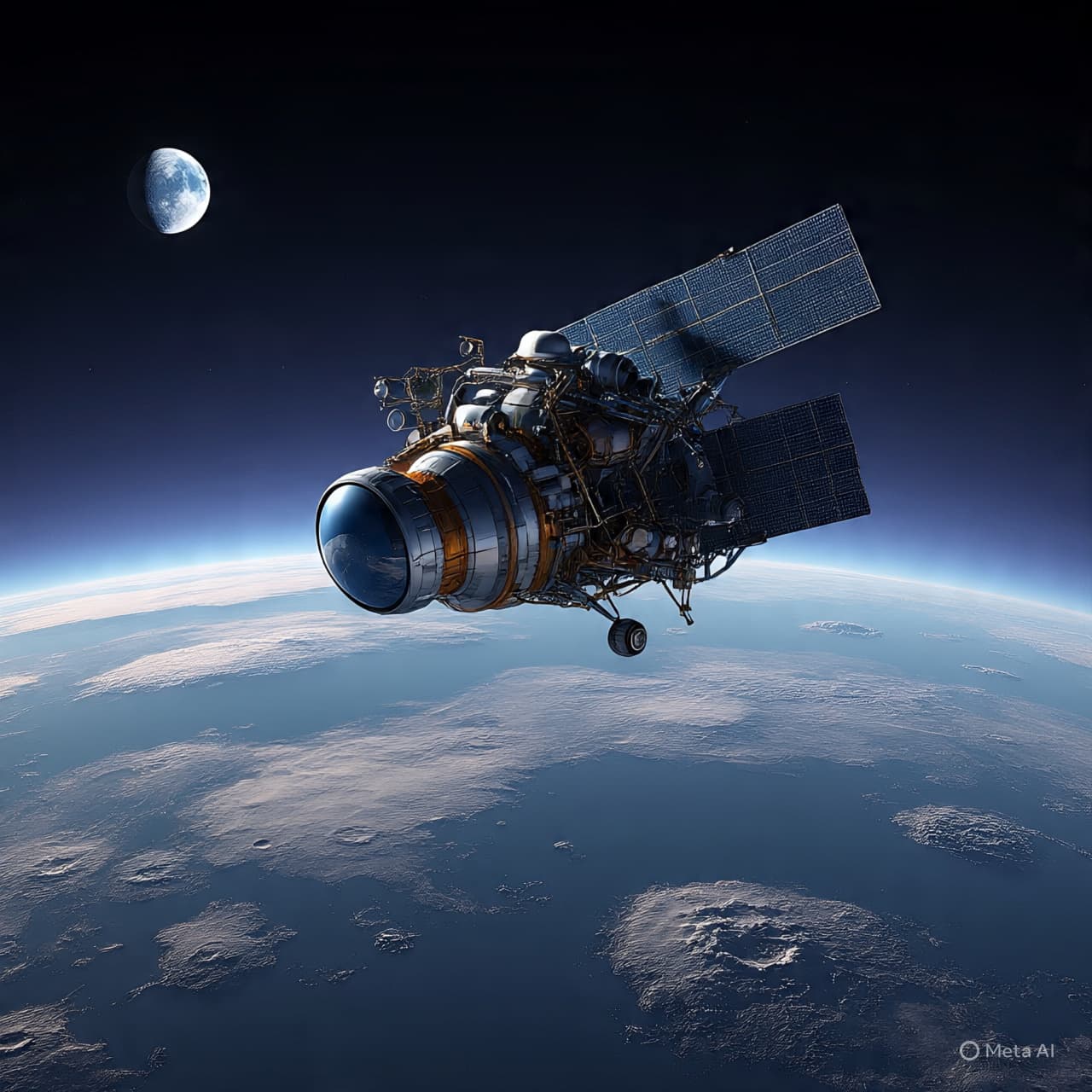
The spacecraft, Orion spacecraft, is designed for this extended reach, carrying crew beyond low Earth orbit into the broader expanse of cislunar space. Its trajectory will take it around the far side of the Moon, where communication with Earth briefly falls away, and where the view turns outward into deeper space before curving back toward home.
NASA has outlined plans for comprehensive coverage of the mission, reflecting both the technical complexity of the flight and the public interest that surrounds it. Live broadcasts, onboard perspectives, and mission updates will accompany the journey, offering a continuous record of movement and experience. In this way, the mission is not only undertaken, but shared—its progress unfolding in real time across distance.
The work sits within the broader scope of NASA’s Artemis program, which aims to return humans to the Moon and establish a sustained presence in lunar orbit and on its surface. Artemis II represents a step within that sequence, building on earlier uncrewed tests and preparing for future landings.
There is a continuity here, though it moves quietly beneath the surface of the moment. The last time humans traveled around the Moon was during the Apollo era, when such journeys were part of a different technological and historical context. Now, decades later, the trajectory is revisited—not as repetition, but as extension. The tools have changed, the systems refined, yet the fundamental act remains: leaving Earth, circling another world, and returning.
Inside the spacecraft, the experience will unfold in measured intervals—launch, separation, transit, orbit, and return—each phase guided by systems designed to maintain stability across distance and time. Outside, the Earth will recede, the Moon will approach, and the line between them will be traced once more.
NASA confirms that Artemis II will be the first crewed mission of the Artemis program, sending astronauts around the Moon aboard the Orion spacecraft. The agency has detailed plans for mission coverage, including live broadcasts and onboard updates. The mission will test systems for future lunar landings as NASA continues preparations for sustained human exploration of the Moon.
AI Image Disclaimer
These images are AI-generated and intended to represent the mission concept, not actual mission photography.
Sources
NASA Space.com Reuters The New York Times Scientific American
Published by Banx Network. This article is part of the Banx decentralized media programme, powered by the BXE token on the XRP Ledger.