There is a particular solitude that comes with returning to a country that has changed in your absence. María Corina Machado, the Nobel Peace Prize laureate and Venezuela's most recognizable opposition figure, came home on Sunday after nearly a year in exile, stepping into a landscape that her supporters had dreamed of and her adversaries had reshaped .
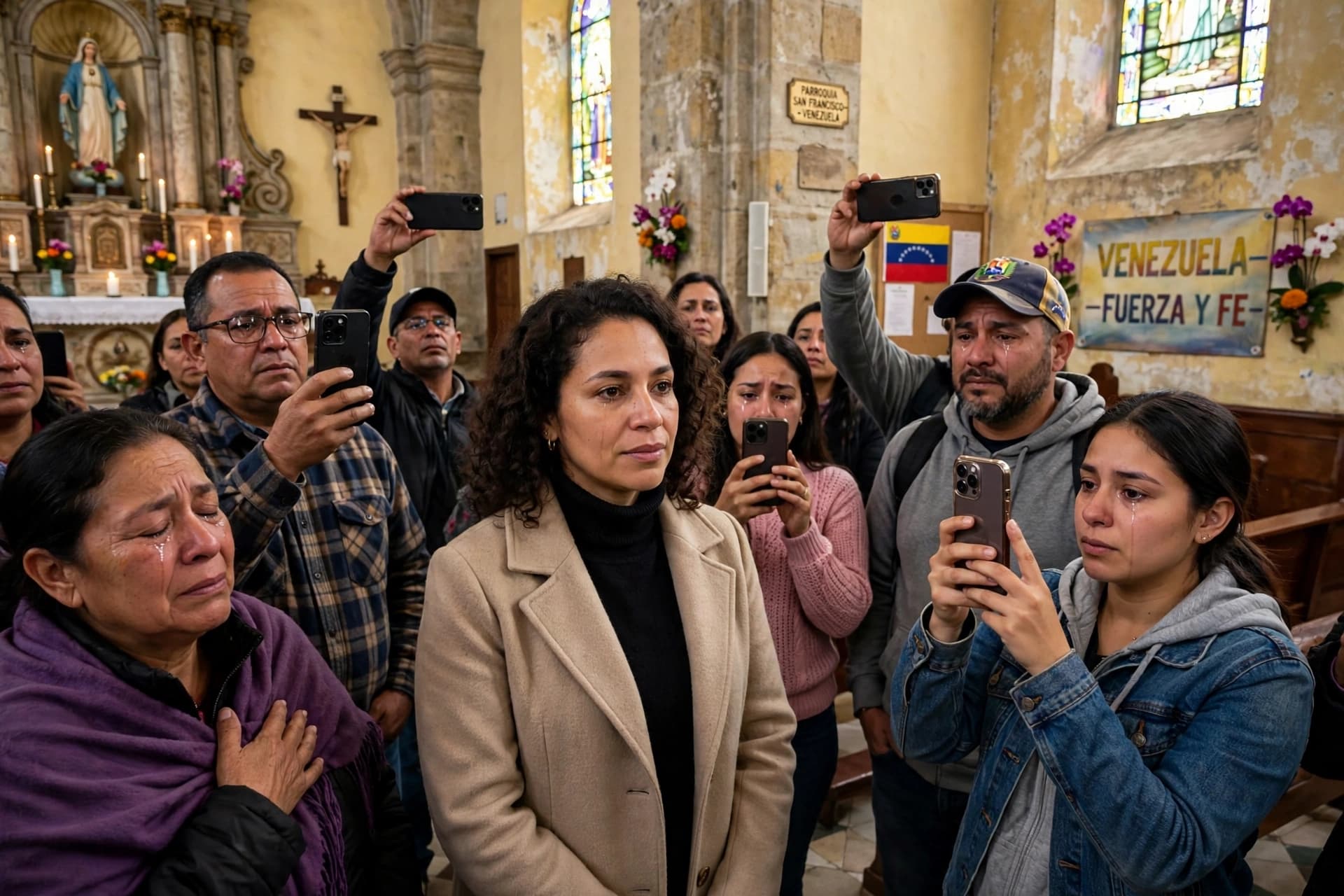
The scenes were jubilant. Thousands lined highways and city streets waving Venezuelan flags, chanting "Liberty!" as Machado traveled in a convoy toward Caracas. In the western city of Barquisimeto, she appeared at a church, wearing her trademark white T-shirt and blue jeans, and the congregation erupted in applause and tears . One woman shouted, "María, if you come back, my daughter has to come back!"—a reference to the millions of Venezuelans who have fled the country's economic and political collapse .
But the political terrain Machado returned to is not the one she left. Nicolás Maduro, her nemesis, was captured in a U.S. military operation in January and is jailed in New York. In his place sits Delcy Rodríguez, his former vice president, who was sworn in as interim president with Washington's blessing and has since exceeded the 90 days she was authorized to serve, with no election date set . The United States, which Machado has praised for removing Maduro, has found Rodríguez a cooperative partner on oil access and other demands.
This is the tightrope Machado must walk. She returns as a symbol of democratic resistance, but the government she opposes is no longer the one Washington wants to pressure. Secretary of State Marco Rubio said the U.S. had told Venezuelan authorities "weeks and weeks ago" that Machado should be allowed to return, and that her safe arrival was "the direct result of the U.S. supported reconciliation talks" . Those talks, however, have not produced an election date, and Rodríguez remains in power.
Machado's supporters want elections in 2027 and want her to be allowed to run. Her party, Vente Venezuela, has seen many of its leaders return from exile in recent weeks, and the opposition has demanded that the transitional government set a date . But Machado's ability to operate freely depends, at least in part, on the Trump administration's continued willingness to tolerate her presence. Trump, asked about her return on Sunday, said he did not know about it but added, "I think she's a very nice woman. She gave me her Nobel Prize, so how can I say anything else?" .
There is a quiet irony in that statement. Machado, who won the Nobel for her efforts on behalf of Venezuelan democracy, gave her medal to Trump—a gesture of gratitude for the operation that removed Maduro. Now she must navigate a relationship in which her symbolic power is both her greatest asset and her most delicate constraint. Brian Fonseca, a Venezuela expert at Florida International University, described her return as "very symbolic" but added that until there is institutional space for the democratic opposition, it remains a gesture rather than a transformation .
For the crowds who greeted her, the symbolism was enough for one day. They had waited months for her return, endured repeated failed attempts, and watched from afar as she received the Nobel and met with world leaders. Now she was here, in the flesh, waving from a sunroof, singing the national anthem in a packed plaza. Whatever comes next—the negotiations, the elections, the compromises—will be decided in rooms she may or may not be allowed to enter. But for a few hours on a Sunday in October, the woman who had been absent was present, and that presence felt like a beginning.
Image note: The visual accompanying this article is an AI-generated illustration and does not depict actual individuals or events.
Sources: BSS/AFP, AP News, BBC
Published by Banx Network. This article is part of the Banx decentralized media programme, powered by the BXE token on the XRP Ledger.