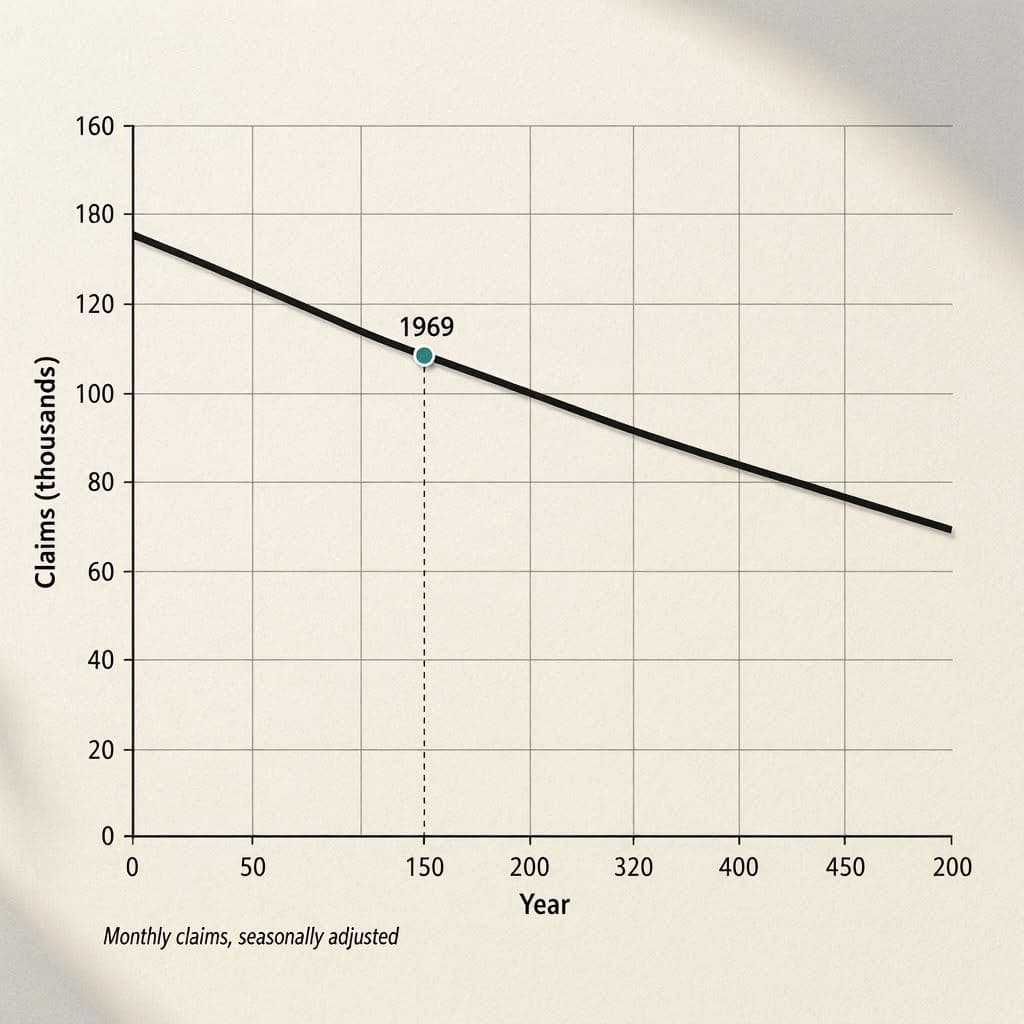
The labor market is often described as the heartbeat of the economy, its rhythm reflecting the health and vitality of the nation. In a striking display of resilience, recent data shows that initial claims for unemployment insurance in the United States dropped to 187,000 last week. This figure, the lowest recorded since 1969, signals a tight labor market where jobs are plentiful and workers are retained. It is a statistic that invites reflection on the strength of the American workforce and the enduring demand for labor in a post-pandemic world.
Body: The decline in jobless claims suggests that employers are holding onto their staff despite economic uncertainties. In previous years, fluctuations in claims were often seen as early indicators of recession or growth. Today, the consistently low numbers point to a structural shift in hiring practices. Companies, having faced difficulties in recruiting talent, are now prioritizing retention over reduction. This stability provides a sense of security for millions of households, supporting consumer spending and overall economic confidence.
Historical context adds weight to this achievement. The last time claims were this low, the economy was in a different era, characterized by industrial dominance and different demographic patterns. Comparing today’s service-oriented, technology-driven economy to that of 1969 highlights the evolution of work. Yet, the fundamental principle remains: when people have jobs, communities thrive. The current data suggests that this principle is holding strong, even in the face of global challenges.
Regional variations exist, with some states showing stronger gains than others. However, the national trend is clear. Industries such as healthcare, hospitality, and professional services continue to add jobs, absorbing workers from sectors that have slowed. This mobility demonstrates the adaptability of the workforce, as individuals transition to roles that offer better prospects and stability.
For policymakers, the low claim numbers present both opportunities and challenges. While low unemployment is a goal, it can also lead to wage inflation and labor shortages in key sectors. The Federal Reserve monitors these trends closely, balancing the need for price stability with the desire for full employment. The current data may influence interest rate decisions, as officials assess whether the economy is overheating or maintaining a sustainable pace.
Workers themselves are feeling the benefits. With fewer people filing for unemployment, bargaining power has shifted slightly in favor of employees. Wages have risen in many sectors, helping to offset inflationary pressures. This dynamic fosters a sense of fairness and opportunity, encouraging participation in the labor force. It also reduces the stigma associated with job transitions, as movement between roles becomes more common and accepted.
Looking ahead, economists caution that no trend lasts forever. Global economic conditions, technological changes, and domestic policies will continue to shape the labor market. However, the current strength provides a buffer against potential shocks. It allows businesses and families to plan with greater certainty, fostering long-term investment and growth.
Closing: The drop in unemployment claims to historic lows is a testament to the resilience of the U.S. economy. It reflects a labor market that is not just surviving, but thriving. As we move forward, maintaining this momentum will require continued adaptation and support for workers and businesses alike.
AI Image Disclaimer: Visuals in this article are AI-generated representations of economic graphs and workplace environments, intended to illustrate the concepts of labor market stability and employment.
Sources: U.S. Department of Labor Bureau of Labor Statistics CNBC Reuters
Published by Banx Network. This article is part of the Banx decentralized media programme, powered by the BXE token on the XRP Ledger.