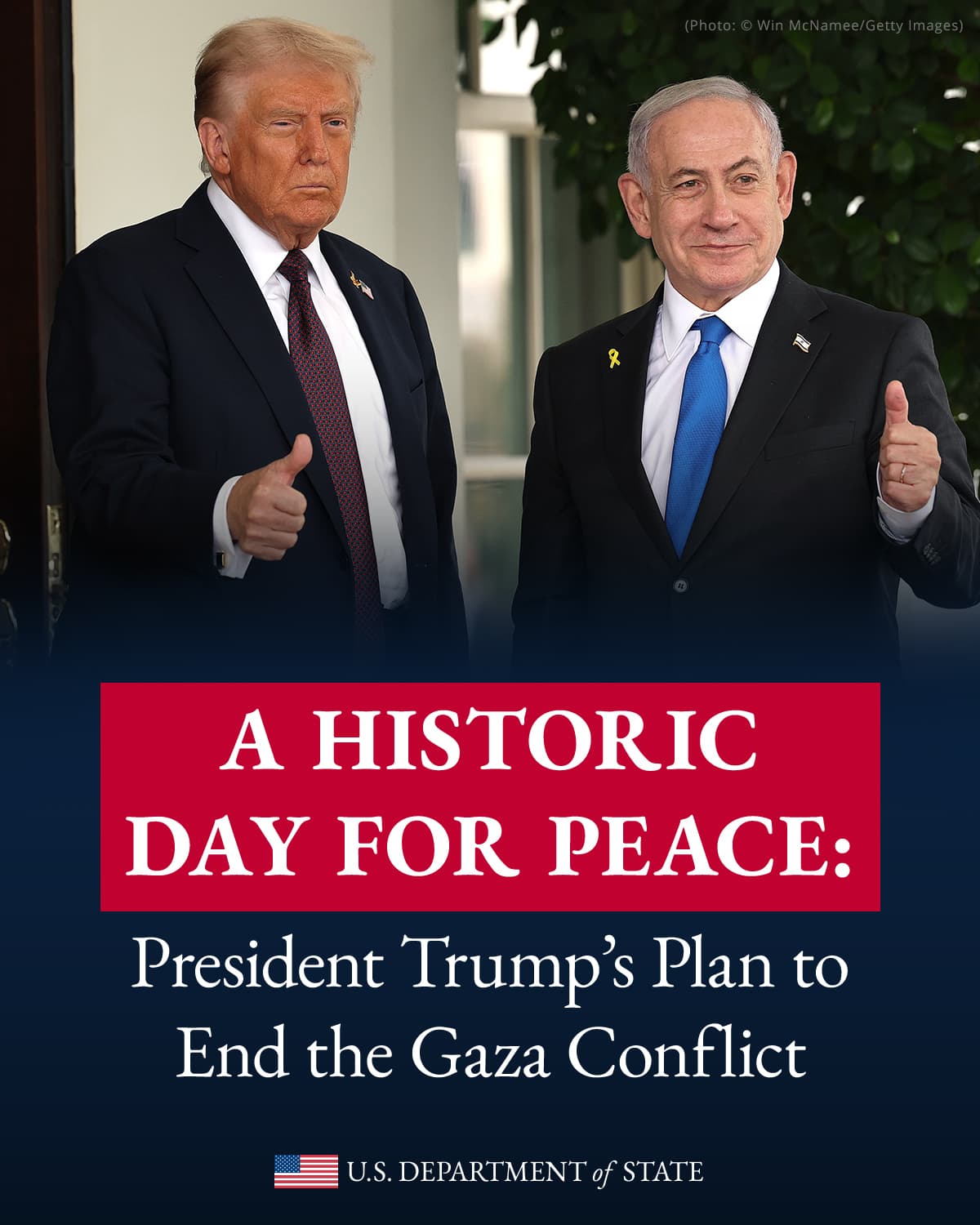
In a moment framed as “a historic day for peace,” former U.S. President Donald Trump introduced a high-profile plan aimed at resolving one of the world’s most entrenched disputes: the Gaza conflict. The initiative, presented alongside Israeli Prime Minister Benjamin Netanyahu, was positioned as a bold blueprint for peace in a region scarred by decades of violence, political tension, and humanitarian crisis.
The proposal outlined a two-pronged strategy. First, it focused on Israel’s security, reinforcing guarantees of protection against terror threats and recognizing Israel’s sovereignty over key territories. Second, it offered Palestinians a pathway to statehood—conditional upon disarmament of militant groups and recognition of Israel as a legitimate state. Supporters argued that this framework balanced Israel’s need for security with the Palestinians’ aspirations for independence and dignity.
For decades, peace talks had faltered. The Oslo Accords, Camp David negotiations, and other diplomatic initiatives left the region locked in a cycle of conflict. Trump’s plan sought to reset the table with direct, transactional commitments, promising billions in economic investments for Palestinian communities if the deal advanced. Critics, however, claimed the plan was heavily tilted in Israel’s favor, limiting Palestinian control over territory and resources while demanding substantial concessions upfront.
What made the announcement “historic” was not just the document itself, but the timing. Coming after the Abraham Accords, which normalized relations between Israel and several Arab nations, Trump’s administration believed momentum was on its side. The logic was simple: if Arab states could build ties with Israel, perhaps Palestinians too would be pressured toward a political compromise.
Despite the headline, peace did not materialize overnight. Palestinian leaders rejected the proposal outright, calling it biased and unworkable. Yet, the plan’s unveiling underscored Washington’s central role in Middle East diplomacy and its ability to frame the global conversation.
Whether history remembers this as a true step toward peace or a symbolic gesture remains to be seen. What is certain is that the announcement spotlighted the urgent need for a sustainable solution—one that addresses humanitarian realities while securing lasting stability.
Published by Banx Network. This article is part of the Banx decentralized media programme, powered by the BXE token on the XRP Ledger.