
In many towns, the land is treated as a silent partner — dependable, unmoving, content to hold streets, homes, and memories without complaint. Hills rise gently, offering views and shelter, and life arranges itself around their steady presence. Few pause to consider that even the most familiar ground carries its own slow conversations, shaped by rain, gravity, and time.
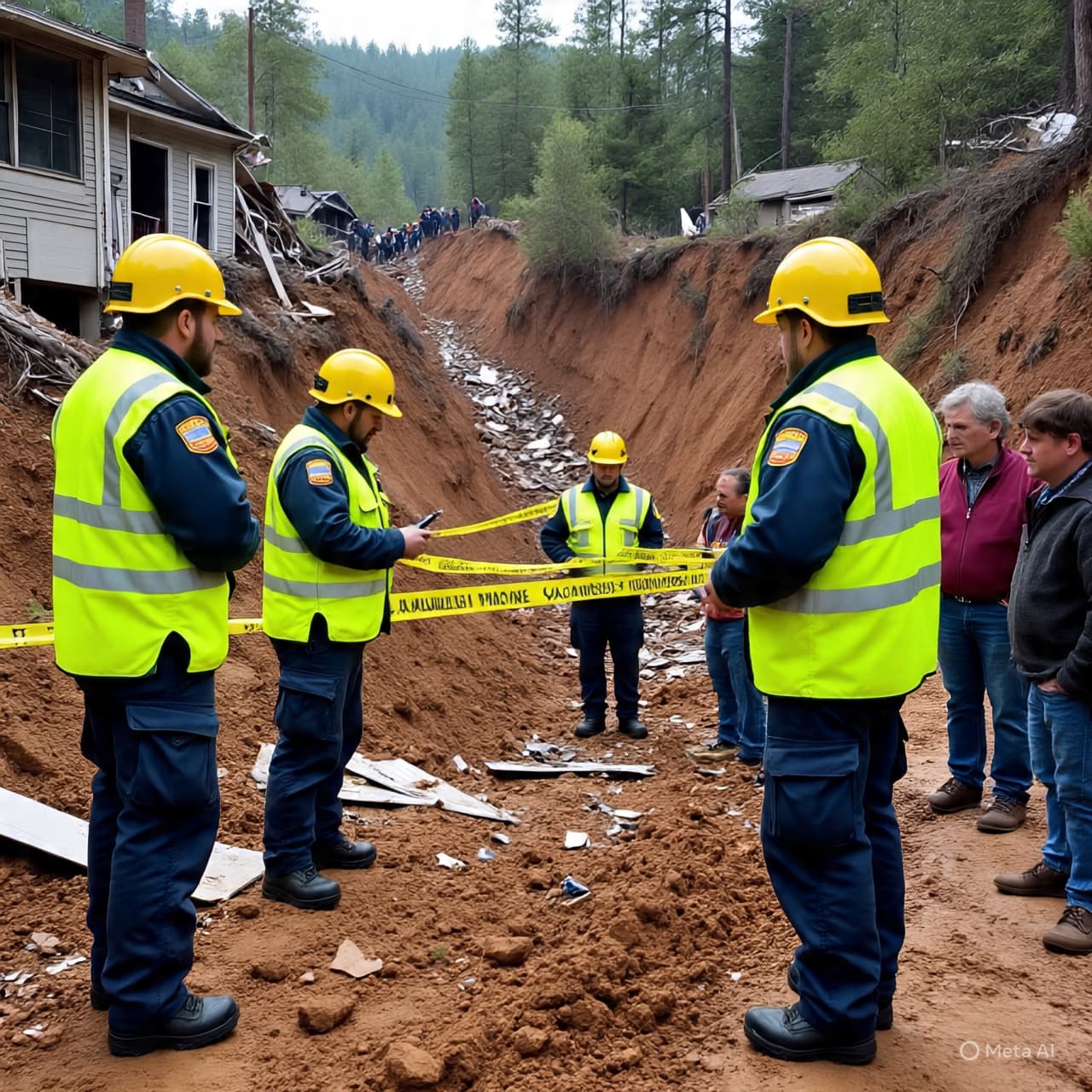
That quiet understanding was interrupted when the hillside above the town gave way. What began as heavy rainfall turned into something more consequential, as soil loosened and ancient layers slid forward with unexpected force. In moments, the edge of the town was no longer where it had always been. Roads fractured, homes tilted, and the landscape rearranged itself without warning or negotiation.
Emergency crews moved quickly, navigating unstable ground to ensure residents were evacuated safely. For many, the departure was hurried and incomplete, marked by doors left unlocked and belongings abandoned in the belief that absence would be brief. Yet as daylight revealed the full reach of the landslide, it became clear that return would not come easily. Portions of the town now rested in unfamiliar positions, reshaped beyond recognition.
Geologists later explained that the conditions had been forming quietly over years. Saturated soil, natural erosion, and shifting pressure combined into a moment when the slope could no longer hold itself together. While such explanations offer clarity, they do little to ease the emotional weight carried by those who watched their homes disappear behind caution tape and safety barriers.
Community centers became gathering points, where neighbors shared updates, spare clothing, and the uneasy comfort of shared experience. Conversations drifted between practical concerns and personal reflections — how long repairs might take, what could be salvaged, whether rebuilding would even be possible. In these exchanges, resilience appeared not as a bold declaration, but as a steady willingness to listen and remain present.
Local authorities have begun assessments to determine long-term safety and next steps. Engineers continue to monitor the hillside, while officials weigh relocation options for families most affected. The process, by necessity, will be slow and measured, guided by caution rather than optimism alone.
For now, the town stands altered but not erased. The land has redrawn its boundary, reminding those who live upon it that permanence is often an agreement, not a guarantee. What remains is a community learning how to live with that knowledge, carrying its past forward even as the ground beneath it has changed.
AI Image Disclaimer Illustrations were produced with AI and serve as conceptual depictions rather than real photographs.
Source Check Credible mainstream and niche media have consistently covered landslides and community impacts similar to this topic.
Available sources (media names only):
Reuters Associated Press BBC News The Guardian Al Jazeera
Published by Banx Network. This article is part of the Banx decentralized media programme, powered by the BXE token on the XRP Ledger.


