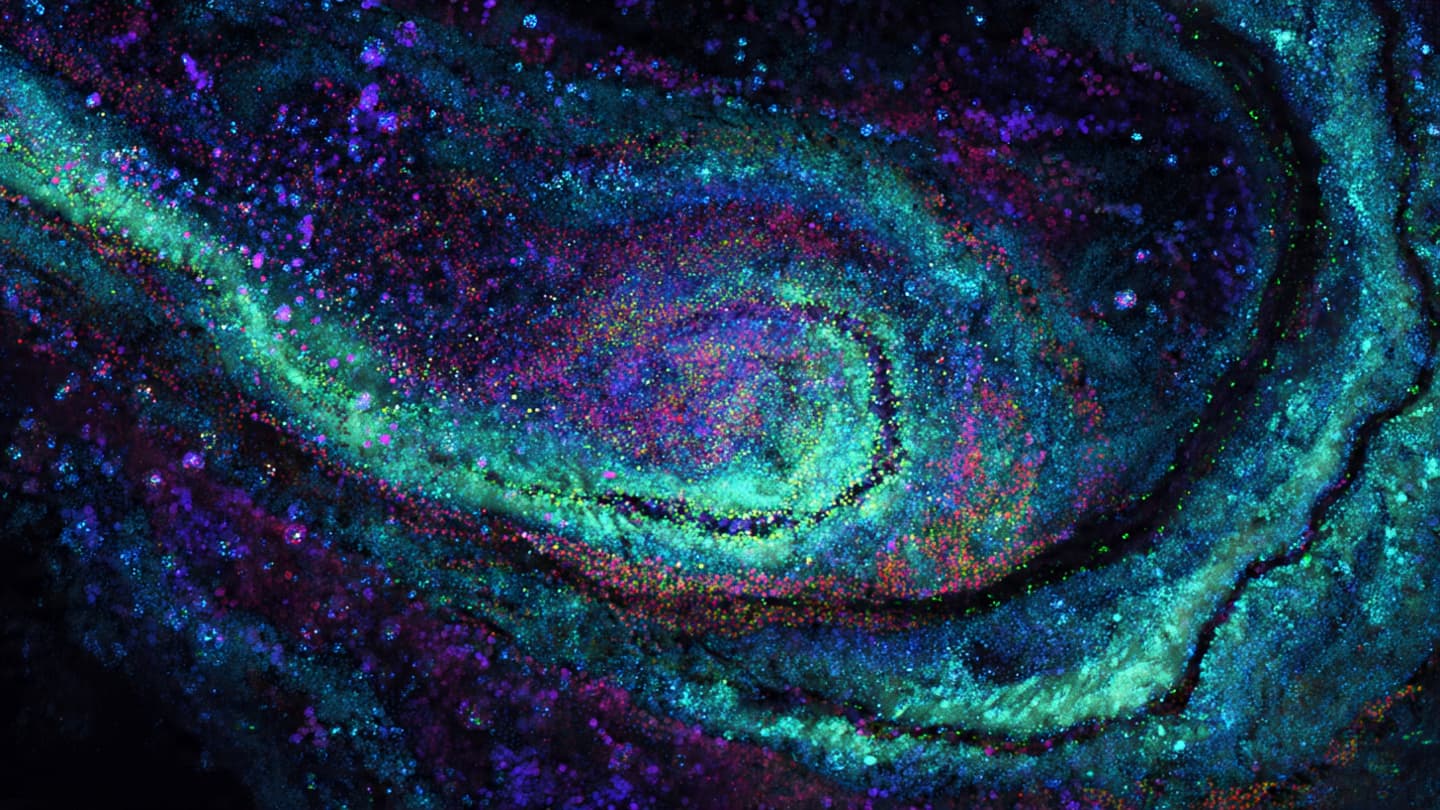
Some discoveries arrive like distant constellations suddenly visible through clearing clouds. Others emerge under a microscope, revealing patterns so intricate they resemble entire galaxies folded into spaces too small for ordinary sight.
Canadian researchers have unveiled a striking microscopic structure within auditory biology, informally described as a “hearing galaxy.” The discovery offers fresh insight into how delicate sensory systems process sound.
The visual complexity of the structure has captured scientific attention, but its deeper significance lies in what it may reveal about hearing disorders and cellular communication inside the ear.
Researchers used advanced imaging technology to map interactions at extraordinary resolution. These observations provide new perspectives on how auditory cells organize themselves to transmit sound information.
Scientists believe the discovery could improve understanding of hearing degeneration and congenital auditory conditions. Better structural knowledge often leads to more precise diagnostic tools and therapeutic research pathways.
The study reflects Canada’s growing strength in microscopic imaging and biomedical analysis. Investments in high-resolution visualization tools have enabled researchers to observe biological systems with unprecedented clarity.
Experts caution that practical medical applications may take years to develop. Scientific breakthroughs often require additional replication, peer validation, and careful integration into broader research frameworks.
Even so, the discovery has generated enthusiasm across auditory science communities. It reminds researchers that nature’s complexity often reveals itself through patience and precision.
For now, this microscopic “galaxy” stands as both scientific achievement and quiet wonder—a reminder that even the smallest structures can expand humanity’s understanding of itself.
AI Image Disclaimer: The visual concepts used here were AI-generated to artistically represent microscopic biological structures.
Sources Verified: NSERC Canada, Scientific American, Nature Science Reports, CBC Science
Published by Banx Network. This article is part of the Banx decentralized media programme, powered by the BXE token on the XRP Ledger.