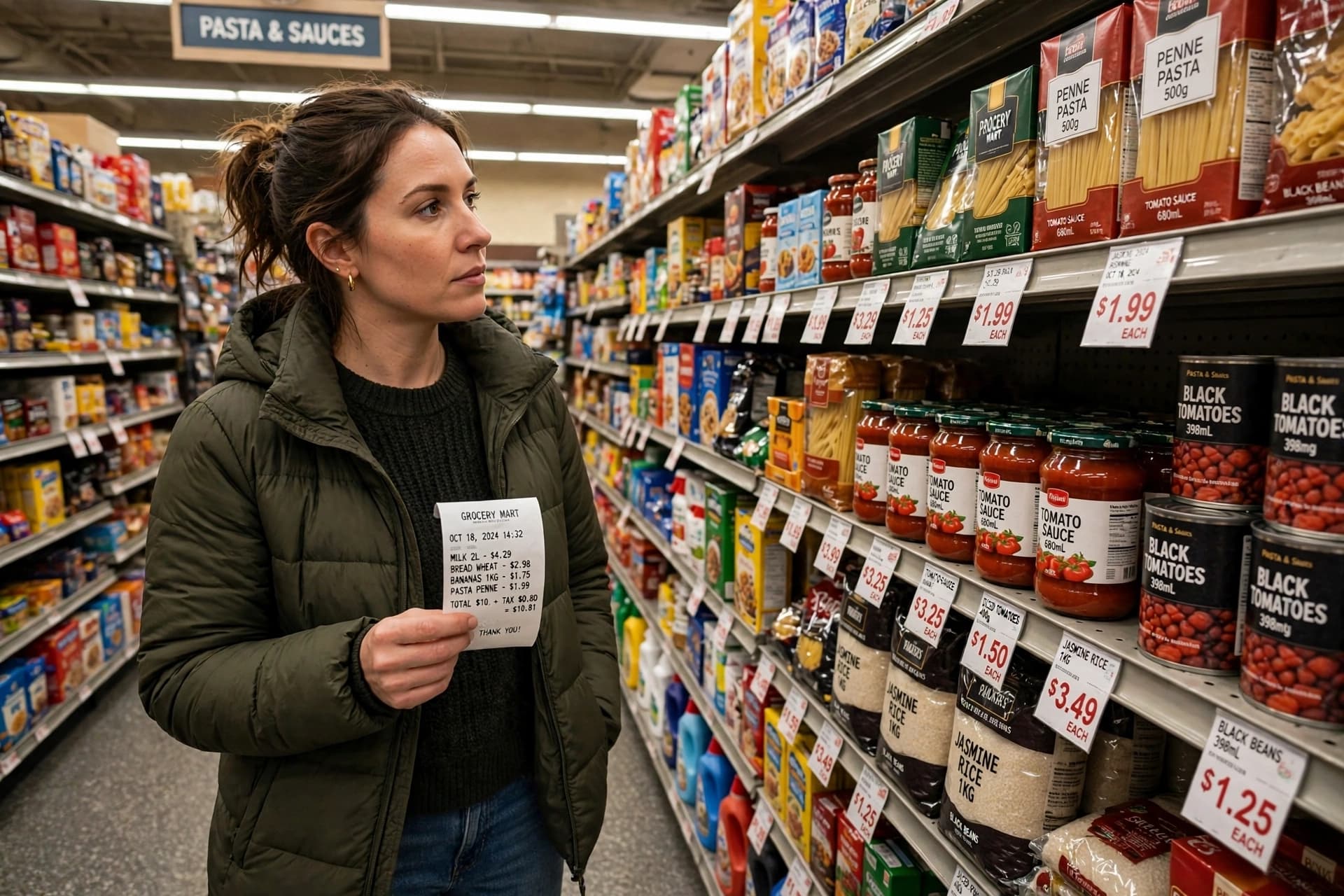
There is a particular kind of arithmetic that voters perform in the final days of a campaign, a calculation not of policy but of groceries, gas, and the quiet dread of a paycheck that no longer stretches. Across the United States, as the midterm campaign entered its final hours, that arithmetic had become the dominant language of American politics. In interviews from suburban Ohio to rural Kansas to Tucson, voters described a daily financial gymnastics—rent hikes, utility bills, the price of Halloween candy—and many drew a straight line between those pressures and the party in power .
The numbers behind the anxiety are not abstract. Since the United States and Israel launched military strikes against Iran in late February, international oil prices have climbed sharply. Diesel retail prices broke records in September, and the cost of gasoline has risen nearly fifty percent since February, while diesel is almost seventy percent more expensive . Tariffs imposed by the administration have added further pressure, making foreign goods more costly for American purchasers. According to government data, rising costs have outpaced workers' hourly wages, compounding a financial stress that many families already felt .
Democrats seized on this arithmetic with singular focus. Candidates and their allies spent nearly half a billion dollars on advertisements mentioning the economy, prices, and inflation, according to AdImpact . In Maine, the Democratic Senate nominee turned surging heating oil costs into a central attack against the Republican incumbent. In North Carolina, the former governor toured the state on a "Make Stuff Cost Less" campaign, unveiling plans to lower the price of food, health care, utilities, child care, and housing. In Texas, supporters waved money-green signs bearing a simple promise: "Money in your pocket" .
Republicans offered a different reading of the same data. They insisted that the fundamentals of the economy were stronger than before they took power two years ago, pointing to rising consumer confidence and the administration's efforts to stimulate growth. President Trump floated the idea of sending Americans a $5,000 check if Republicans held Congress, though he acknowledged at a rally that the sum might not buy much. "The problem is that for $5,000, the most you'll be able to buy is a hamburger and maybe a small dessert," he said .
What made this campaign distinct was not simply the salience of prices but the degree to which voters attributed responsibility. Douglas Holtz-Eakin, a former chief economist for President George W. Bush's Council of Economic Advisers, noted that the old political maxim—that presidents bear blame for economies they cannot fully control—did not entirely apply here. The war with Iran raised gas prices. Tariffs made goods more expensive. "The standard of living is declining and people know that," Holtz-Eakin said. "The nature of these actions have really allowed voters to blame him" .
For many voters, the concerns crossed lines of generation, gender, race, and ideology. A father of eight in suburban Cincinnati who voted Democratic described the price of "everyday stuff" as dramatically higher. A fifty-two-year-old independent in Kansas cited college costs and the price of a pizza. An eighty-year-old retiree in Tucson who voted Republican spoke of basic needs: eating, and gas for getting to appointments or church . The worries were not uniform in their politics, but they were uniform in their presence.
The campaign will end, as campaigns do, and the votes will be counted. But the arithmetic that dominated this season—the calculation of what a paycheck can buy, and whether the future will be harder than the present—will not disappear when the final ad airs. It will follow the winners into office, a quiet ledger waiting to be settled.
Image Disclaimer: The visual accompanying this article was generated by artificial intelligence and is not a photograph of actual voters or campaign events.
Sources: The New York Times, Spectrum News, La Hora, Sina Finance
Published by Banx Network. This article is part of the Banx decentralized media programme, powered by the BXE token on the XRP Ledger.