
Key Highlights
- Iran's government is perceived as less fractured and more centralized amid recent conflicts.
- President Trump described Iran's regime as 'seriously fractured' during a recent announcement.
- Internal disagreements exist among Iranian factions regarding survival strategies.
The perception of power can vary significantly based on perspective. From a distance, a government might appear either brittle or absolute, depending on the narrative constructed around it. This is particularly true in times of conflict, where terms like 'collapsed' or 'united' are often used to simplify complex political realities into digestible soundbites for public consumption.
In a recent address, President Donald Trump characterized Iran's government as 'seriously fractured,' coinciding with an extension of a ceasefire and a call for Tehran to present a unified proposal for peace. This statement suggested a regime under strain, potentially revealing cracks in a system that has historically relied on rigidity and control. However, the reality in Tehran is often more intricate than such descriptions imply.
The Islamic Republic has undergone significant changes in recent weeks due to escalating conflicts, including reported strikes by American and Israeli forces that have resulted in the deaths of several high-ranking military and political figures. The absence of former Supreme Leader Ayatollah Ali Khamenei, who has reportedly been killed, and the injury of his successor, Mojtaba Khamenei, have left a power vacuum and raised questions about the future leadership of Iran.
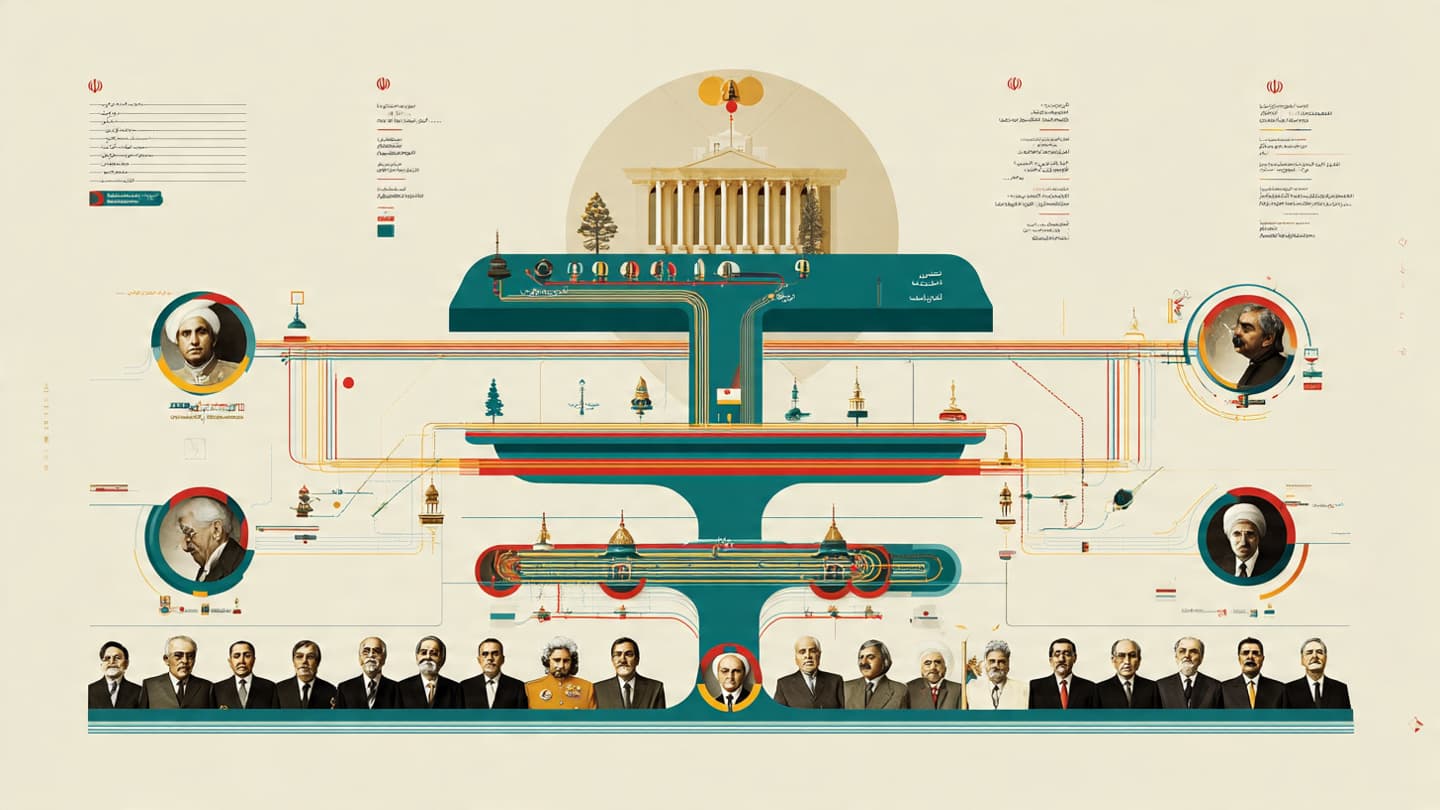
Despite these upheavals, analysts suggest that the Iranian regime is not fracturing but rather transforming. The once-diverse power structure, characterized by overlapping institutions and rival factions, appears to be consolidating into a more centralized decision-making body in response to the pressures of war. This shift may lead to a more streamlined approach to governance, particularly in times of existential threat.
Publicly, Iranian officials have been keen to project an image of unity. They have consistently maintained that negotiations will not resume until the United States lifts its blockade on Iranian ports and shipping. This message has been echoed across various platforms, including state media and parliamentary discussions, with key figures like Mohammad Bagher Ghalibaf, the parliament speaker, emerging as a prominent negotiator.
However, beneath this facade of cohesion lies a complex web of internal disagreements. While there is consensus on the need for survival, factions within the government differ on the methods to achieve this. Hard-liners advocate for a stance of resistance against perceived humiliations, while pragmatists may view diplomacy as a necessary means to safeguard military gains and mitigate economic decline. The Revolutionary Guard Corps, with its own command structures and ideological influence, remains a significant player in shaping political outcomes.
Trump's characterization of Iran as fractured may serve a strategic purpose, suggesting that the pressure campaign is effective and framing the ceasefire as an opportunity rather than a delay. This narrative can bolster domestic support and signal confidence to allies. However, it risks complicating negotiations, as Iranian leaders may interpret such statements as propaganda rather than constructive dialogue.
On the streets of Tehran, public sentiment appears to rally in support of the regime, with crowds chanting against the United States and any form of compromise. Historically, external pressures have often galvanized nationalist sentiments in Iran, temporarily suppressing dissent.
The situation remains fluid and complex. While Iran's institutions have been challenged and its leadership reshuffled, the country is not on the brink of disintegration. Instead, it faces a period of uncertainty, with decision-making processes evolving in response to both internal dynamics and external pressures. As the world watches, the intricate dance of power in Tehran continues to unfold, revealing the multifaceted nature of governance in times of crisis.
Published by Banx Network. This article is part of the Banx decentralized media programme, powered by the BXE token on the XRP Ledger.



