
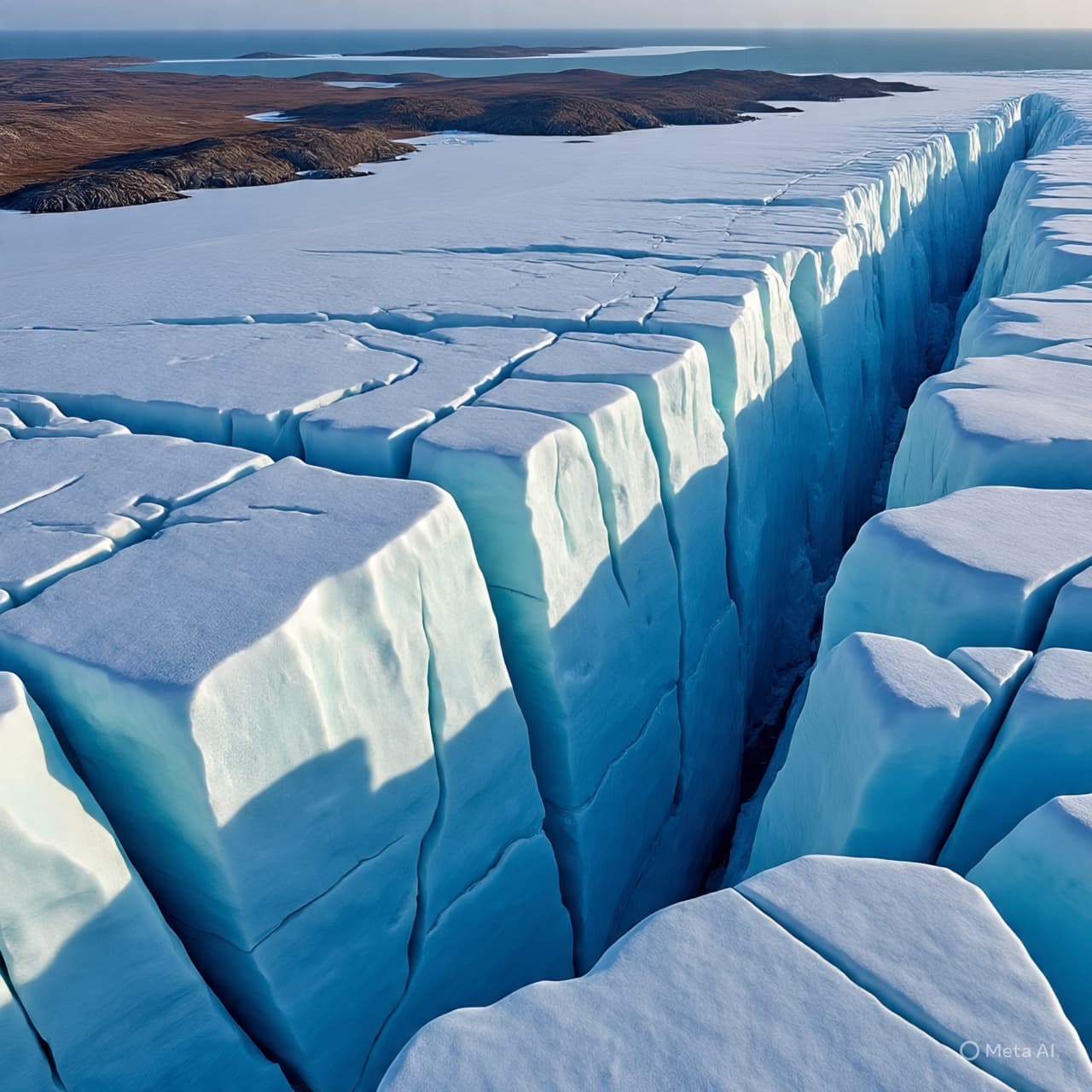
Key Highlights
- Seismic Activity:Hundreds of earthquakes detected beneath Thwaites Glacier.
- Climate Impact:Thwaites holds enough ice to raise sea levels by over half a meter.
- Research Focus:Scientists are refining models to understand glacier dynamics.
The Thwaites Glacier, often dubbed the "Doomsday Glacier," has become a focal point for climate scientists due to its alarming seismic activity. Recent reports indicate that hundreds of small earthquakes have been detected beneath this massive ice sheet, raising concerns about its stability and the potential implications for global sea levels. This seismic activity, while not felt by humans, is significant enough to warrant attention from the scientific community.
The earthquakes occurred in areas where the ice meets bedrock, a crucial interface that influences how quickly glaciers can slide into the ocean. As the Thwaites Glacier responds to warming ocean waters and internal stresses, the friction between the ice and the underlying rock changes, leading to these seismic bursts. This phenomenon suggests that the glacier is not merely a static mass of ice but is actively responding to environmental changes.
Researchers are divided on the implications of these findings. Some believe that the earthquakes may represent a natural adjustment process within the glacier, while others warn that they could signal an accelerating instability. The interplay of warming waters, increased ice flow, and the resulting cracking could create feedback loops that further destabilize the glacier.
Monitoring the Thwaites Glacier poses unique challenges. Antarctica is one of the most remote and difficult environments to study, with limited instrumentation and slow data collection. Each earthquake detected adds a piece to the puzzle, but it also raises new questions about the glacier's future and the broader impacts of climate change.
Despite the uncertainty, one thing is clear: the Thwaites Glacier is changing. The seismic signals confirm that it is active and responsive to both ancient geological forces and modern climate change. As researchers work to refine their models and expand monitoring efforts, the focus remains on understanding the glacier's dynamics rather than making predictions about its future.
In a world where climate change often feels abstract, the shaking of ice beneath the Thwaites Glacier serves as a stark reminder of the tangible impacts of a warming planet. As scientists continue to study this critical region, the hope is to gain insights that could inform global responses to rising sea levels and climate resilience strategies.
The Thwaites Glacier's story is still unfolding, and as it continues to shift and respond to its environment, it commands the attention of scientists and policymakers alike. The quiet tremors beneath the ice may hold the key to understanding one of the most pressing challenges of our time: the future of our planet's coastlines in the face of climate change.
Published by Banx Network. This article is part of the Banx decentralized media programme, powered by the BXE token on the XRP Ledger.



