Space exploration has always moved to the rhythm of patience. Rockets may rise in minutes, but the path to the launchpad is measured in years—sometimes decades—of design, recalculation, and quiet revision. The journey back to the Moon, like the first, is shaped not only by ambition but by the steady discipline of engineering reality.
has announced an overhaul of its , adjusting timelines and program structures as technical delays continue to ripple through its lunar ambitions. The move reflects both the complexity of returning astronauts to the Moon and the agency’s effort to recalibrate in the face of engineering and budgetary pressures.
The Artemis program, conceived as a successor to the historic , aims to land astronauts near the Moon’s south pole and establish a sustainable human presence in lunar orbit and on the surface. Unlike Apollo’s sprint, Artemis is structured as a long-term campaign, involving international partnerships and commercial contractors.
Recent technical challenges have centered on multiple components, including the Orion crew capsule’s heat shield performance and development timelines for the Human Landing System. The powerful rocket, designed to carry astronauts beyond low Earth orbit, has also faced scrutiny over cost and production cadence. Each element, intricate on its own, must align precisely with the others.
In announcing the overhaul, NASA officials emphasized that safety remains paramount. Adjustments to mission sequencing and testing protocols are intended to reduce risk and ensure that crewed flights proceed only when systems meet rigorous standards. The agency has signaled that revised timelines will likely push certain milestones further into the future than originally projected.
The Artemis architecture is notably collaborative. Private industry partners contribute spacecraft components and lunar lander technology, while international agencies support the planned lunar Gateway station. Delays in one area can cascade into others, requiring coordinated revisions across a network of stakeholders.
Budget realities also form part of the equation. Large-scale space programs must navigate annual appropriations and shifting political priorities. While bipartisan support for lunar exploration has endured, funding constraints influence how quickly hardware can be developed, tested, and launched.
Observers in the aerospace community note that course corrections are not uncommon in ambitious programs. The history of human spaceflight is marked by redesigns and reassessments, often undertaken quietly before becoming public. What distinguishes Artemis is its scope: it seeks not merely to plant a flag, but to build infrastructure for sustained exploration and eventual missions to Mars.
NASA has reiterated that its commitment to returning astronauts to the Moon remains firm. The agency continues to conduct uncrewed testing, refine heat shield materials, and work with contractors to address performance concerns. Officials describe the overhaul not as retreat but as refinement—a recalibration designed to protect long-term success.
The symbolic weight of Artemis is considerable. It represents a renewed American presence in deep space and a framework for international cooperation beyond Earth orbit. Yet symbolism alone cannot launch rockets. Engineering rigor, data analysis, and incremental validation remain decisive.
As timelines shift, the public conversation may oscillate between impatience and understanding. Space exploration inspires urgency, but it also demands caution. The balance between ambition and assurance defines the program’s current moment.
In practical terms, NASA will provide updated schedules and mission outlines in the coming months. Crewed lunar missions are expected to follow once technical concerns are fully addressed and systems demonstrate readiness. For now, the agency’s focus rests on testing, review, and disciplined progress.
The path to the Moon, once again, is proving to be both demanding and deliberate. Artemis continues, shaped by revision but guided by the same enduring horizon.
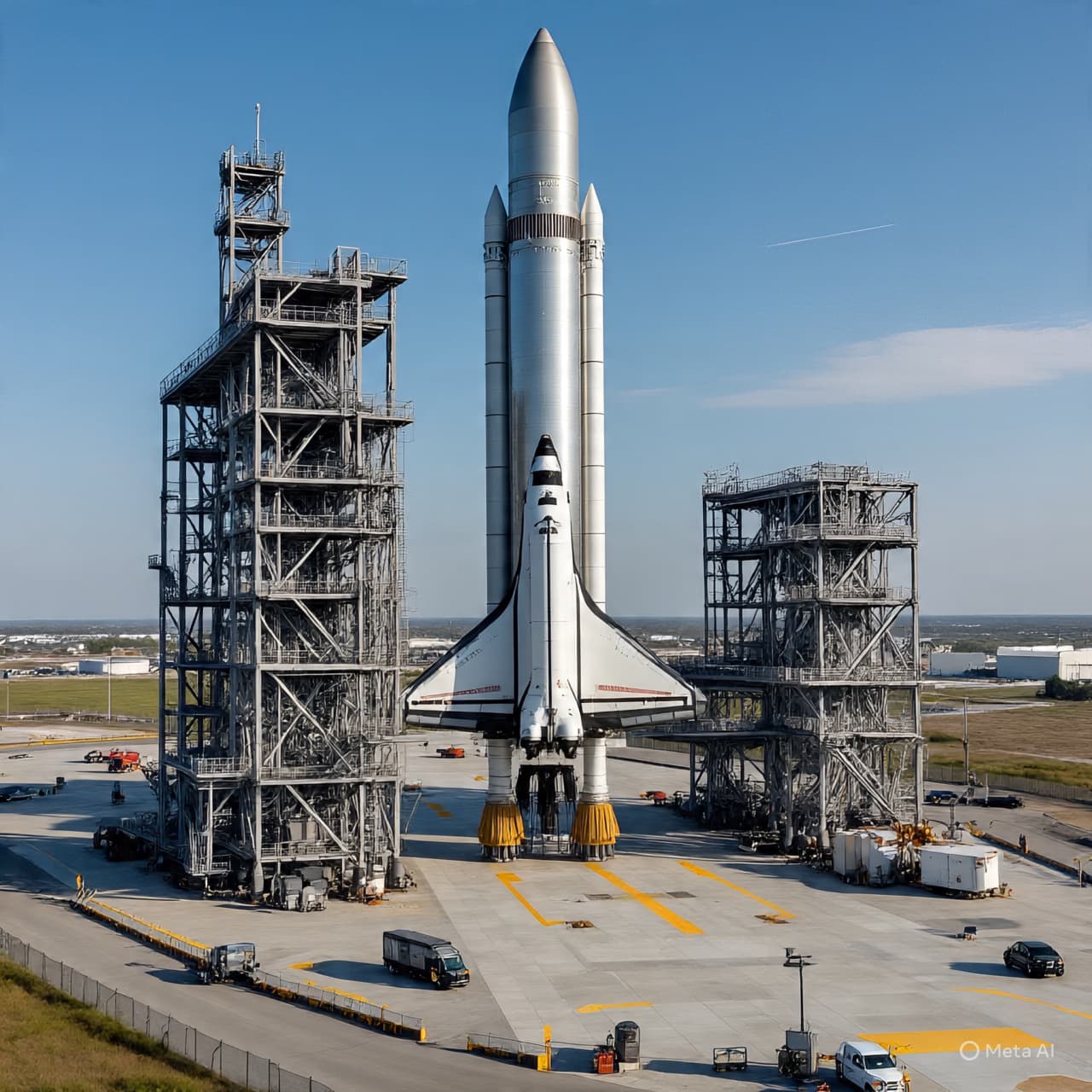
AI Image Disclaimer Images in this article are AI-generated illustrations, meant for concept only.
Sources Reuters Associated Press The New York Times SpaceNews Ars Technica
Published by Banx Network. This article is part of the Banx decentralized media programme, powered by the BXE token on the XRP Ledger.