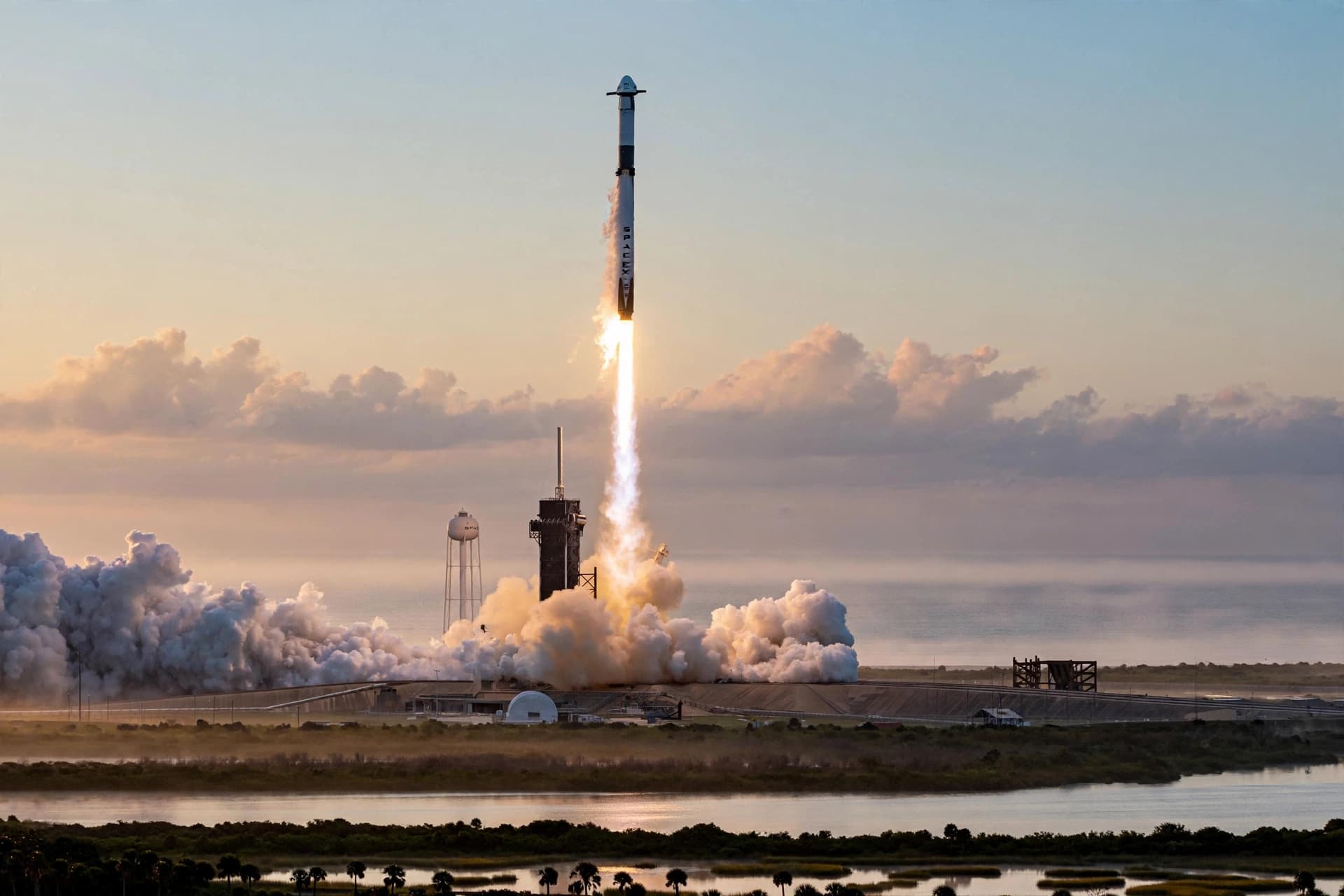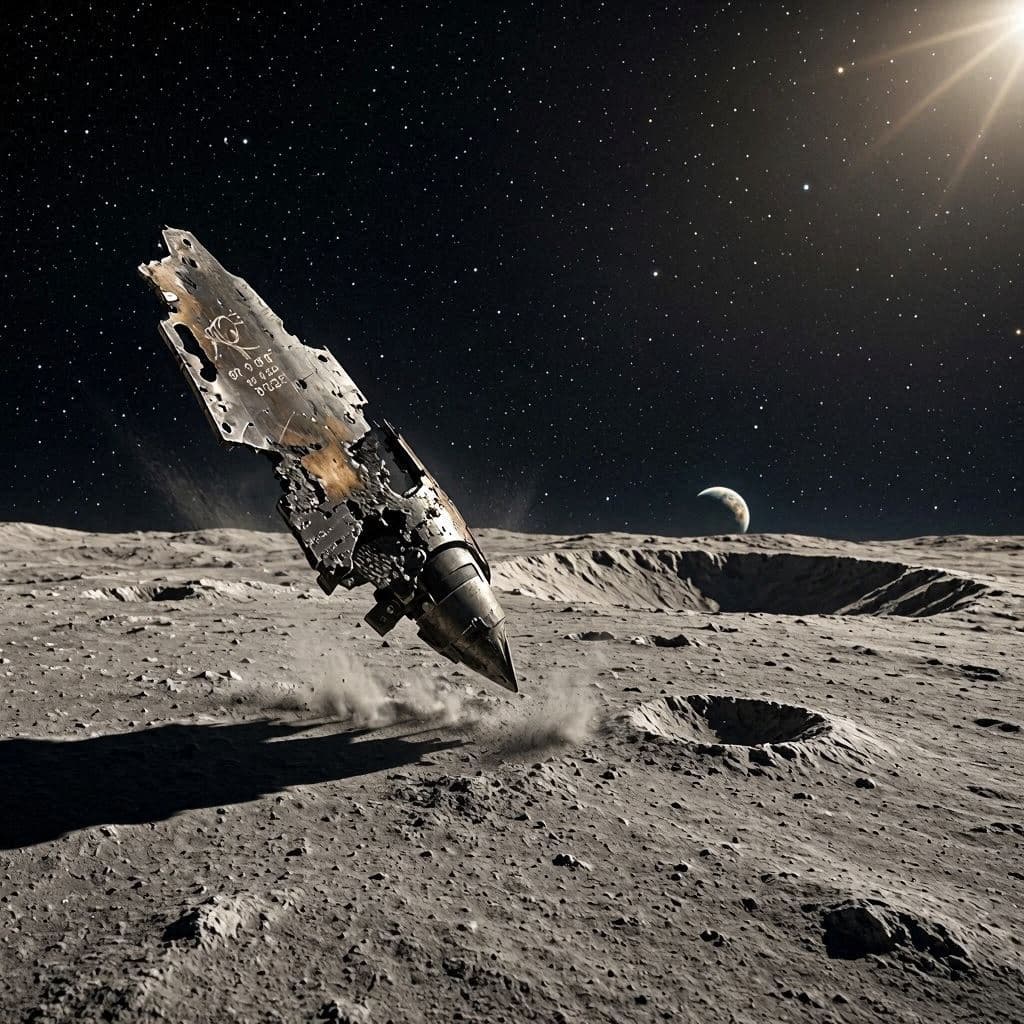
In the silent vacuum of space, where human artifacts drift like ghosts of ambition, a discarded piece of technology is on a collision course with the Moon. An abandoned upper stage from a SpaceX Falcon 9 rocket, left behind after a mission years ago, is predicted to strike the lunar surface in August 2026. While the impact itself poses no danger to Earth, it highlights a growing concern about the accumulation of space debris in our celestial neighborhood.
This event, tracked by independent astronomers, serves as a stark reminder of the unintended consequences of space exploration. As more nations and private companies launch missions, the management of leftover hardware becomes an increasingly complex challenge for the global community.
Body: The object, designated as 2025-010D, is expected to hit the Moon near Einstein Crater at high speed. Although the impact will create a small crater, it will not be visible to the naked eye. However, the significance lies not in the destruction but in the precedent it sets for future lunar activities.
Space junk has long been a concern in Earth’s orbit, where collisions can damage satellites and endanger astronauts. Now, as focus shifts to the Moon for scientific and commercial purposes, the risk of contamination and interference from debris is becoming a pressing issue. The SpaceX incident is one of several recent events highlighting this trend.
Experts warn that uncontrolled impacts can scatter debris across the lunar surface, potentially interfering with sensitive instruments and future landing sites. As NASA and other agencies plan for sustained presence on the Moon, ensuring a clean environment is crucial for both safety and scientific integrity.
The lack of international regulations for disposing of space hardware beyond Earth’s orbit adds to the complexity. While guidelines exist for low-Earth orbit, there is no unified framework for managing debris in deep space or on other celestial bodies. This regulatory gap leaves room for accidental collisions and environmental harm.
SpaceX and other companies are under increasing pressure to adopt more responsible practices, such as de-orbiting stages safely or designing them to disintegrate upon re-entry. However, the technical and economic challenges of doing so for lunar missions remain significant.
Public awareness of space debris is growing, driven by high-profile incidents and media coverage. This attention is helping to drive policy discussions and technological innovations aimed at mitigating the problem. The goal is to ensure that space remains accessible and sustainable for future generations.
As the predicted impact date approaches, astronomers will monitor the event closely. Data collected from the collision may provide insights into the behavior of debris and the effects of impacts on the lunar regolith, contributing to our understanding of planetary protection.
Closing: The impending crash of the SpaceX rocket stage is a small event with large implications. It underscores the need for proactive measures to manage space debris, ensuring that our exploration of the cosmos does not come at the cost of its preservation.
AI Image Disclaimer: Images used in this report are AI-generated depictions intended to illustrate the concepts of space debris and lunar impact.
Sources: Phys.org Scientific American Northeastern Global News Cleveland.com
Published by Banx Network. This article is part of the Banx decentralized media programme, powered by the BXE token on the XRP Ledger.