
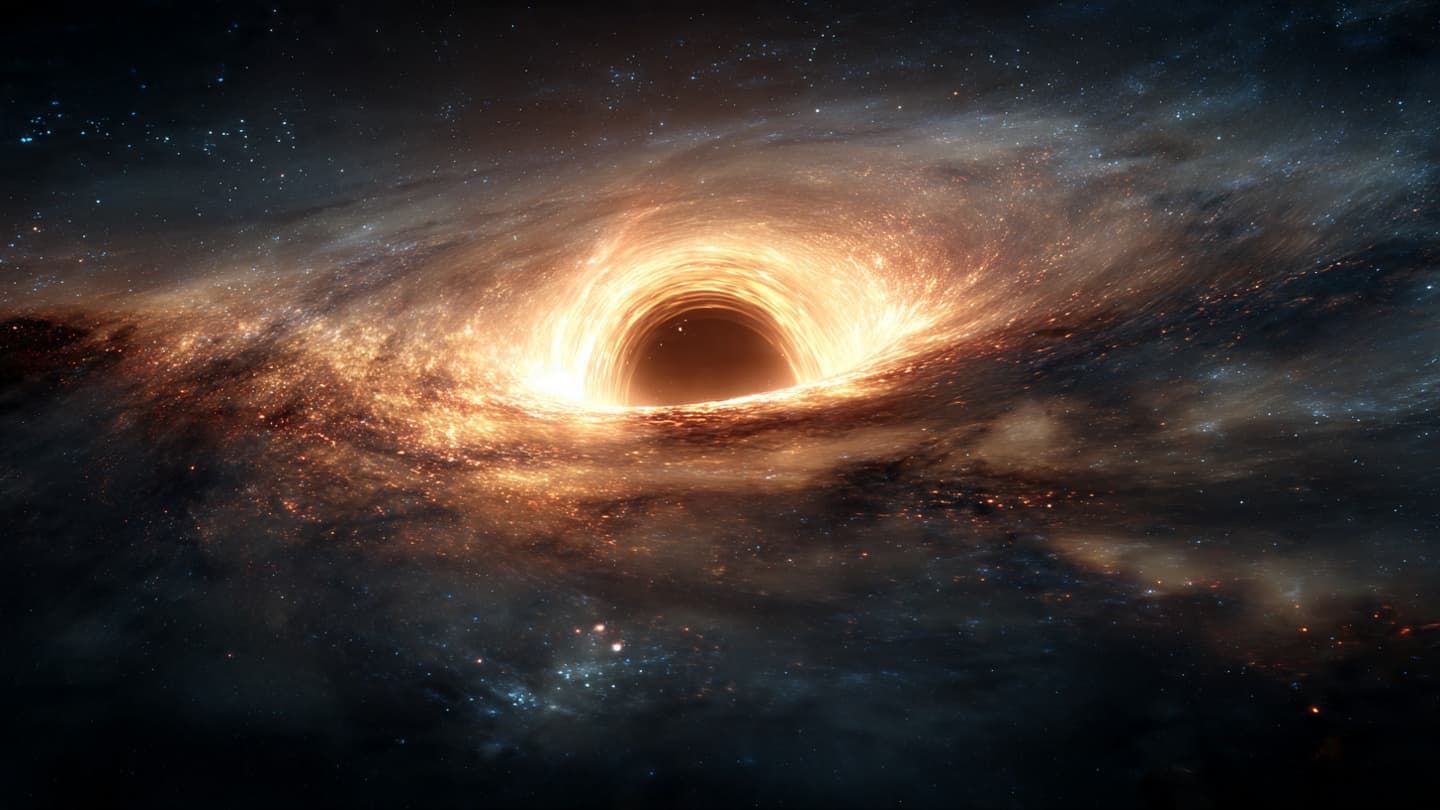
Galaxies often appear serene from afar, like islands of light drifting through an immense cosmic ocean. Yet at their centers, powerful forces quietly shape their destinies. New findings from observations made by the XRISM mission suggest that winds generated near supermassive black holes may evolve on remarkably short timescales, offering scientists fresh insight into how galaxies eventually cease forming stars.
The X-ray Imaging and Spectroscopy Mission, known as XRISM, was launched through an international collaboration led by Japan with contributions from NASA and other partners. Designed to observe energetic phenomena across the universe, the observatory provides exceptionally detailed measurements of X-ray emissions.
Recent observations revealed that winds flowing outward from material surrounding a supermassive black hole can undergo significant changes within roughly three hours. Such rapid variability challenges earlier assumptions that these large-scale outflows remain relatively stable over extended periods.
These black hole-driven winds are important because they can push gas away from galaxies. Gas serves as the raw material needed for star formation, and when enough gas is removed or heated, the birth of new stars gradually slows or stops altogether.
Astronomers often refer to this process as galaxy quenching. Understanding exactly how and when quenching occurs remains one of modern astrophysics' central questions, as it influences the long-term evolution of galaxies throughout cosmic history.
Researchers also developed new analytical tools capable of predicting how such energetic outflows affect their host galaxies. Improved models may allow scientists to estimate when a galaxy is likely to experience declining star formation activity.
The findings highlight the dynamic relationship between supermassive black holes and the galaxies surrounding them. Rather than acting as distant spectators, black holes appear deeply connected to the broader environments in which they reside.
Future observations from XRISM and other observatories are expected to refine these predictions further, helping astronomers better understand the complex mechanisms governing galaxy evolution across billions of years.
AI Image Disclaimer: Some visual illustrations in this report were produced with AI assistance and are intended solely as conceptual representations.
Sources: NASA, JAXA, Nature Astronomy, ESA
Published by Banx Network. This article is part of the Banx decentralized media programme, powered by the BXE token on the XRP Ledger.



