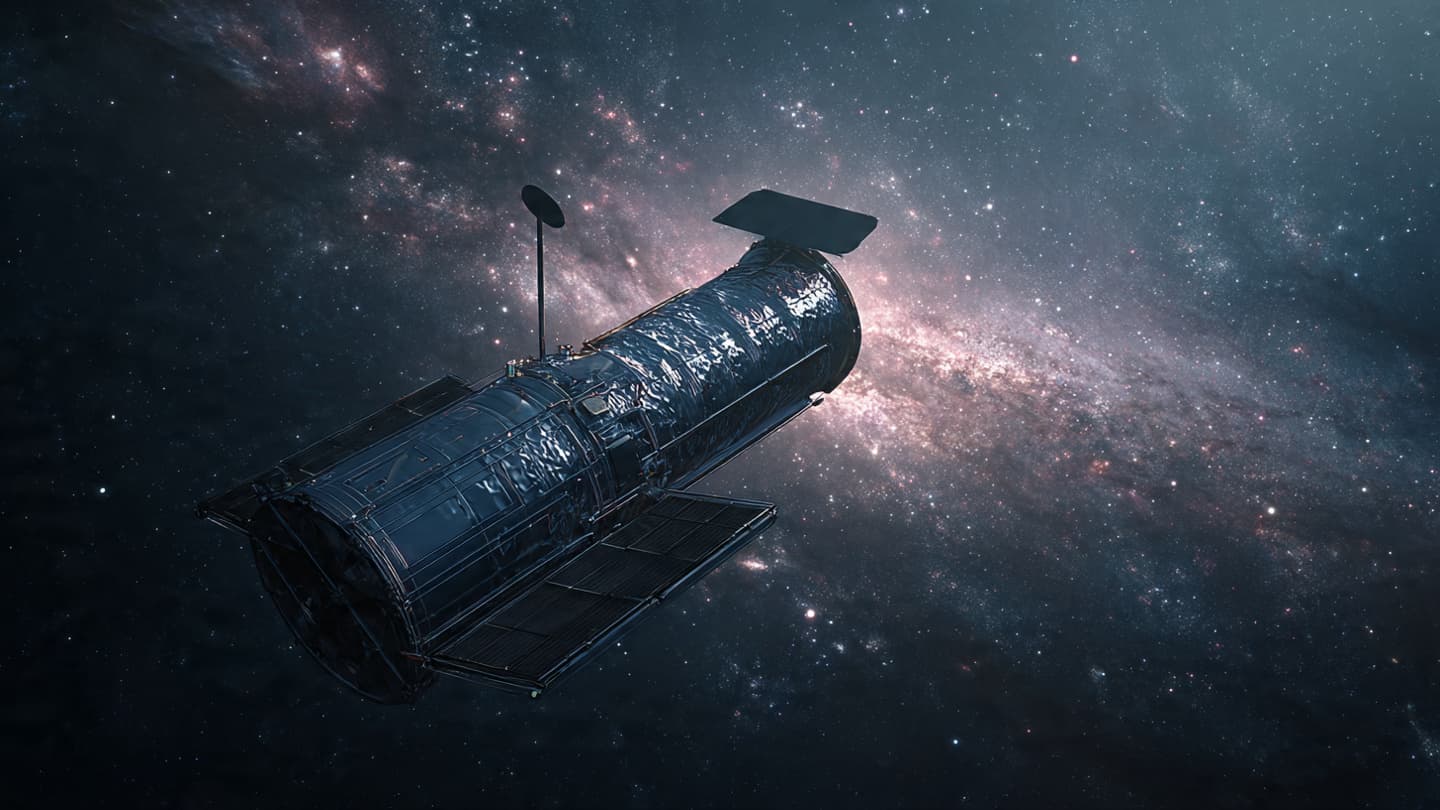
Modern astronomy often advances through instruments that quietly extend human vision beyond natural limits. From early telescopes pointed toward the Moon to giant observatories orbiting Earth today, each generation of technology has revealed a universe larger and more complex than previously imagined. NASA’s upcoming Nancy Grace Roman Space Telescope is expected to continue that tradition with ambitious new scientific goals.
Named after pioneering astronomer Nancy Grace Roman, often called the “mother of Hubble,” the telescope is being designed to study some of the universe’s biggest mysteries, including dark energy and distant exoplanets. Scientists hope the mission will complement discoveries already made by observatories such as Hubble and the James Webb Space Telescope.
One major objective of the Roman Telescope involves investigating dark energy, the unknown force believed to drive the accelerating expansion of the universe. Although astronomers can observe the effects of cosmic expansion, the nature of dark energy itself remains largely unexplained.
Researchers plan to use the telescope’s wide-field imaging capabilities to map enormous sections of the universe with exceptional precision. By studying the distribution of galaxies and cosmic structures over time, scientists hope to better understand how dark energy influences large-scale cosmic evolution.
The mission will also contribute significantly to exoplanet research. Using advanced observation techniques, Roman may detect thousands of planets orbiting distant stars, including worlds difficult to identify through current methods. Scientists believe the telescope could greatly expand understanding of planetary systems throughout the Milky Way.
Unlike some previous missions focused on narrow observational targets, Roman’s wide field of view will allow astronomers to survey vast regions of space efficiently. Researchers compare the difference to viewing the universe through a panoramic lens rather than a narrow telescope tube.
The project reflects decades of technological development and international scientific collaboration. Engineers continue designing instruments capable of operating in the harsh environment of space while collecting extraordinarily detailed cosmic data across many years of observation.
Public interest in space exploration remains strong partly because such missions connect scientific discovery with deeper philosophical questions. Research into distant galaxies and planets often inspires reflection about humanity’s place within an immense and evolving universe.
As preparations for the Roman Telescope continue, scientists remain aware that every new observatory tends to produce unexpected discoveries alongside planned objectives. In astronomy, each clearer view into the cosmos often reveals not certainty, but even greater wonder.
AI Image Disclaimer: Some space illustrations in this article were generated using AI-assisted imagery for scientific visualization purposes.
Sources: NASA, Jet Propulsion Laboratory, Space.com, Scientific American, Nature
Published by Banx Network. This article is part of the Banx decentralized media programme, powered by the BXE token on the XRP Ledger.