
Key Highlights
- Political Landscape:Hungary's governance is evolving under Viktor Orbán.
- Incremental Changes:Legal and institutional shifts shape future elections.
- International Concerns:European institutions monitor Hungary's democratic integrity.
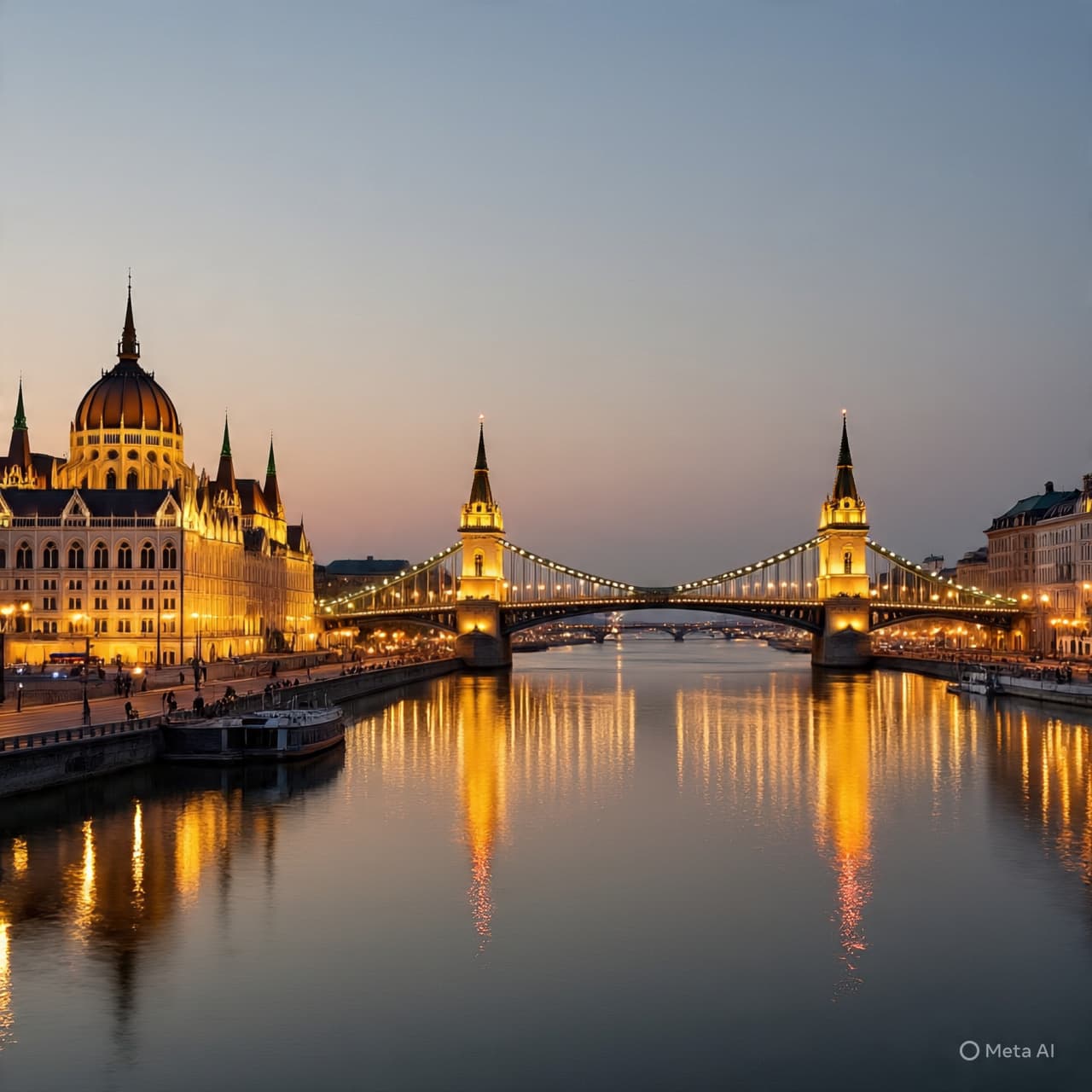
Hungary's political landscape is undergoing a subtle yet significant transformation under the leadership of Viktor Orbán. The Danube River, flowing through Budapest, serves as a metaphor for the steady, often unnoticed changes that are reshaping the country's governance. As bridges connect various neighborhoods, the political framework is being linked and divided in ways that may not be immediately apparent but will have lasting implications for the future.
Orbán's tenure, which has spanned over a decade, has been characterized by a series of strategic measures that extend beyond the immediate electoral cycle. These measures include adjustments to electoral rules, judicial reforms, and the consolidation of power across key institutions. While these changes may seem technical, they carry profound implications for the nature of governance in Hungary. They not only define who holds power but also how that power is exercised and contested.
The concept of “traps” has emerged in discussions about Hungary's political evolution. This term refers to the layered mechanisms that can limit the options available to potential successors or challengers. Rather than relying on a single decisive event, the political landscape is shaped by a series of incremental changes that create a framework within which political competition occurs. This approach reflects a long-term vision of authority that prioritizes stability and continuity over immediate electoral gains.
Supporters of Orbán argue that these changes are necessary for ensuring national stability and direction. However, critics contend that they restrict the space for opposition and undermine the fluidity essential for a healthy democracy. The ongoing political life in Hungary, characterized by regular elections and public discourse, unfolds within a carefully constructed framework that has been refined over time. For emerging political figures, the path to leadership appears increasingly constrained by the conditions established long before they enter the arena.
The implications of these developments extend beyond Hungary's borders. European institutions and international observers have expressed concerns about the balance of power and the resilience of democratic norms within the country. As Hungary navigates its internal dynamics, it remains an active participant in broader regional structures, with its political evolution intersecting with its relationships in the European Union and beyond.
The quiet nature of these changes is striking. Unlike moments of abrupt upheaval, the transformation of Hungary's political landscape unfolds gradually, often without a single defining moment. Laws are amended, institutions are adjusted, and over time, the cumulative effects become more visible. This gradual reshaping of the political landscape is akin to the slow but steady course of the Danube, which continues to flow through Budapest, reflecting the ongoing evolution of governance in Hungary.
As the light shifts over the city, the question of Hungary's political future remains open, albeit more narrowly defined than before. The structures now in place will not only influence the next election but will also shape the possibilities that follow. Ultimately, the narrative is less about a singular successor and more about the conditions under which succession occurs. In these carefully constructed and quietly reinforced conditions, one can discern the outline of a future that has been, at least in part, anticipated in advance.
Published by Banx Network. This article is part of the Banx decentralized media programme, powered by the BXE token on the XRP Ledger.



