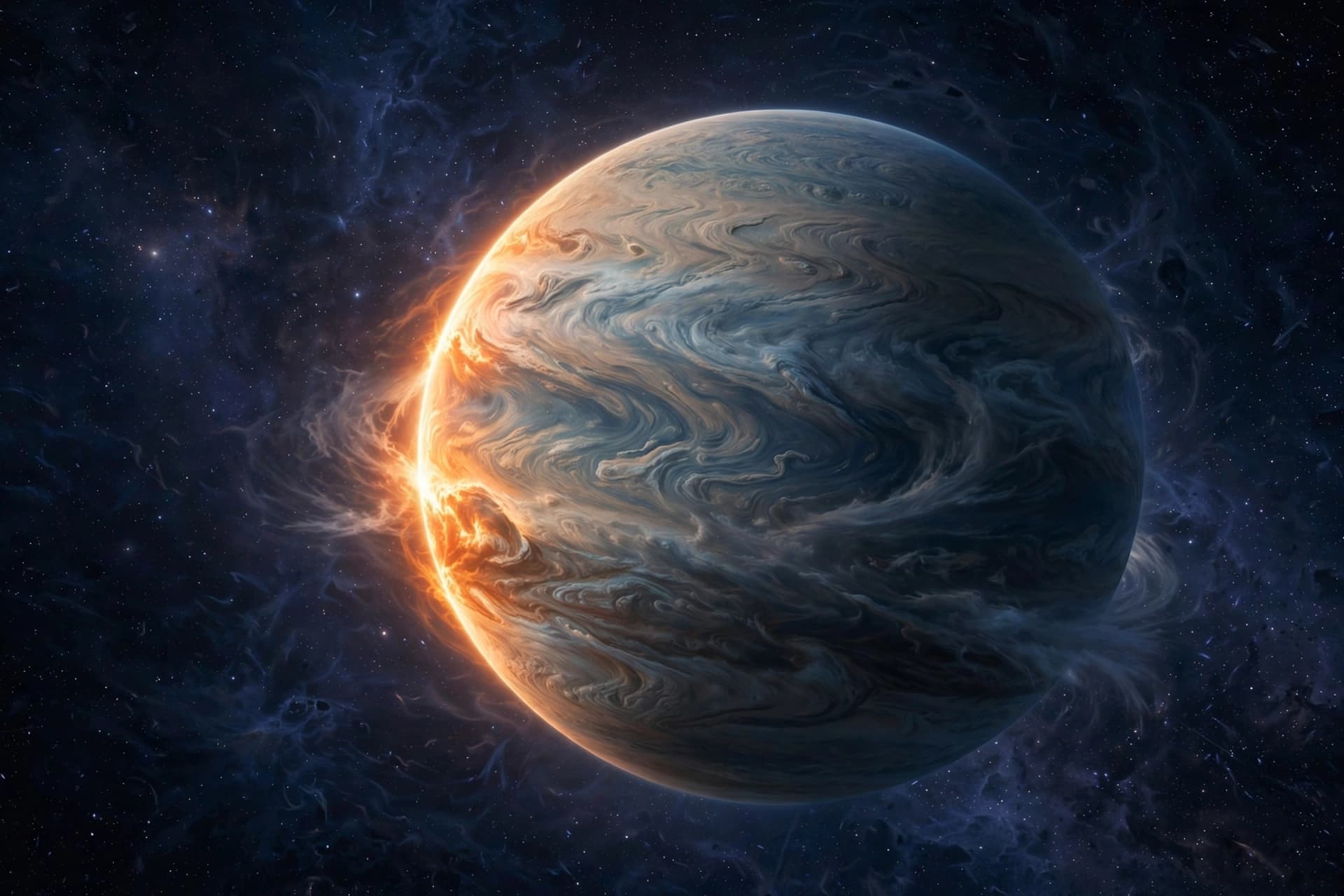
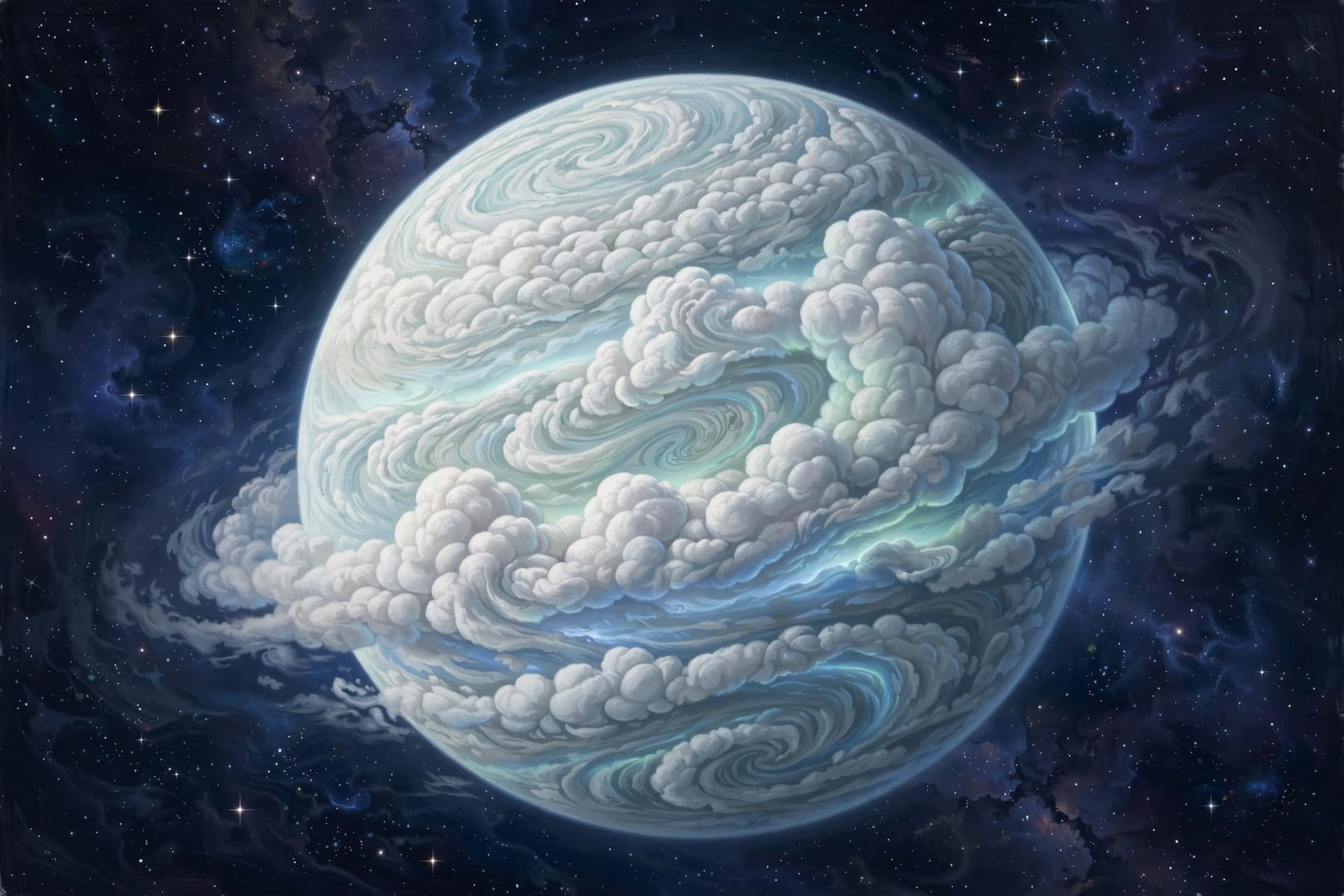
From a distance measured in light rather than miles, the planet appears unremarkable. A small point of mass circling a distant star, one among thousands now cataloged beyond our solar system. Yet when astronomers looked closer, they found something unsettlingly familiar. A rocky world, similar in size to Earth, shaped by the same physical rules—yet frozen into a version of reality our planet narrowly avoided.
The exoplanet lies roughly 150 light-years away, close enough in cosmic terms to feel almost neighboring. It orbits its star at a distance that would be survivable if conditions were right. Instead, the world is locked in cold, its surface likely dominated by ice, its atmosphere thin or altered by forces that pulled it away from Earth’s trajectory.
Scientists describe it as a kind of mirror image—a “bizarro” Earth that shows what happens when familiar ingredients assemble under harsher circumstances. Gravity behaves the same. Rock forms the same way. But without sufficient warmth or atmospheric protection, the planet never crossed the narrow threshold that allows oceans to remain liquid and climates to stabilize.
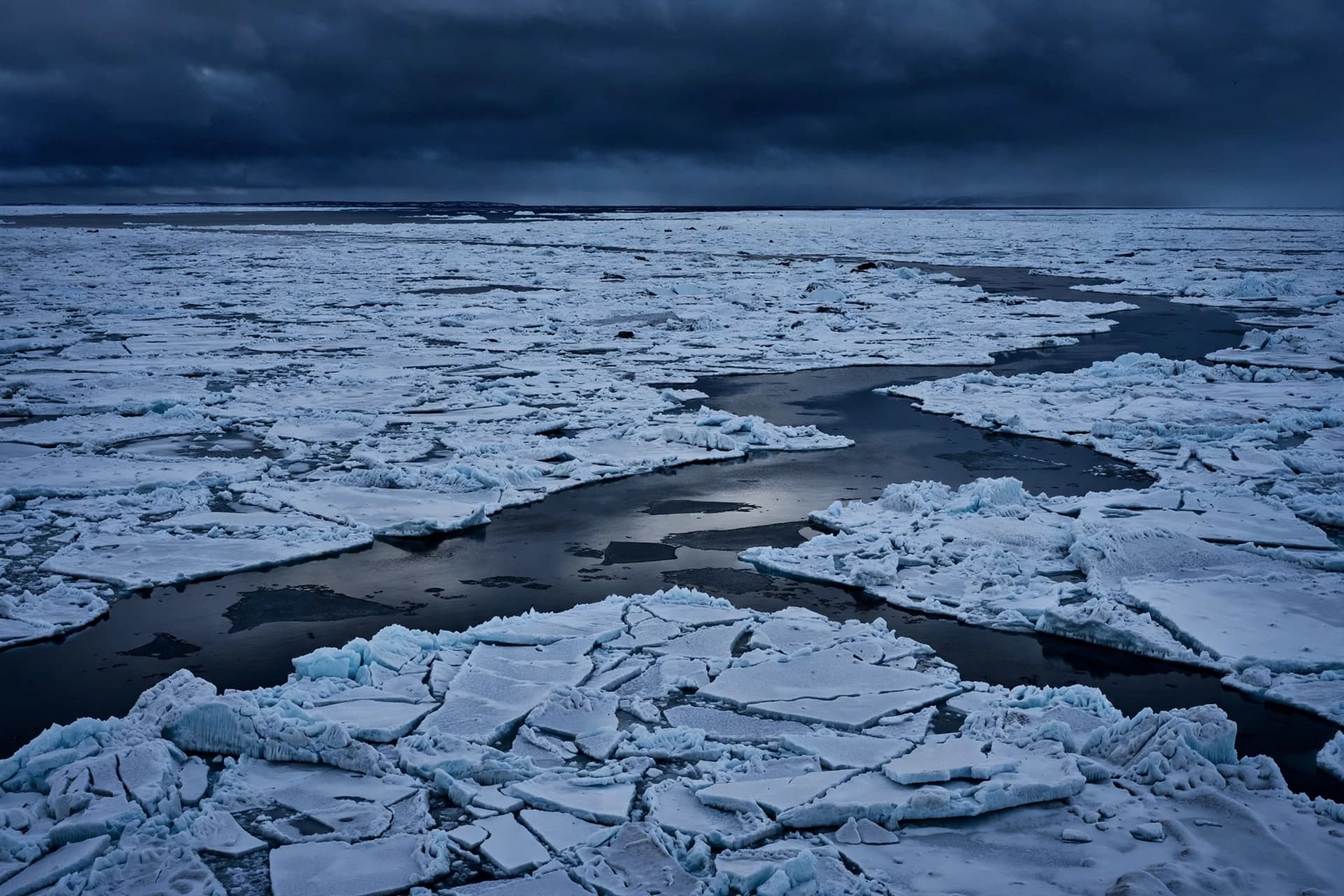
Observations suggest a world where ice may cover much of the surface, reflecting starlight back into space rather than absorbing it. This feedback loop deepens the cold, reinforcing conditions that make recovery unlikely. The planet may still experience geological activity beneath its frozen shell, but whatever dynamism exists is sealed away from view.
What makes the discovery compelling is not the planet’s hostility, but its resemblance. For decades, the search for Earth-like worlds focused on finding comfort—places where life might thrive. This planet offers something else: perspective. It shows how fragile habitability really is, how small shifts in orbit, atmosphere, or stellar behavior can tip a planet into permanence of ice.
In this frozen twin, scientists see a cautionary outline. Earth, too, has known ice ages. It has hovered near climatic edges before. The difference is timing, chemistry, and a chain of events that, once broken, cannot easily be restored. The nearby exoplanet becomes a reminder that Earth’s balance is not guaranteed by size or composition alone.
Though far beyond reach, the planet is close enough to study in detail as instruments improve. Each observation refines our understanding not just of distant worlds, but of our own. The frozen Earth-that-isn’t stands quietly in the dark, offering no promise of life—but plenty of insight into how rare a living planet may truly be.
AI Image Disclaimer
Illustrations are AI-generated and serve as conceptual representations.
Sources
Astronomical journal publications Observational exoplanet research teams Space telescope mission data Planetary science reviews
Published by Banx Network. This article is part of the Banx decentralized media programme, powered by the BXE token on the XRP Ledger.