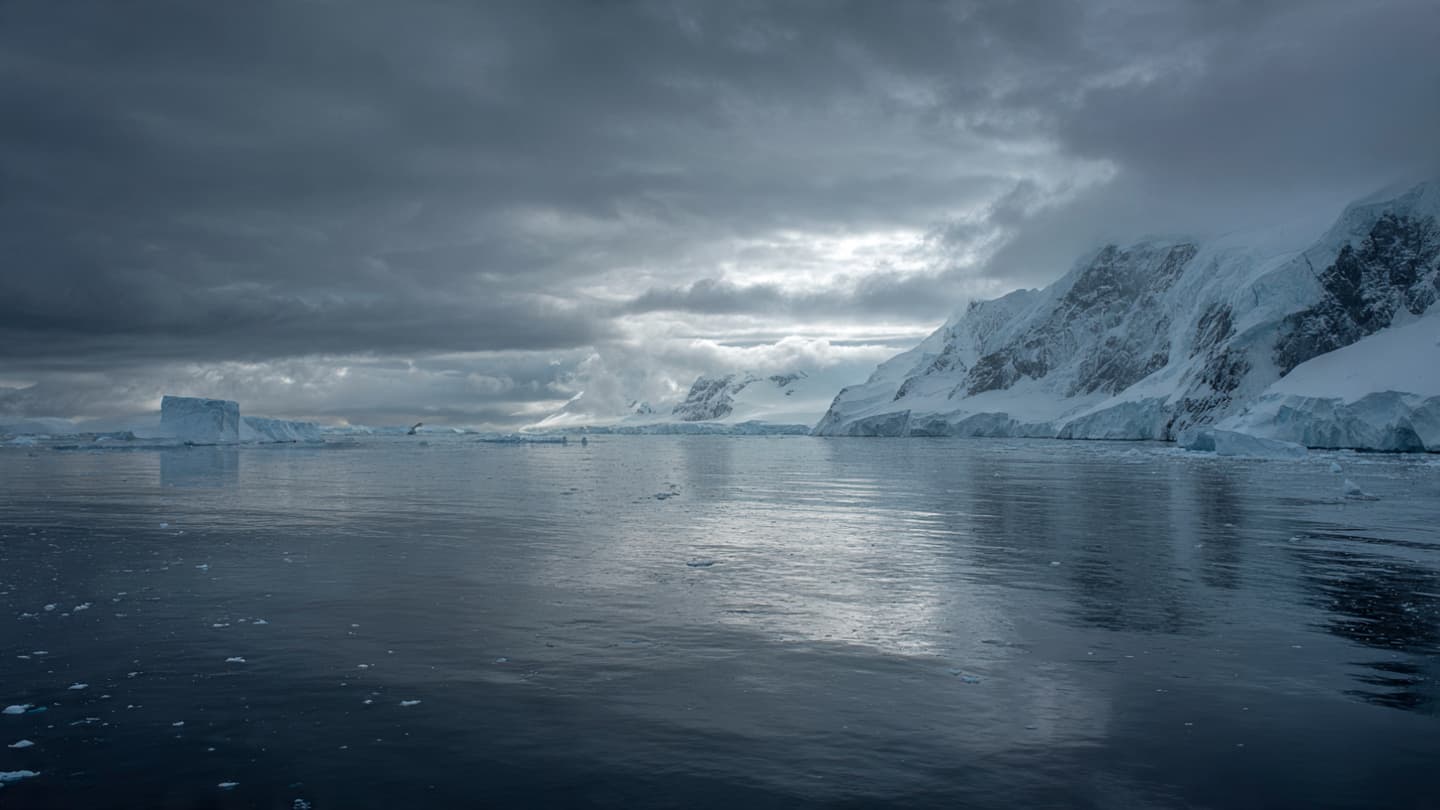
Antarctica has long been imagined as a place of stillness, a vast white silence at the bottom of the world. Yet even silence can shift when the atmosphere above it begins to change in unfamiliar ways, as if the planet itself were adjusting its breath.
Recent scientific observations have pointed toward a convergence of climate pressures affecting Antarctica at once. These include warming ocean currents reaching further under ice shelves, shifts in atmospheric circulation patterns, and increased surface melt during unusually warm periods. Together, they form what some researchers describe as a “triple influence” on the continent’s stability.
Satellite measurements from agencies such as NASA and the European Space Agency (ESA) have shown fluctuations in ice sheet mass loss over the past decade, particularly in West Antarctica and parts of the Antarctic Peninsula. While variability is expected in such a large system, the persistence of certain warming signals has drawn continued scientific attention.
Ocean-driven melt is considered especially significant. Warmer deep water intrusions beneath floating ice shelves can weaken them from below, reducing their ability to hold back inland glaciers. This process does not always appear dramatic on the surface, yet it can reshape long-term ice dynamics.
At the same time, atmospheric changes linked to shifting wind patterns around the Southern Ocean have altered how heat and moisture are transported toward the continent. These changes can amplify surface melting during rare but impactful warm air intrusions.
Scientists studying ice cores and satellite data, including work referenced by institutions such as the British Antarctic Survey and peer-reviewed journals like Nature Climate Change, emphasize that Antarctica does not respond to climate drivers in a single, uniform way. Instead, it reacts through interconnected systems that can reinforce one another.
The result is not a sudden collapse narrative, but a gradual and complex rebalancing of ice, ocean, and air. Researchers continue to refine models to better understand how these interacting factors may evolve in the coming decades.
For now, Antarctica remains a continent of extremes and resilience, but one that is increasingly shaped by forces far beyond its icy horizon. Scientists continue monitoring these changes closely as part of long-term global climate observation efforts.
AI Image Disclaimer: Images in this article are AI-generated for illustrative and editorial visualization purposes only.
Sources: NASA, European Space Agency (ESA), British Antarctic Survey, Nature Climate Change
Published by Banx Network. This article is part of the Banx decentralized media programme, powered by the BXE token on the XRP Ledger.