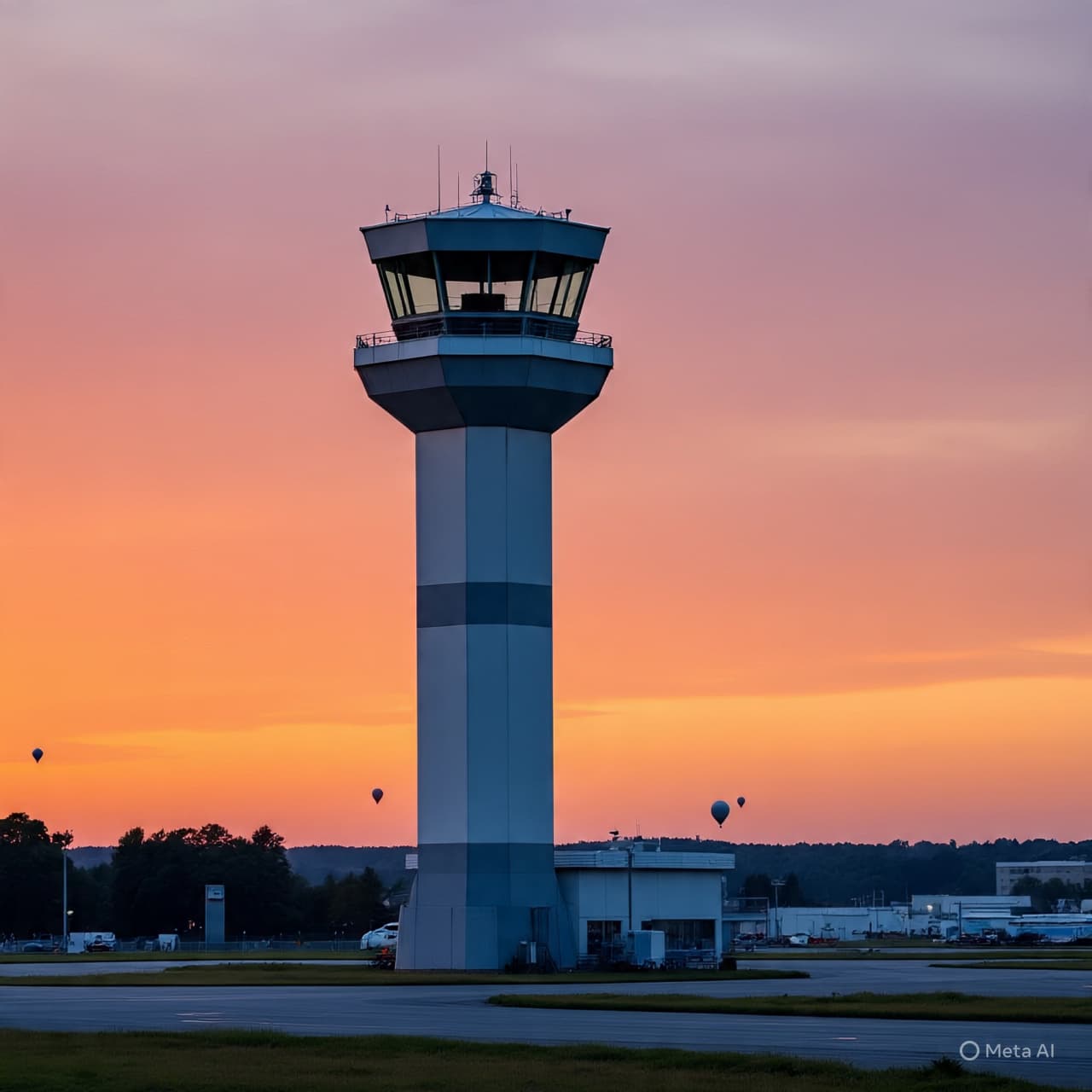
Sometimes, it doesn’t take a missile or a storm to disrupt the skies — just a few drifting balloons. On a recent morning, Vilnius Airport, Lithuania’s main international hub, abruptly suspended operations after unidentified balloons entered its controlled airspace. The event, while brief, cast a quiet shadow over Europe’s most vigilant eastern frontier.
According to Lithuania’s National Crisis Management Centre, the closure was a precautionary move. The airspace around Vilnius was temporarily restricted, and air traffic diverted, while defense officials assessed the situation. No hostile activity was confirmed, yet the response underscored a deeper unease — the kind that lingers when geopolitics meets uncertainty in the air.
For a nation sitting on NATO’s eastern flank, even a balloon can carry the weight of symbolism. Memories of last year’s cross-border balloon incidents — some carrying cameras or propaganda materials — still haunt the Baltic region. In a neighborhood defined by proximity to Russia and Belarus, no intrusion is taken lightly.
Airports are meant to embody movement and freedom. Yet, in that brief pause above Vilnius, the world was reminded how fragile that freedom can be. The incident speaks less about balloons, and more about vigilance — how, in modern Europe, security has become a matter of air currents and radar signals, not just borders and treaties.
By evening, flights resumed, the airspace cleared, and normalcy returned. But the pause left a mark: in today’s security landscape, even the most innocent shapes in the sky can cast long shadows.
AI Image Disclaimer: This image is an AI-generated illustration created for editorial visualization purposes only.
Sources: This article is based on reporting from Reuters, BBC, Euronews, and Associated Press.
Published by Banx Network. This article is part of the Banx decentralized media programme, powered by the BXE token on the XRP Ledger.