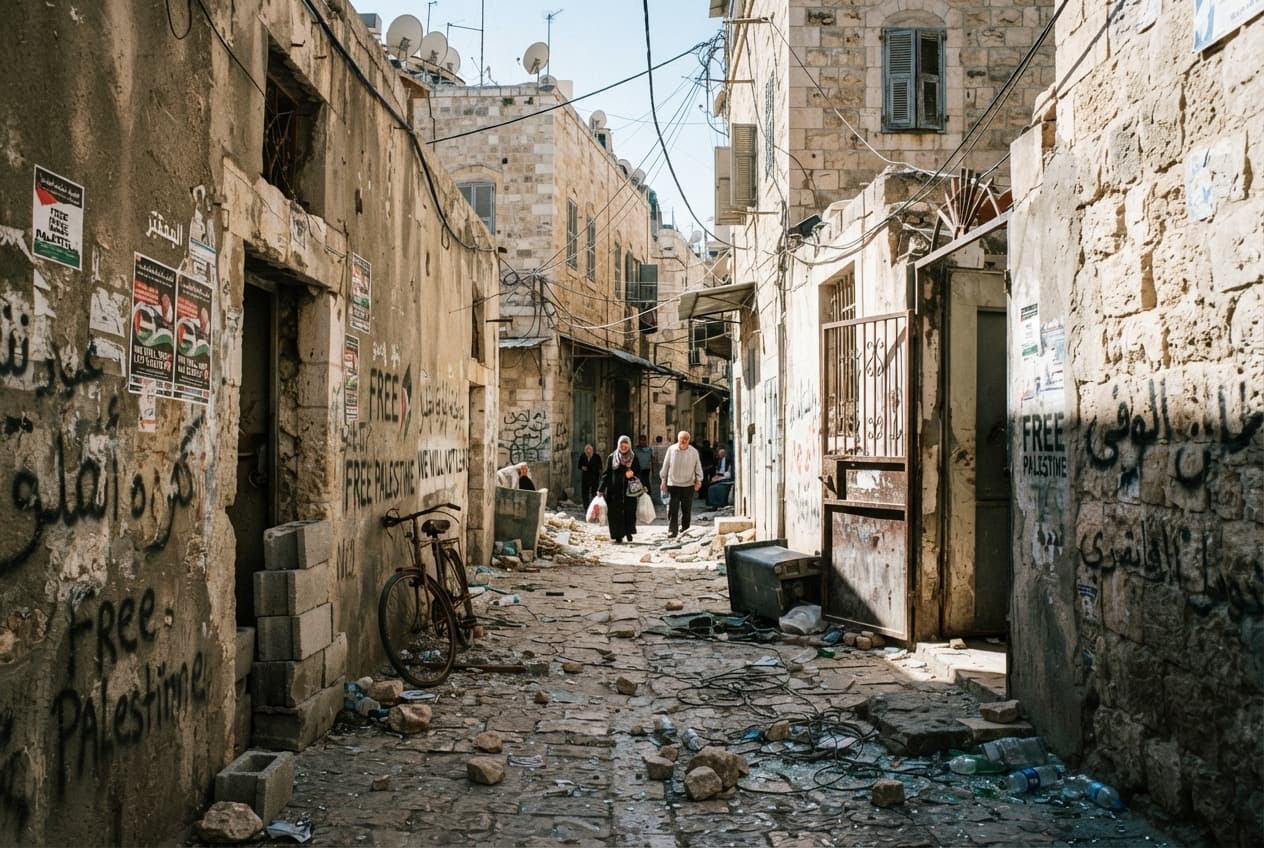
Dawn in Gaza often arrives in layers — a pale wash over concrete rooftops, the distant hum of generators, the low murmur of families beginning another day under fragile quiet. This week, that quiet fractured again as Israeli airstrikes killed five people, according to local health authorities, testing the resilience of a ceasefire already under visible strain.
The strikes came amid rising tensions between Israel Defense Forces and armed factions in the enclave, with each side accusing the other of violations. Israeli officials said the operation targeted militant infrastructure following reported security threats, while Palestinian sources described civilian casualties among the dead. As in many such episodes, the immediate facts were layered with competing narratives, each shaped by security concerns and grief.
The ceasefire — brokered in recent weeks with the involvement of regional mediators including Egypt and Qatar — had aimed to pause months of devastating conflict. It provided space for limited humanitarian aid deliveries and tentative diplomatic engagement. Yet truces in Gaza have historically proven delicate, susceptible to rapid unraveling after isolated incidents or retaliatory cycles.
Residents reported renewed fear as explosions echoed across neighborhoods. Emergency crews moved through damaged streets, while hospitals, already stretched by prolonged hostilities, absorbed another wave of casualties. The humanitarian landscape in Gaza remains severe, with infrastructure damaged, displacement widespread, and access to basic services constrained.
Israeli authorities have maintained that military actions are directed at militant groups responsible for rocket fire and cross-border attacks. Palestinian officials counter that densely populated urban terrain makes civilian harm difficult to avoid, and that repeated escalations undermine prospects for sustained calm. International actors have urged restraint on all sides, warning that further deterioration could collapse ceasefire arrangements altogether.
The broader conflict between Israel and Palestinian armed groups has cycled through flare-ups and pauses for years, each round leaving deeper scars on communities. Ceasefires are often negotiated in moments of exhaustion, yet sustaining them requires political will, credible enforcement mechanisms, and the management of incidents that can quickly reignite confrontation.
As diplomats worked behind closed doors to preserve the truce, ordinary life in Gaza continued in cautious fragments — markets reopening briefly, children navigating damaged streets, families scanning news updates for signs of what might come next. In Israel’s southern communities, residents also monitored developments, wary of renewed rocket fire.
Whether the ceasefire holds will depend on decisions made in the hours and days ahead. For now, five more lives have been lost, and the fragile pause that once felt like a narrow bridge between violence and relief appears once again under strain.
In the fading light of evening, smoke thinned above the skyline, and the city’s generators resumed their steady rhythm. Between diplomacy and detonation, Gaza waits — suspended in the uncertain space where hope for calm meets the reality of conflict.
AI Image Disclaimer
Visual representations were generated using AI technology and are intended for illustrative purposes only.
Sources
Israel Defense Forces
Gaza Health Ministry
United Nations Office for the Coordination of Humanitarian Affairs
Reuters
Published by Banx Network. This article is part of the Banx decentralized media programme, powered by the BXE token on the XRP Ledger.