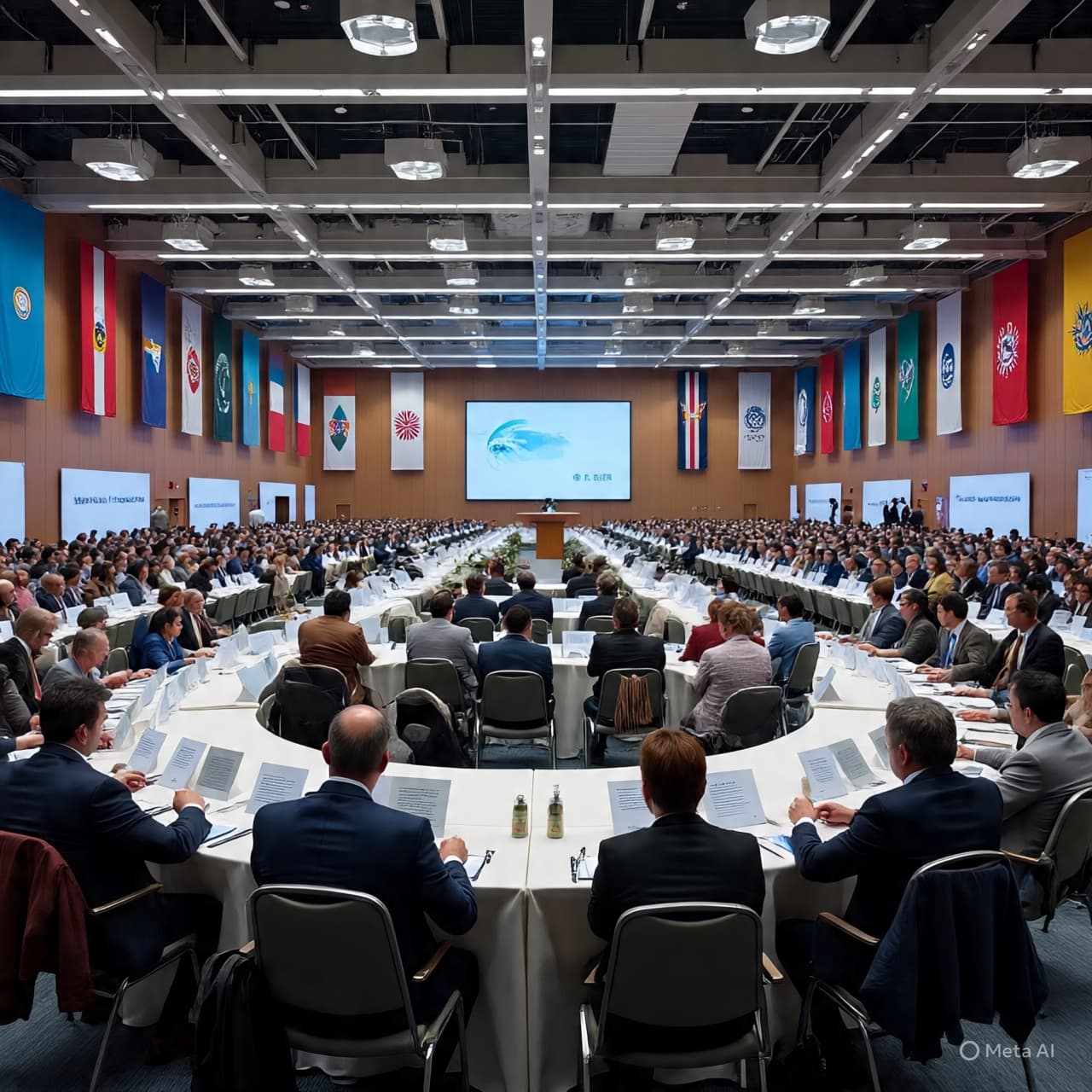
In the leafy expanse of Belém’s conference halls, world leaders gathered beneath banners of unity with a shared purpose: to confront a crisis that does not heed borders or politics. Yet beyond the symbolic green of the Amazon backdrop, cracks in that unity were visible — not as dramatic ruptures, but as quiet fractures that suggest a more fragile form of climate cooperation in an age of shifting geopolitical winds.
The 30th session of the Conference of the Parties — COP30 — brought representatives from nearly every nation to Brazil at the close of 2025. Here, negotiators wrestled not only with rising temperatures and scientific urgency, but with an unmistakable absence: that of the United States, the world’s second‑largest emitter of greenhouse gases. Under President Donald Trump’s administration, the U.S. declined to send a high‑level delegation, signaling a departure from the multilateral engagement that has long underpinned global climate diplomacy.
In plenaries and side rooms, the implications of this absence were palpable. Without the active participation of the United States, long‑standing efforts to secure robust commitments — from concrete targets on fossil fuel reduction to agreements on climate finance — foundered on competing priorities and diplomatic caution. This dynamic underscored a broader truth: when one of the world’s major emitters steps back from the table, the delicate architecture of consensus becomes harder to maintain.
Nevertheless, COP30 did not collapse into complete discord. Delegates managed to agree on measures aimed at tripling adaptation finance and advancing transparency frameworks — pragmatic responses to an accelerating climate crisis that demands both equity and accountability. The summit’s final text embraced voluntary indicators for measuring progress and reaffirmed the principle that collective action remains essential, even if binding commitments proved elusive.
Yet the spirit of cooperation felt strained. With the U.S. disengaged at the summit and domestic policy in Washington pulling against climate commitments, other actors stepped forward — from the European Union to states and cities, and coalitions of nations seeking alternative pathways to multilateral progress. In speeches and negotiations, there emerged an implicit acknowledgment that the old model of consensus may need supplementation with more flexible alliances and voluntary frameworks, capable of withstanding political divergence.
Amid these political currents, the climate crisis did not pause. Scientific reports and recent climate records confirm that 2026 is set to be among the hottest years on record, with extreme weather events wiping away lives and livelihoods from Asia to the Americas. This reality — the atmospheric ledger of past emissions — presses on negotiators with a simple yet unyielding demand: outcomes must match urgency, or the world risks crossing climatic thresholds from which there is no return.
Thus COP30’s legacy may be neither triumph nor failure, but a testament to the complexities of global cooperation in turbulent times. In a world where political leadership can shift with an election cycle, climate diplomacy continues not as a monolith but as an evolving network of commitments, pressures, and solidarities. What remains clear is that the planet’s future depends not just on agreements signed under tropical skies, but on the political will — sometimes fragile, sometimes resilient — of nations still willing to act together.
AI Image Disclaimer “Visuals are created with AI tools and are not real photographs.”
Sources The Guardian PBS NewsHour CBS News Reuters South China Morning Post
Published by Banx Network. This article is part of the Banx decentralized media programme, powered by the BXE token on the XRP Ledger.