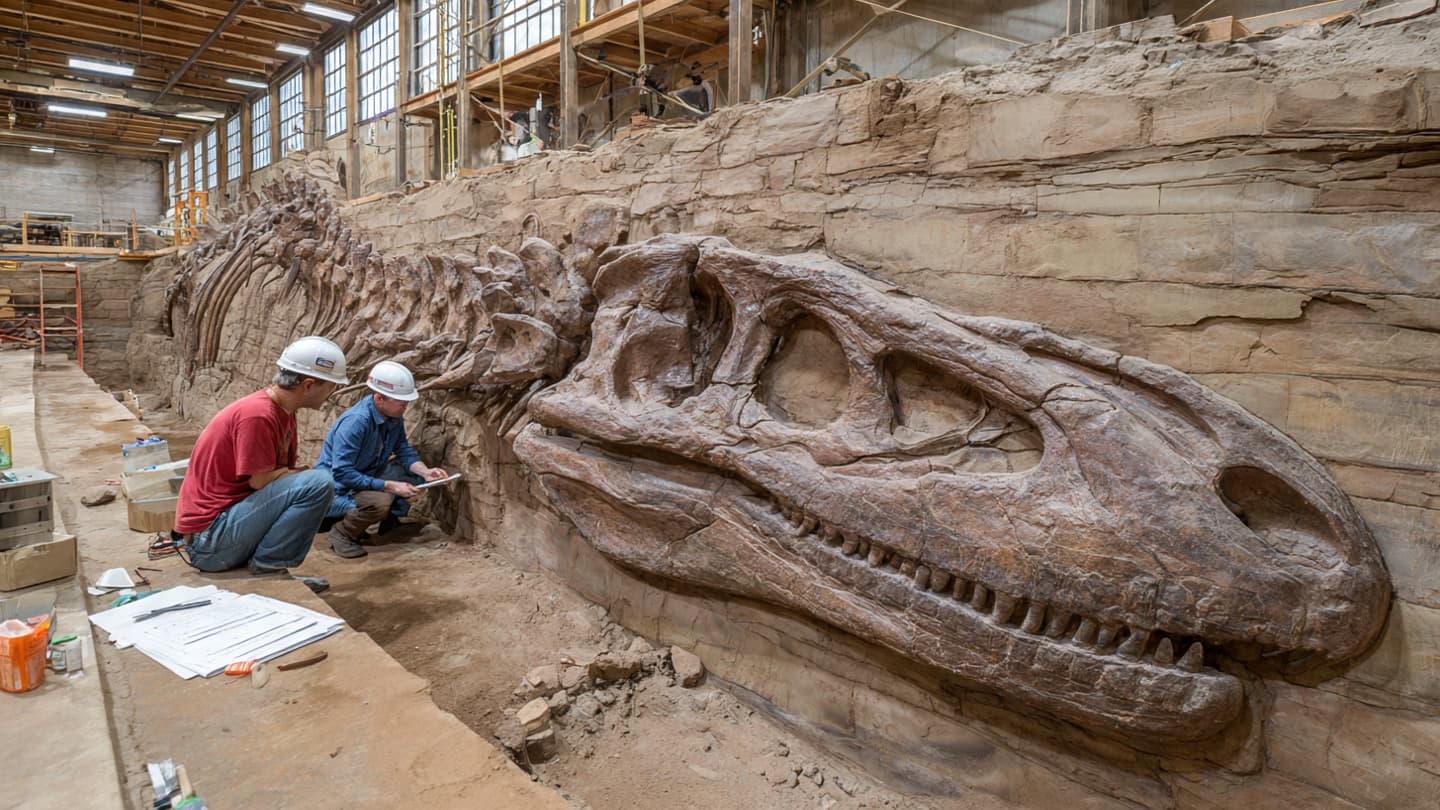
Time has a way of preserving whispers in stone, leaving fragments of ancient lives for modern hands to interpret. Each fossil, quiet and unmoving, carries within it a story that can reshape how we imagine the distant past.
A recently analyzed fossil, dating back approximately 75 million years, has offered new insight into the biology of and its relatives. The discovery centers on previously overlooked anatomical details that suggest unexpected traits within the tyrannosaur lineage.
The fossil, unearthed in North America, belongs to a mid-sized tyrannosaur species that predates the iconic T. rex. Researchers conducted a detailed examination using modern imaging techniques, allowing them to observe structures not easily visible through traditional methods.
One of the most notable findings relates to sensory capabilities. Evidence suggests that these predators may have possessed more refined sensory systems than previously understood, potentially including heightened facial sensitivity. This could have aided in hunting or social behavior.
Additionally, the fossil reveals clues about growth patterns and physical development. Bone structures indicate that tyrannosaurs may have experienced more complex developmental stages, possibly involving changes in behavior or ecological roles as they matured.
Another surprising aspect lies in the skull anatomy. Subtle features point to variations in muscle attachment and jaw mechanics, suggesting that feeding strategies could have been more diverse than once assumed. This challenges the long-standing image of tyrannosaurs as uniform apex predators.
The research also contributes to broader discussions within paleontology about how dinosaur species evolved over time. It highlights the importance of reexamining existing specimens with new technologies, as older discoveries can yield fresh insights under modern scrutiny.
Scientists note that while the findings are compelling, further comparative studies across multiple fossils will be essential to confirm these interpretations. As more specimens are analyzed, a clearer picture of tyrannosaur diversity may emerge.
The fossil serves as a reminder that even well-known prehistoric giants still hold secrets, waiting patiently beneath layers of time.
AI Image Disclaimer: Visual representations in this article include AI-generated imagery to depict prehistoric environments.
Published by Banx Network. This article is part of the Banx decentralized media programme, powered by the BXE token on the XRP Ledger.