
Key Highlights
- Fire detected at Kirishi oil refinery, one of Russia's largest.
- Satellite imagery confirmed sustained heat levels from the blaze.
- Investigations into the cause are currently underway.
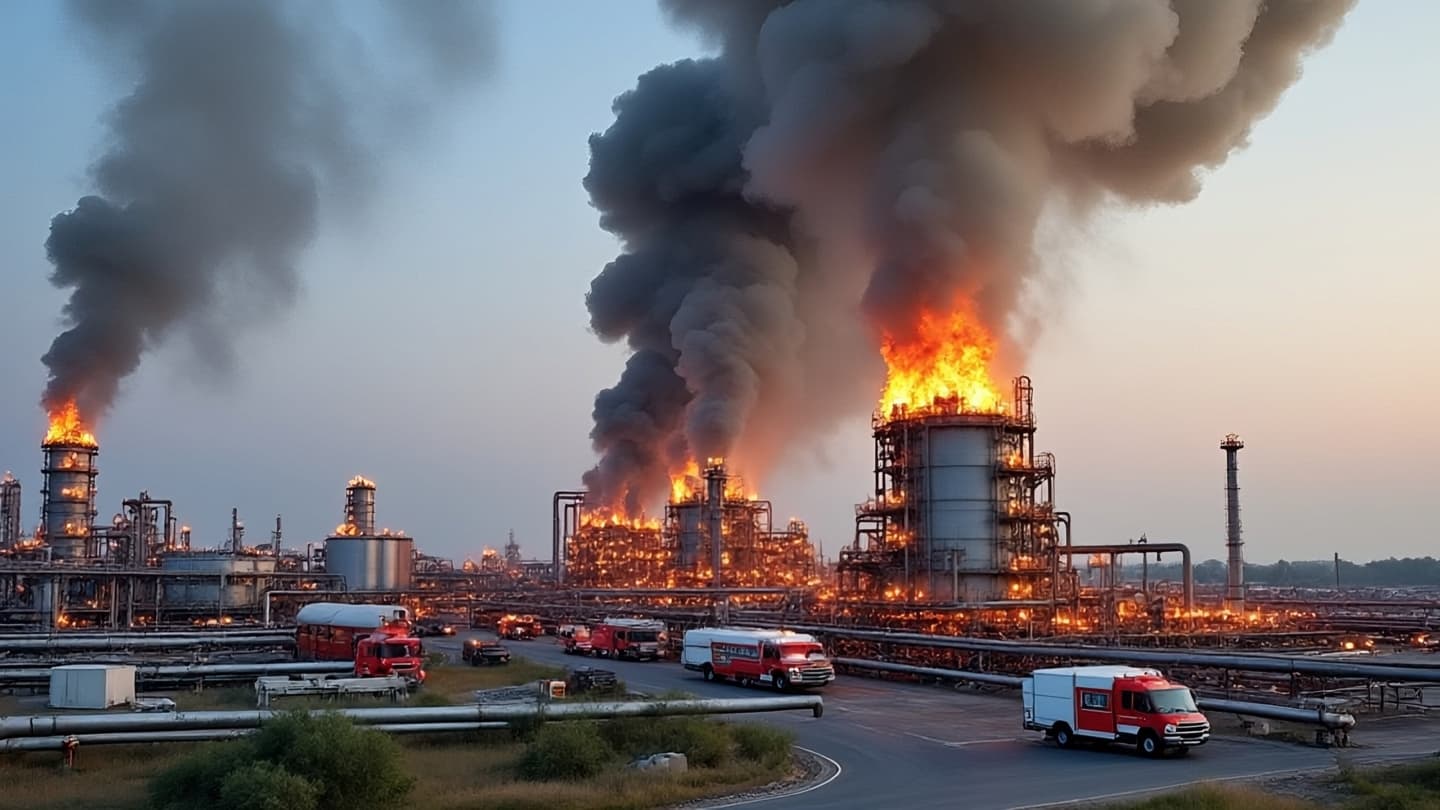
A significant fire erupted at the Kirishi oil refinery, one of Russia's largest refining facilities, located in the Leningrad region. This incident has garnered attention not only locally but also internationally, as satellite imagery from NASA detected heat signatures indicative of a substantial blaze. The refinery plays a crucial role in Russia's fuel production and distribution network, making any disruption noteworthy.
Reports indicate that the fire was identified through advanced satellite monitoring systems that track thermal anomalies. These systems are capable of detecting large-scale events even in remote or restricted areas, providing critical data for emergency response teams. The imagery suggested that the heat levels were sustained, indicating an ongoing fire rather than a brief incident.
Local authorities have confirmed the occurrence of the fire and have mobilized emergency services to manage the situation. Initial efforts have focused on containing the flames and preventing their spread to adjacent units within the refinery complex, where flammable materials are stored and processed. The swift response is crucial in mitigating potential hazards associated with such industrial fires.
As of now, the cause of the fire remains undetermined. Officials have stated that investigations are underway, exploring various possibilities including technical faults, operational issues, or external factors that may have contributed to the incident. Importantly, there has been no immediate confirmation of casualties, which is a relief given the scale of the facility and the potential for harm.
The Kirishi refinery holds strategic importance not only for the regional energy supply but also within the broader context of Russia's oil refining industry. Any disruption at such a facility can have far-reaching implications, affecting not just local operations but also the national energy landscape. The incident underscores the vulnerabilities inherent in large-scale industrial operations, which require constant oversight to ensure safety and productivity.
The use of satellite detection technology for monitoring industrial fires has become increasingly valuable. It offers independent verification in situations where on-the-ground information may be limited or delayed. In this instance, NASA's data played a pivotal role in raising early awareness of the fire, allowing for a more coordinated response.
While the fire appears to have been contained, its visibility—both in the sky and in the media—has sparked discussions about infrastructure vulnerabilities. For residents in the surrounding area, the incident has introduced a significant interruption to daily life, as smoke and flames raise concerns about safety and environmental impact.
As investigations continue, the focus will remain on understanding the origin of the fire and ensuring operational stability moving forward. The Kirishi refinery stands as both a vital asset for Russia's energy needs and a reminder of the complexities and risks associated with large-scale industrial operations.
Published by Banx Network. This article is part of the Banx decentralized media programme, powered by the BXE token on the XRP Ledger.



