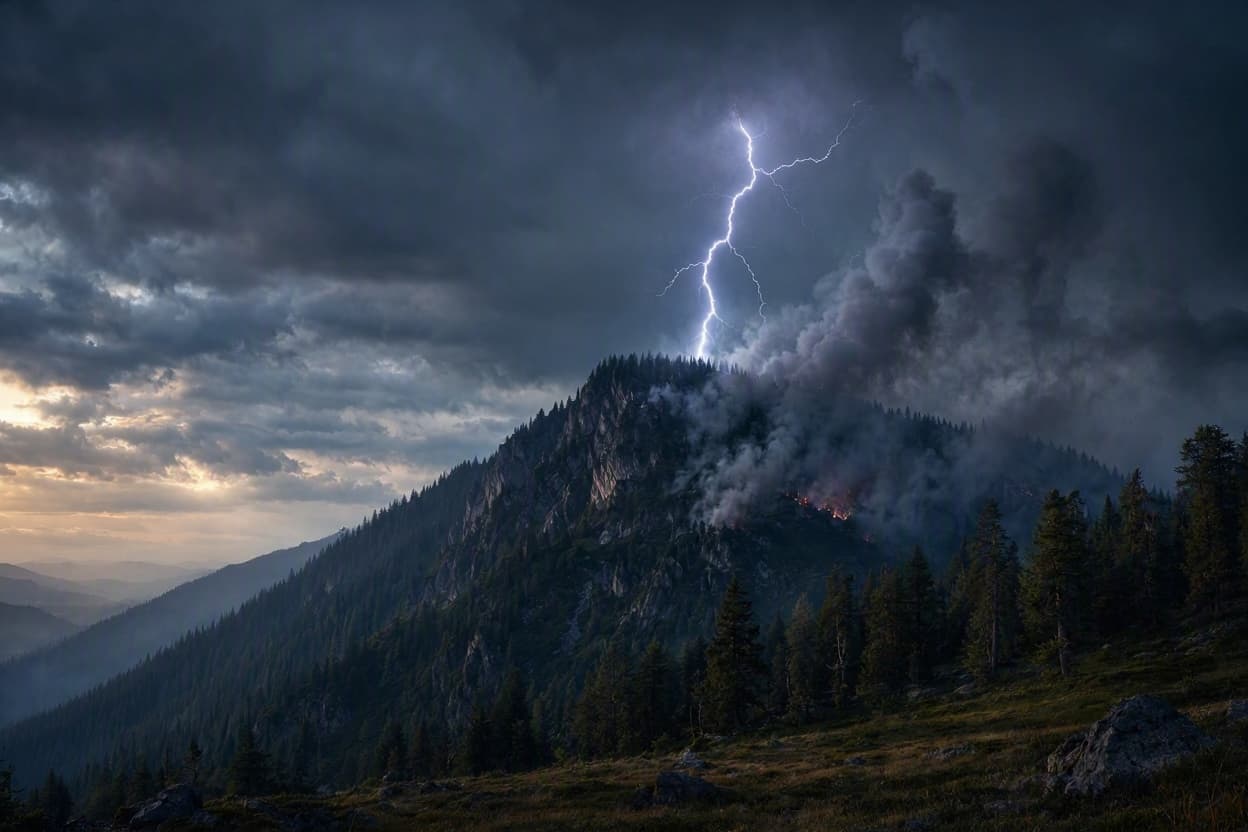
On the rugged slopes of Vancouver Island, where dense forests meet the sky, a dramatic sequence of events unfolded recently. A bolt of lightning struck the mountainside near Port Alberni, and within fifteen minutes, flames began to rise from the dry underbrush. This rapid ignition, captured by observant locals, serves as a vivid illustration of the power of nature and the heightened risk of wildfires during dry thunderstorms. It is a reminder that in the delicate balance of the ecosystem, a single spark can quickly transform into a significant threat.
The incident occurred during a brief but intense thunderstorm that passed over the Beaufort Range. Witnesses reported seeing the lightning strike, followed shortly by the emergence of smoke and fire. The BC Wildfire Service confirmed that lightning was the likely cause, a common occurrence in the region during summer months when vegetation is dry and susceptible to ignition. The speed at which the fire started highlights the critical importance of early detection and rapid response.
Dry lightning, which occurs without significant rainfall, is particularly dangerous because it provides the ignition source without the moisture needed to suppress the resulting flames. In conditions of low humidity and high temperatures, even small fires can spread rapidly, driven by wind and fueled by dense forest litter. The fifteen-minute window between strike and visible fire underscores how quickly situations can escalate in such environments.
Firefighters were dispatched to the scene promptly, working to contain the blaze before it could spread to nearby residential areas or critical infrastructure. Their efforts were aided by the remote location of the strike, which allowed for aerial monitoring and strategic ground operations. However, the terrain remains challenging, with steep slopes and thick vegetation complicating access and suppression efforts.
This event is part of a broader pattern of wildfire activity on Vancouver Island, where lightning storms have ignited numerous blazes in recent weeks. Authorities have urged residents to remain vigilant, reporting any signs of smoke or fire immediately. Public awareness and cooperation are essential components of wildfire management, helping to minimize damage and protect communities.
The ecological impact of such fires is complex. While wildfires are a natural part of forest regeneration, their frequency and intensity are increasing due to climate change. Longer dry seasons and higher temperatures create conditions that favor larger, more destructive fires. Understanding these dynamics is crucial for developing effective long-term management strategies that balance safety with ecological health.
For the community of Port Alberni, the sight of smoke on the horizon is a familiar yet unsettling reminder of the risks they face. Local emergency plans are regularly updated to address these threats, ensuring that resources are ready when needed. The resilience of the community is tested each fire season, requiring constant preparedness and adaptation.
The lightning-induced fire near Port Alberni highlights the ongoing challenge of wildfire management in British Columbia. As climate conditions continue to evolve, the need for vigilance and rapid response becomes ever more critical. By staying informed and prepared, residents and authorities can work together to mitigate the risks and protect the natural beauty of the region.
AI Image Disclaimer: Visuals accompanying this article are AI-generated illustrations designed to complement the narrative and do not depict real-time events.
Sources: CHEK News BC Wildfire Service VicNews CBC News
Published by Banx Network. This article is part of the Banx decentralized media programme, powered by the BXE token on the XRP Ledger.