

Key Highlights
- Icebergs transport rocks that support marine life.
- New habitats created by melting ice enhance biodiversity.
- Research reveals insights into deep-sea ecosystem development.
[The Role of Icebergs in Marine Ecosystems]
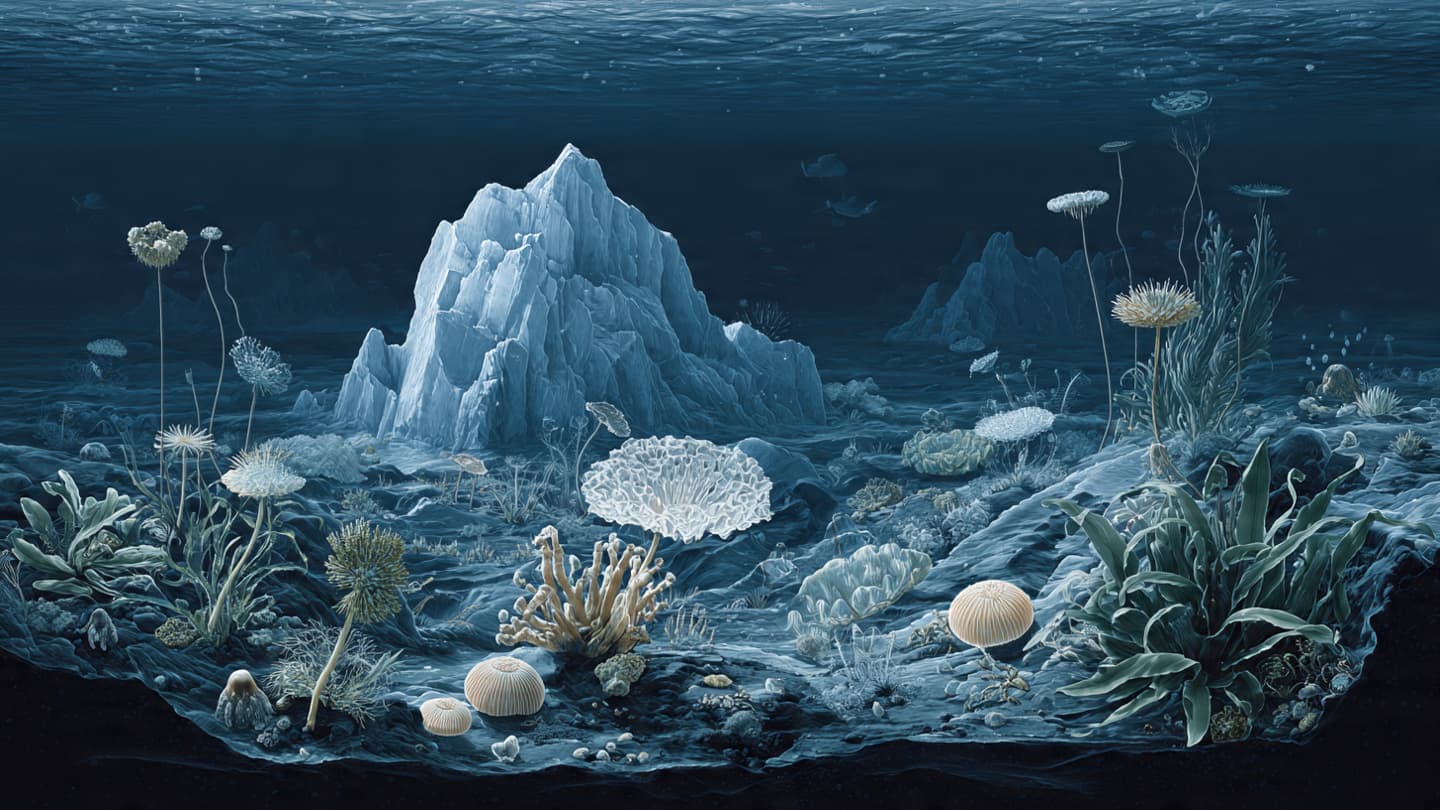
The natural world often reveals connections that seem improbable at first glance. A rock trapped within an iceberg for centuries may appear insignificant, yet when released into the ocean and carried to the seafloor, it can help support entire communities of marine life. Recent studies have shown that rocks deposited by melting icebergs play a crucial role in the formation of habitats for various organisms, providing new insights into how life colonizes some of the planet's most remote environments.
Icebergs frequently transport sediment, gravel, and larger rocks across vast distances. As the ice gradually melts, these materials sink to the ocean floor and become part of the underwater landscape. This process is not merely a geological occurrence; it has significant ecological implications. For many deep-sea species, stable hard surfaces are essential. Organisms such as corals, sponges, and other marine animals often require solid structures on which they can attach and grow, making the rocks delivered by icebergs vital for their survival.
Researchers have observed that these rocks create ecological opportunities in areas where suitable surfaces are otherwise scarce. Over time, they may become centers of biodiversity surrounded by active marine communities. This phenomenon highlights the adaptability of ocean ecosystems, demonstrating that marine organisms are capable of exploiting newly available habitats whenever environmental conditions permit. The presence of these rocks can lead to increased species diversity, as various organisms find niches to thrive in the newly formed habitats.
[Implications for Ecosystem Development]
The discovery of how melting icebergs contribute to deep-sea ecosystems also sheds light on broader ecological processes. Scientists are particularly interested in what these findings reveal about ecosystem development. Understanding how species colonize new locations can improve knowledge of biodiversity and ecological resilience. This research is part of a larger effort to explore deep-sea environments, many of which remain poorly understood despite covering much of the Earth's surface.
As exploration technologies continue to improve, discoveries like this demonstrate that even simple geological processes can influence the distribution of life. A rock released from melting ice may ultimately become the foundation of an entire underwater ecosystem. This underscores the importance of continued research into the dynamics of marine environments and the factors that contribute to their health and sustainability.
The implications of these findings extend beyond academic interest; they are crucial for conservation efforts and understanding the impacts of climate change on marine ecosystems. As icebergs continue to melt due to rising global temperatures, the ecological roles they play will become increasingly significant in the context of environmental change.
Published by Banx Network. This article is part of the Banx decentralized media programme, powered by the BXE token on the XRP Ledger.




