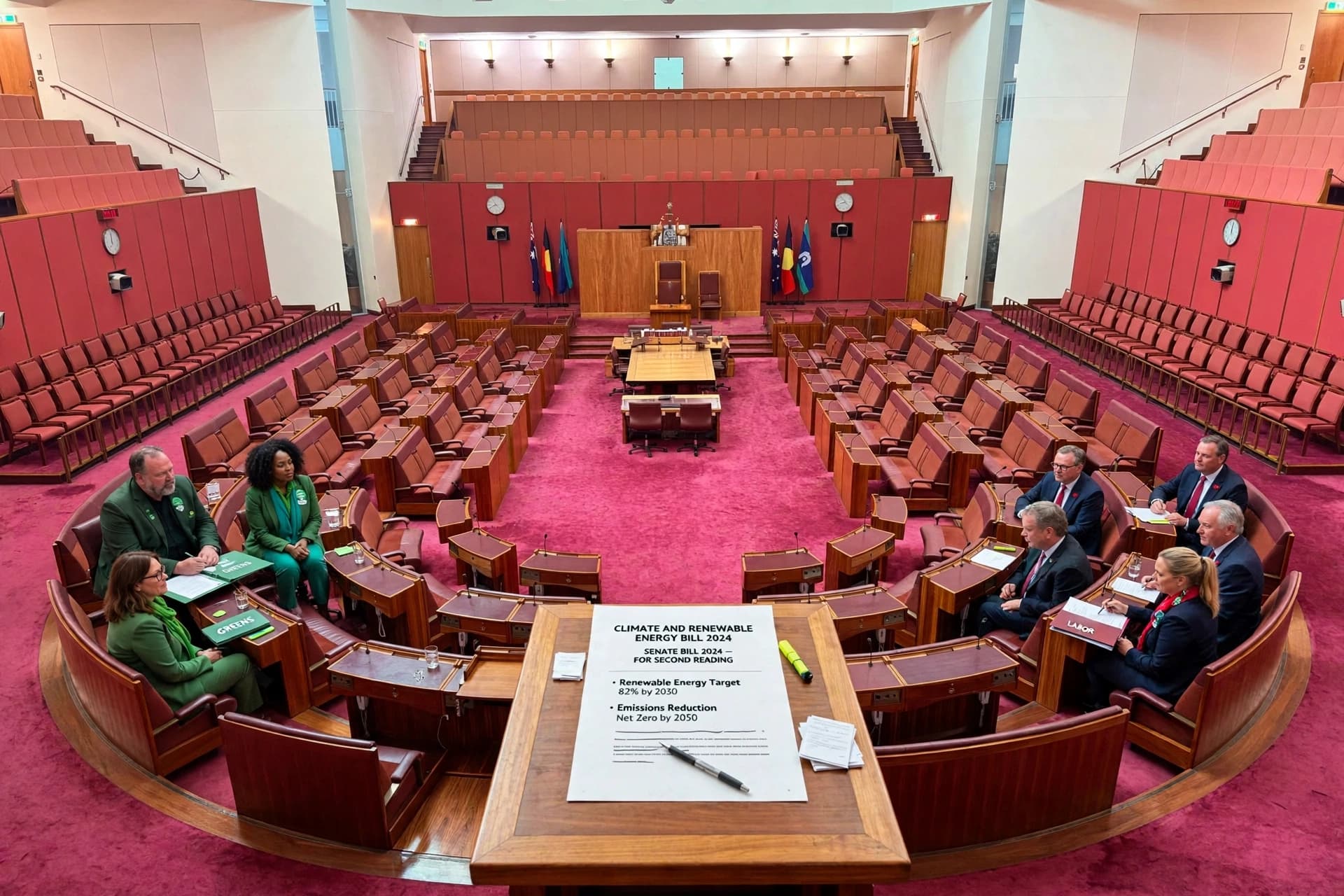
There is a particular irony in a political party opposing a law that it largely supports on principle—a situation in which the disagreement is not about the destination but about the route, and the route, in this case, runs through a minister's office. On Thursday, Greens leader David Shoebridge confirmed that his party would not support Labor's Digital Duty of Care legislation in its current form, citing "excessive ministerial discretion" as the reason. The decision leaves the Albanese government without the votes it needs in the Senate, as the Coalition and One Nation have also rejected the proposal .
The legislation, released as an exposure draft in September, would impose a proactive duty on digital platforms to identify and reduce risks of serious harm to users, rather than relying on complaints after the fact. It would also give users greater control over recommendation algorithms, allowing them to choose a feed based on accounts they follow rather than one shaped by engagement-driven algorithms . The Greens support these principles. Shoebridge has spoken repeatedly about the need to hold tech platforms accountable for design choices that "send people down addictive pathways because they make money" .
The problem, as the Greens see it, is a provision that would allow the Communications Minister—currently Anika Wells—to determine what constitutes "serious harm" through a disallowable legislative instrument. The government has argued this provides parliamentary oversight, since either house can disallow the instrument. But Shoebridge described the discretion as "excessive," telling News24 that "we don't think that giving a minister excessive discretion is a good way of going" .
The criticism is not confined to the Greens. Polling commissioned by News24 and conducted by YouGov found that 48 percent of Australians were uncomfortable with the minister having the power to determine harmful content. Twenty percent said there was "too much power" with the minister; another 28 percent said the law was needed but the minister should not have that power . The Coalition has gone further, describing the bill as "political censorship, pure and simple" and demanding it be scrapped. Shadow Communications Minister Sarah Henderson warned that vague definitions of harm could chill legitimate debate on topics including gender and biological sex .
Shoebridge has sought to clarify that the Greens' objection is about process, not substance. He has said the party wants a digital duty of care that targets "system design" rather than "whack-a-mole policing on content," and that adults should retain broad freedom for "genuine, sometimes kind of testy political debate" . But the political context is complicated. Shoebridge recently became Greens leader after defeating Mehreen Faruqi, and he has declared his intention to "replace Labor" as the dominant force on the left. The Greens have also accused Labor of failing to deliver material improvements for renters, mortgage holders, and workers—criticisms that Prime Minister Anthony Albanese has dismissed as the posture of a "party of protest" rather than a "party of government" .
For now, the legislation remains in limbo. The government needs crossbench support to pass it, and the crossbench has rejected the draft as written. Wells has said she is "more than open" to amendments that would constrain ministerial discretion and secure Coalition support. Whether those amendments materialize—and whether they would satisfy the Greens—remains to be seen. The bill's stated purpose is to make the internet safer, particularly for children. The debate over who gets to decide what safety means is the debate that will determine whether it becomes law.
AI Image Disclaimer: The visual elements in this article were created using AI generation tools and are intended for illustrative purposes only.
Sources: News24, The Guardian, Senator Sarah Henderson, brownsburgweek.com
Published by Banx Network. This article is part of the Banx decentralized media programme, powered by the BXE token on the XRP Ledger.