There is a particular weight that settles over a landscape when the infrastructure meant to hold back water is no longer certain to hold. In California, where the memory of Oroville’s spillway failure and the evacuation of nearly 200,000 people still lingers, that weight has returned with a new audit and an old, familiar question: what happens when the rain comes and the dams are not ready?
A state audit released Monday found that 57 dams in California are in poor or unsatisfactory condition, up from previous counts, and that the number is likely to keep rising as water officials reevaluate aging structures . Forty of the riskiest dams—rated high or extremely high hazard—are clustered near densely populated coastal cities, including the Bay Area, San Diego, and Los Angeles . Should they fail, the auditor warned, they could collectively endanger as many as 1.5 million people and cause more than $265 billion in economic damage .
The audit also found that despite a 2017 law giving the Department of Water Resources the power to penalize dam owners who violate safety requirements, the agency has never used that authority . State engineers have referred owners of 44 dams for enforcement as of April, but the department has taken no punitive action . Water managers told the auditor they lack adequate staffing for an enforcement branch and are not confident they could defend their actions in a hearing .
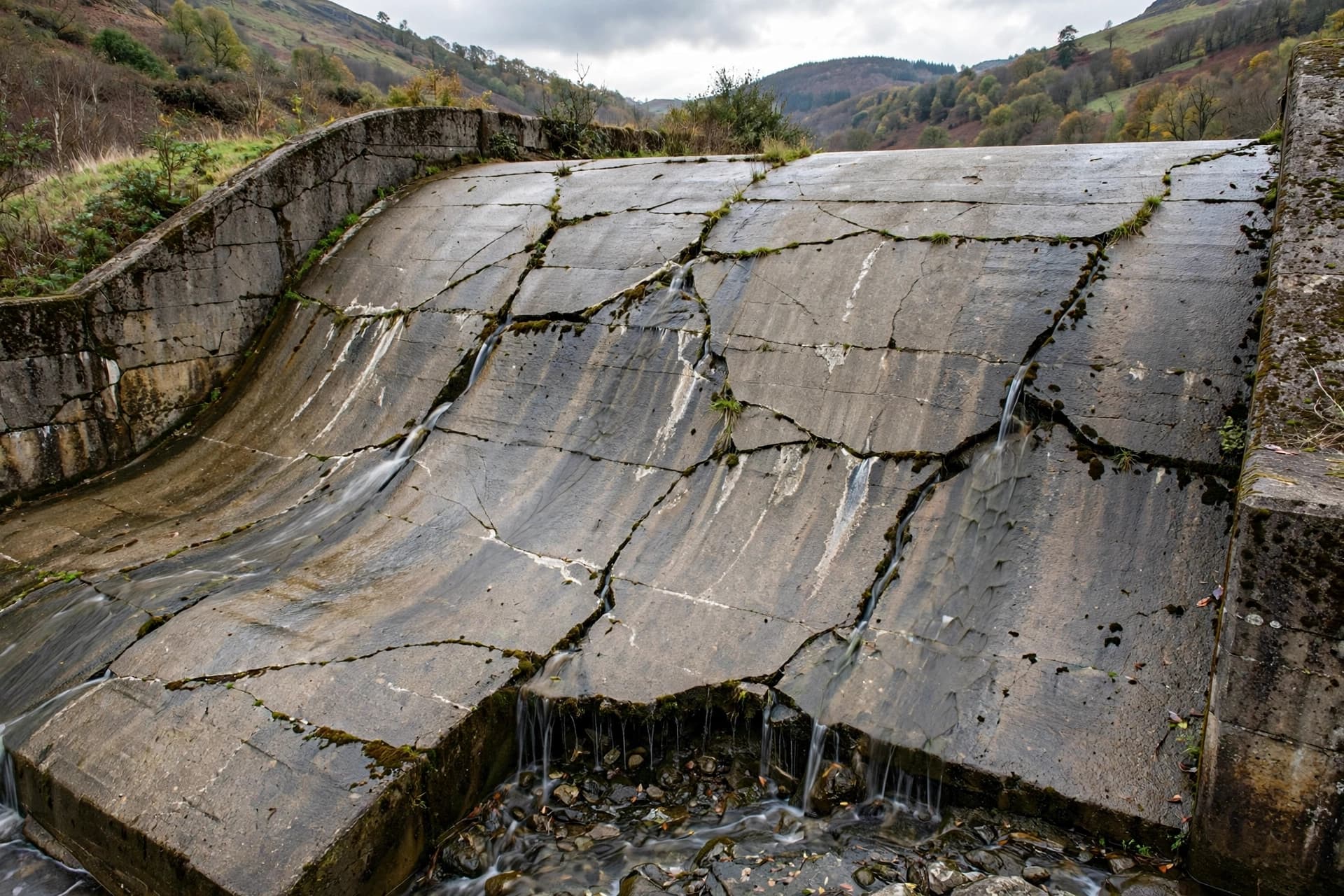
The problem, in part, is money. Many dams were built when safety standards were softer, and state law never required owners to set aside funds for maintenance . When concrete crumbles or spillways erode, most dam owners lack the resources for repairs. One case cited in the audit involved a dam with a 47-foot-wide hole in its spillway that has gone unrepaired for more than thirty years—a deficiency that could cause flooding affecting nearly 300 people and more than $88 million in damage .
The backdrop to this audit is a forecast that has made the stakes higher. Meteorologists are predicting a historically strong El Niño system this winter, with a 95 percent chance of extreme precipitation . For a state that swings between drought and deluge, the prospect of heavy rain against aging infrastructure is not abstract. It is a scenario that water managers have planned for and, according to the audit, failed to fully address.
Governor Gavin Newsom touted dam repairs in his drought-era water strategy four years ago, but in 2024, he and lawmakers slashed funding for a dam repair grant program . A 2024 ballot proposition later delivered $464 million, and FEMA awarded the state $629,198 in September—funding that the audit described as a “drop in the bucket” against an estimated $28 billion in needed repairs .
The audit urged lawmakers to set deadlines for dam owners to submit maintenance and repair plans, expand enforcement authority, and use the full force of the state’s powers. For now, the dams remain, the rain is coming, and the question of whether California can fix what is broken before the water rises remains unanswered.
The images accompanying this article are AI-generated and serve illustrative purposes only.
Sources: AP News, Water Education Foundation, American Rivers
Published by Banx Network. This article is part of the Banx decentralized media programme, powered by the BXE token on the XRP Ledger.