Fire is a primal force, both destructive and renewing, but when it encroaches upon our homes, it becomes a threat of immediate and terrifying proportion. In a recent incident, residents watched in awe and fear as a bushfire leaped across a major highway, defying expectations and challenging containment efforts. This dramatic event serves as a stark reminder of the unpredictability of nature and the vulnerability of communities living on the urban fringe.
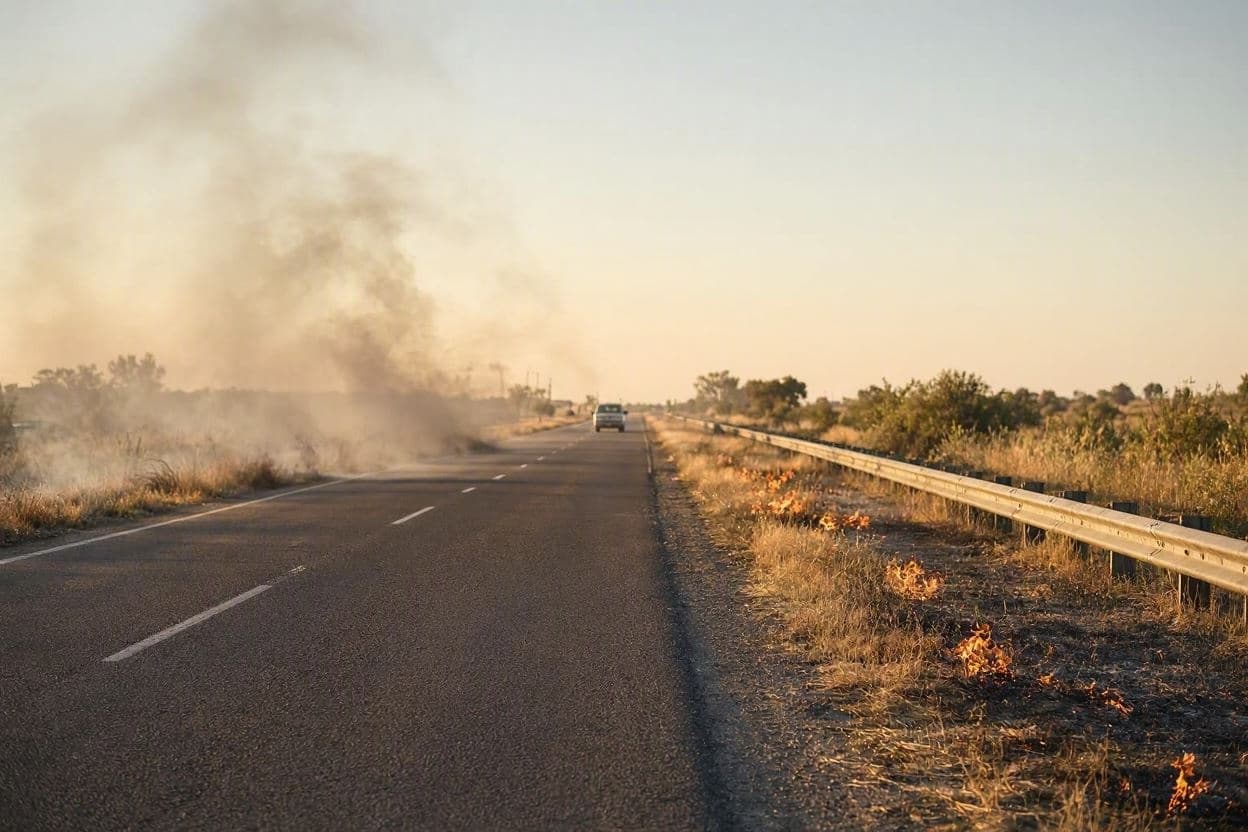
The fire, fueled by strong winds and dry vegetation, had been burning in rural land adjacent to a busy highway. Firefighters had established control lines along the road, believing it would act as a natural barrier. However, embers carried by gusts ignited spot fires on the other side, quickly merging into a new front. Within minutes, the flames were advancing toward residential properties, forcing emergency evacuations and heightening anxiety among locals.
Footage captured by bystanders showed the fire cresting the asphalt, a vivid illustration of how quickly conditions can change. The highway, usually a symbol of connectivity and safety, became a transient boundary that offered little protection against the wind-driven blaze. This phenomenon, known as spotting, is a common challenge in bushfire management, particularly in areas with heavy fuel loads and erratic weather patterns.
Emergency services responded rapidly, deploying additional resources to protect the threatened homes. Water-bombing aircraft and ground crews worked tirelessly to establish new containment lines. The coordination between different agencies was crucial in preventing further spread. Residents praised the bravery and professionalism of the firefighters, who operated under extreme pressure to safeguard lives and property.
The incident has raised questions about land management practices in peri-urban areas. As cities expand, the interface between built environments and natural bushland becomes more complex. Fuel reduction burns and clearing programs are essential but often controversial. Balancing ecological preservation with fire safety is a delicate task that requires ongoing community engagement and scientific insight.
Climate change is exacerbating these challenges, leading to hotter, drier conditions that increase fire risk. Seasons are lengthening, and intensity is rising, making traditional fire models less reliable. Communities must adapt by becoming more resilient, through better planning, education, and infrastructure. The fire jumping the highway is a warning sign that we must heed, preparing for more frequent and severe events.
Local councilors have promised a review of emergency response protocols and land management strategies. They emphasize the need for proactive measures rather than reactive ones. Community meetings are being organized to discuss evacuation plans and property preparation. Empowering residents with knowledge and resources is key to reducing vulnerability. It is a collective effort to live safely with fire.
The fire has since been contained, and no homes were lost, thanks to the swift actions of emergency teams. However, the psychological impact on residents remains. The event serves as a powerful reminder of the need for vigilance and preparedness in fire-prone regions. Nature demands respect, and our readiness determines our resilience.
AI Image Disclaimer: Any images used in conjunction with this article are AI-generated simulations and do not represent actual photographic evidence from the scene.
Sources: ABC News (Australia) The Daily Telegraph NSW Fire and Rescue Service Local Council Media Releases
Published by Banx Network. This article is part of the Banx decentralized media programme, powered by the BXE token on the XRP Ledger.