There is a certain choreography to the relationship between the federal government and the nation's oldest university—a dance of oversight and autonomy, of demands made and boundaries asserted. Sometimes the music stops, and a judge is asked to decide who moved first and whether the steps were legal. This week, in a Boston courtroom, the music stopped on the government's side.
A federal judge dismissed a Trump administration lawsuit on Monday that sought to force Harvard University to turn over admissions records, including student application essays, as part of an investigation into whether the school was complying with the Supreme Court's 2023 decision banning affirmative action . U.S. District Judge Myong J. Joun ruled that the government had not cleared the procedural hurdles required before asking a court to compel compliance, and he dismissed the complaint without prejudice—leaving the door open for the administration to try again if it can demonstrate that Harvard will not cooperate voluntarily .
The ruling was narrow in its scope. Judge Joun wrote explicitly that it "does not determine whether Harvard has discriminated, whether the agencies may lawfully seek appropriately defined applicant-level data, or whether Harvard may ultimately be required to provide such data" . What it determined was a matter of timing and process: the Department of Justice and the Department of Education had sued too quickly, without first taking the steps the law requires to secure Harvard's voluntary cooperation.
The administration filed the suit in February, accusing Harvard of "slow-walking" document production and refusing to provide applicant-level admissions records the government said it needed to assess compliance with the affirmative action ban . Harvard's lawyers characterized the lawsuit differently, describing it as "part of the Trump administration's ongoing campaign against Harvard" and pointing to the timing of the filing, which came after President Trump announced he was ending settlement talks and seeking $1 billion in damages from the university . The school has maintained that it complies with federal law in its admissions processes.
The decision adds to a series of legal setbacks for the administration in its efforts to pressure elite universities. Courts have already blocked attempts to cancel more than $2 billion in Harvard grants, to restrict the school's hosting of international students, and to pursue a separate lawsuit alleging failure to protect Jewish and Israeli students from harassment . Each of these cases has followed a similar pattern: the government makes a demand, the university resists, and a judge is asked to decide whether the demand was properly made.
For Harvard, the ruling is a procedural victory rather than a vindication of its admissions practices. For the government, the dismissal without prejudice means the investigation can continue, and a new lawsuit remains possible. Neither side responded immediately to requests for comment . The broader question—whether Harvard's admissions processes comply with the law—remains unanswered, waiting for a case that reaches the merits rather than the threshold.
The judge's order closes a chapter, but not the book. The government may yet return to court, and Harvard may yet be required to open its files. For now, the university keeps its records, and the administration keeps its investigation, and the choreography continues.
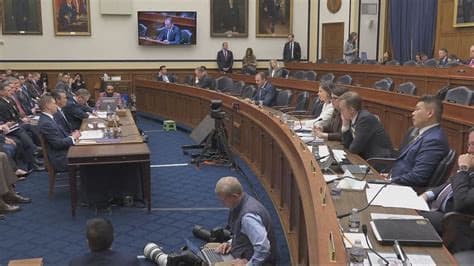
Image Disclaimer: The visuals for this article were produced by artificial intelligence and do not depict actual locations or documents.
Sources: The New York Times, Courthouse News Service, South China Morning Post, The New Republic, Times Now News
Published by Banx Network. This article is part of the Banx decentralized media programme, powered by the BXE token on the XRP Ledger.