
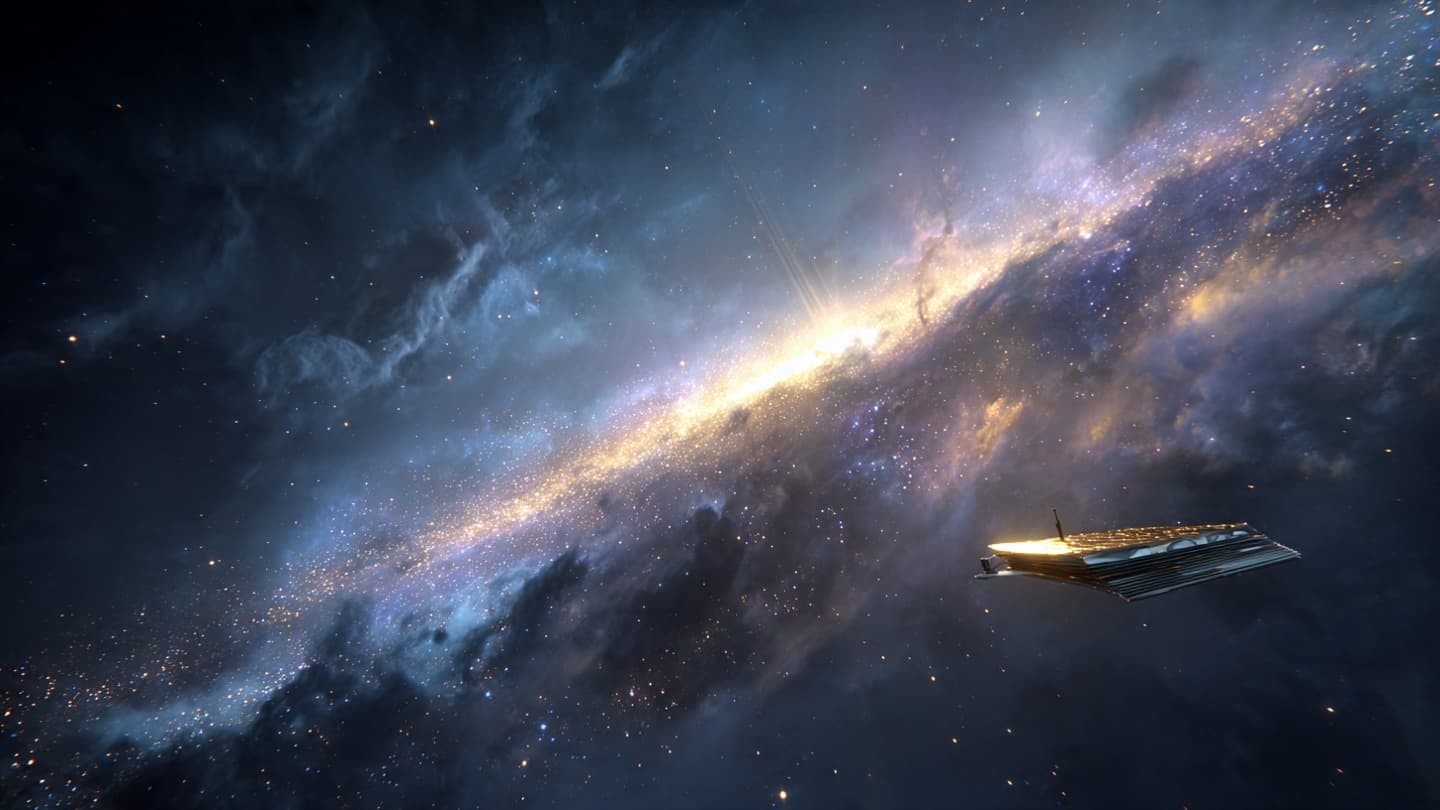
The early universe was not the quiet expanse one might imagine. It was a place of fierce creation and transformation, where young galaxies formed, collided, and evolved amid powerful cosmic forces. Recent observations from the James Webb Space Telescope have now revealed one such force in remarkable detail.
Astronomers using the James Webb Space Telescope have detected a powerful outflow, often described as a "galaxy-killing wind," emanating from a distant galaxy observed as it existed near the dawn of cosmic history. The discovery offers new insight into how galaxies regulate their own growth.
These immense outflows occur when energetic processes—often driven by supermassive black holes or intense bursts of star formation—expel vast amounts of gas from a galaxy. Because gas serves as the raw material for creating new stars, sustained outflows can eventually slow or halt star formation.
Researchers observed the distant galaxy at a time when the universe was only a fraction of its current age. Webb's advanced infrared capabilities allowed scientists to examine details that previous telescopes could not resolve.
Scientists emphasize that the term "galaxy-killing" should not be interpreted literally. Rather, such winds are believed to play an important role in shaping how galaxies evolve over billions of years.
The findings may also help astronomers understand processes that could influence the future evolution of galaxies closer to home, including the Milky Way. However, any comparable changes within our own galaxy would occur on timescales spanning billions of years.
Understanding these feedback mechanisms remains a central goal in modern astrophysics because they help explain why some galaxies continue producing stars while others become relatively inactive.
The James Webb Space Telescope continues to transform astronomy by providing unprecedented views of the early universe and revealing processes that shaped galaxies shortly after their formation.
Researchers expect further observations to refine existing models of galaxy evolution and deepen understanding of the universe's earliest epochs.
AI Image Disclaimer: The visual materials accompanying this article were generated with AI to depict complex astronomical phenomena.
Source Verification Check: NASA, Nature Astronomy, Space.com, Live Science
Published by Banx Network. This article is part of the Banx decentralized media programme, powered by the BXE token on the XRP Ledger.



