

Key Highlights
- New Zealand's tracking stations are crucial for Artemis II.
- They provide continuous telemetry and data relay services.
- The mission emphasizes global collaboration in space exploration.
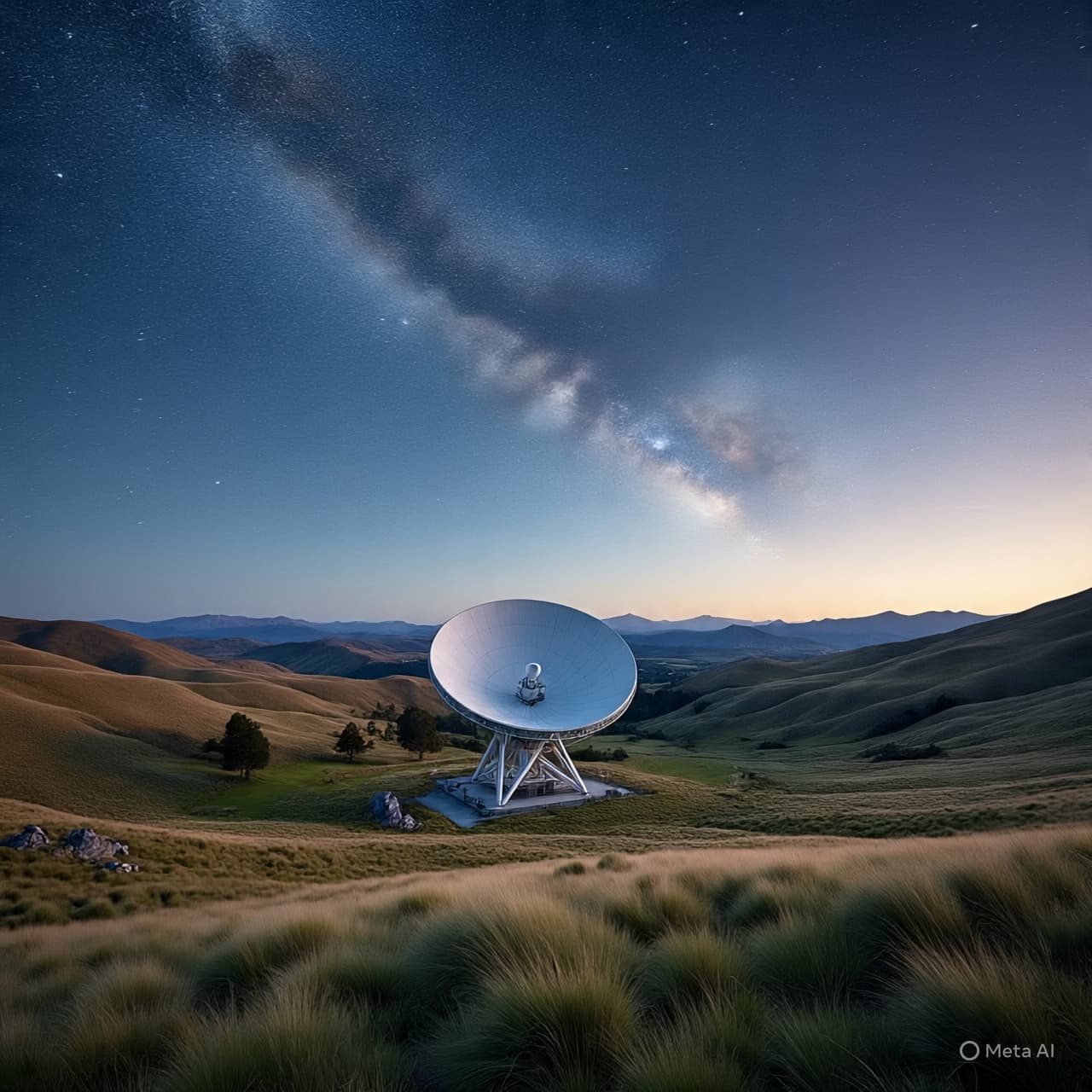
New Zealand's landscape is often characterized by its breathtaking vistas, where mountains meet the sea. Yet, in certain remote valleys, the focus shifts from the horizon to the sky, where massive satellite dishes stand sentinel, listening for signals from the moon. As NASA's Artemis II mission gears up to return humanity to lunar exploration, these tracking stations in New Zealand play an indispensable role in ensuring communication between Earth and the spacecraft.
The Artemis II mission, set to launch in the near future, aims to carry astronauts around the moon, marking a significant step in humanity's return to lunar exploration. The tracking stations in New Zealand are positioned strategically to capture the delicate signals transmitted from the spacecraft as it orbits the moon. These facilities serve as the backbone of communication, providing a vital link that allows mission control to monitor the spacecraft's systems and ensure the safety of the crew.
The sheer scale of the satellite dishes is awe-inspiring, standing tall against the backdrop of the Southern Hemisphere's clear skies. These dishes are not just technological marvels; they symbolize a commitment to exploration and discovery. Inside the climate-controlled rooms, technicians work diligently, analyzing data that represents the lifeblood of the mission. Their efforts ensure that every signal received is translated into actionable information, keeping the astronauts connected to their home planet.
The significance of New Zealand's contribution to the Artemis II mission cannot be overstated. As a key player in the international space community, New Zealand's tracking stations exemplify the collaborative spirit of modern space exploration. The partnership between local infrastructure and global space agencies highlights how different nations can come together to achieve a common goal—returning humans to the moon.
Standing beneath one of these massive dishes at night evokes a sense of wonder. The dish moves gracefully, tracking signals that are invisible to the naked eye but crucial to our understanding of the universe. This intricate dance of technology and mathematics occurs far from urban distractions, allowing for a moment of reflection on humanity's place in the cosmos.
As the Artemis II mission progresses, the role of New Zealand's tracking stations will remain vital. They are the quiet guardians of communication, ensuring that the connection between Earth and the moon is maintained throughout the mission. This relationship underscores the mutual dependence between ground-based technology and space exploration, reinforcing our collective desire to explore and understand our nearest celestial neighbor.
In conclusion, New Zealand's tracking stations are not merely facilities; they are integral components of a larger narrative of exploration and discovery. As humanity prepares to embark on this new chapter of lunar exploration, the contributions of these stations will be felt across the globe, reminding us that exploration is a shared endeavor, woven together by the threads of technology, collaboration, and curiosity.
Published by Banx Network. This article is part of the Banx decentralized media programme, powered by the BXE token on the XRP Ledger.




