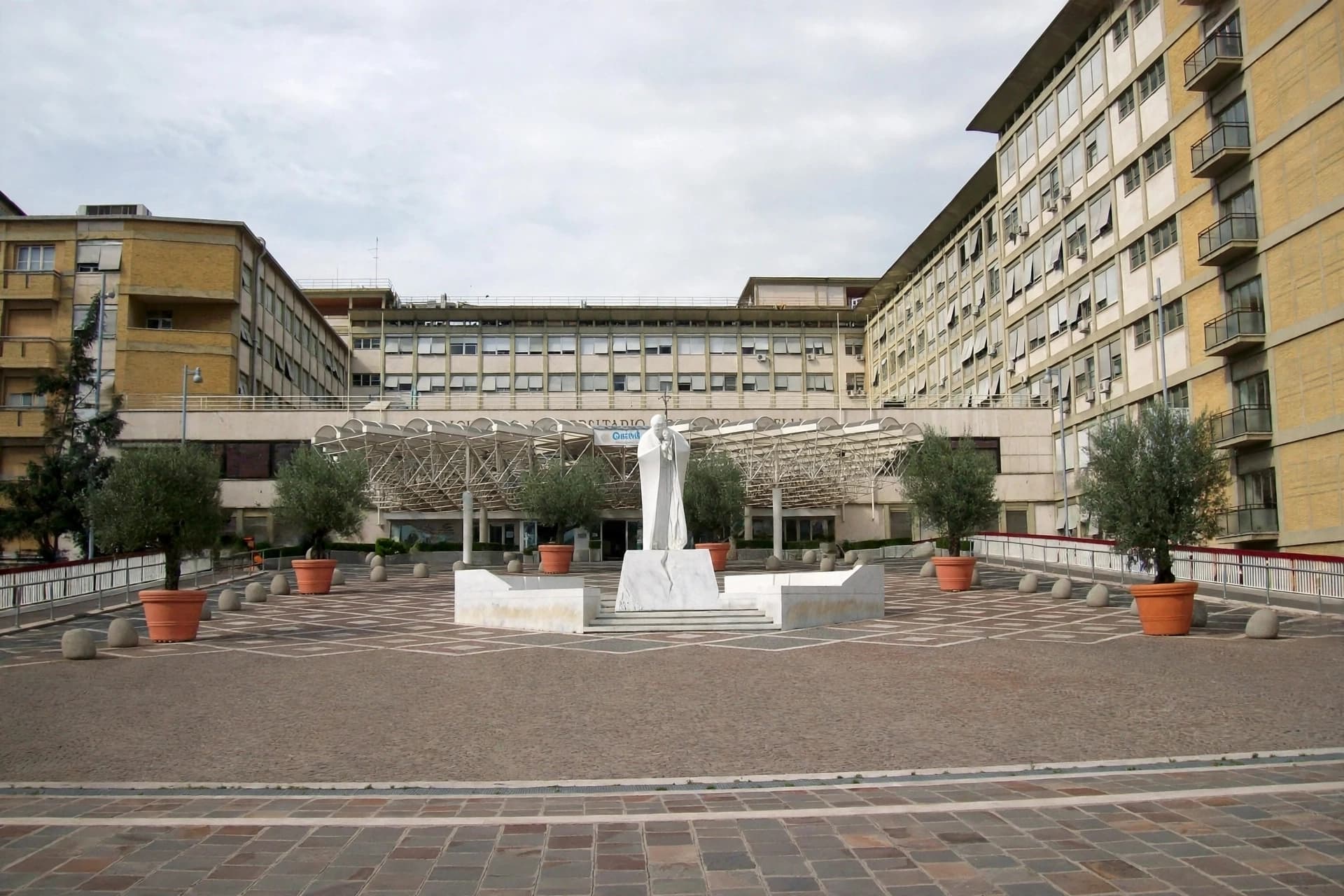
There is a particular vulnerability that accompanies news of illness in a figure who represents spiritual authority for millions—a reminder that the body, however revered, remains mortal. On Tuesday, the Vatican announced that Pope Leo XIV, the first American pope, had been diagnosed with lung cancer after surgeons removed a nodule from his right lung. The surgery, performed at Rome's Gemelli Hospital, lasted approximately ninety minutes and was successful, with no complications .
The nodule was discovered during what the Vatican described as "routine checks." Leo, seventy-one, had announced the upcoming surgery himself on Sunday, speaking from the balcony in St. Peter's Square after delivering the traditional Angelus blessing. He told the crowd that the nodule was "contained" and had been found "at a very early stage," and that doctors had advised him to have it removed .
The medical bulletin, released Tuesday evening, confirmed the diagnosis of lung adenocarcinoma, a common form of lung cancer. The entire lower lobe of the pope's right lung was removed "to ensure the procedure was radical" . The Vatican said the diagnosis had been "suspected by preoperative tests" and confirmed during surgery . Further tests are being carried out to determine whether the cancer had spread .
Lung adenocarcinoma varies greatly in survival rates depending on the stage of the cancer and the patient's overall health. Dr. Sudish Murthy, a thoracic surgeon at the Cleveland Clinic, noted that the information released so far suggests early-stage lung cancer, which is typically treated with surgery and tends to have a very high survival rate . Dr. Lorenzo Spaggiari, a thoracic surgical oncologist in Milan, emphasized that "the important thing is to catch it at an initial stage" .
The pope is expected to spend about a week recovering in the hospital, and all audiences have been canceled until October 20 . He still plans to travel to South America in November, a trip that includes a visit to Peru, where he served as a missionary and bishop for many years . A Vatican spokesman said those plans had not changed .
Leo's decision to disclose his condition publicly represents a marked shift in transparency compared to his predecessors. The Vatican has historically been reticent about papal health, though Leo's predecessor, Francis, was more open about his ailments . Vatican Secretary of State Cardinal Parolin told journalists the news was like a "bolt from the blue," but said the cardinals had been struck by the pope's "serenity" .
The news has shaken Catholics around the world. Giuseppe Purpura, a seventy-two-year-old in Rome, said he was concerned: "He's still quite young and I really wasn't expecting this. I thought he was in better health," noting that "thankfully it was caught in time" . The Vatican has stressed that the pontiff, who is generally thought to be fit and sporty, had no symptoms of infection or illness before the nodule was detected .
Leo was elected to lead the Roman Catholic Church in May 2025, becoming the first American pope. The diagnosis comes only about a year and a half into his papacy . Medical advances mean that a lung cancer diagnosis is no longer a death sentence; as Dr. Spaggiari noted, one of his patients once ran the New York Marathon after having a lung removed .
AI Image Disclaimer: The visual content in this article is generated by artificial intelligence and serves an illustrative purpose only.
Sources:
· The New York Times · BBC News · SBS Australia · U.S. News & World Report · Deutsche Welle · Deutschlandfunk
Published by Banx Network. This article is part of the Banx decentralized media programme, powered by the BXE token on the XRP Ledger.

.jpg&w=3840&q=75 "Qantas Grounds Plane After Passengers Report Bedbug Bites")