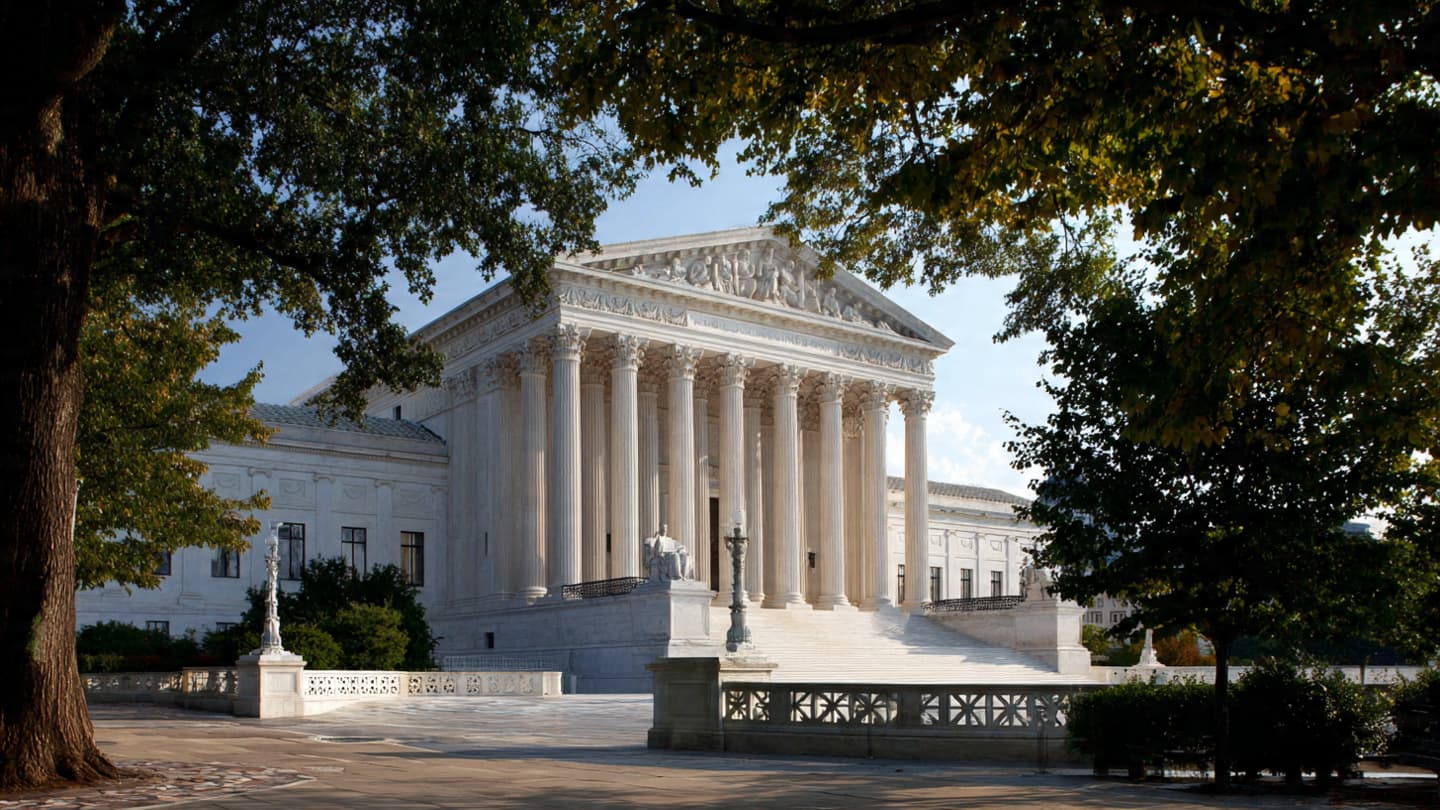
In the architecture of democracy, timing can sometimes feel as consequential as judgment itself, especially when questions of access and enforcement remain unresolved. The Supreme Court’s decision to postpone a dispute over who may bring lawsuits under the Voting Rights Act adds another pause to a long-running legal conversation.
The case centers on whether private individuals or groups retain the ability to sue to enforce parts of the Voting Rights Act that remain after previous court decisions narrowed its scope. This question touches on a foundational aspect of civil rights law: who is empowered to act when voting protections are believed to be violated.
By putting off the dispute, the Court has left the underlying legal uncertainty in place for the time being. Such delays are not uncommon in the judicial process, where procedural clarity and case selection often determine the pace at which broader constitutional questions are addressed.
The Voting Rights Act, originally passed in 1965, has undergone significant legal interpretation over the decades. Certain provisions have been altered or invalidated, while others continue to function as tools for addressing discriminatory voting practices.
Legal scholars often describe enforcement authority as a crucial element of civil rights legislation, since the effectiveness of any law depends not only on its text but also on who can invoke it in court. This case directly engages with that principle.
The Court’s decision to defer the issue means that lower court rulings and ongoing cases may continue to operate under existing interpretations until further clarification is provided. This creates a landscape in which legal standards may vary depending on jurisdiction and timing.
Observers note that such procedural decisions can shape policy outcomes indirectly, even without a definitive ruling, by influencing how and when legal challenges are brought forward.
For now, the question of enforcement authority under the Voting Rights Act remains open, suspended in the Court’s docket, awaiting a future moment when it will again come into focus.
AI Image Disclaimer: Images used for illustration purposes are AI-generated and intended solely for editorial visualization.
Sources: Associated Press, Reuters, The Washington Post, NBC News
Published by Banx Network. This article is part of the Banx decentralized media programme, powered by the BXE token on the XRP Ledger.