
Key Highlights
- Activist Sharif Osman Hadi's death has ignited protests across Bangladesh.
- Demonstrators are demanding accountability from authorities amid violent clashes.
- The unrest reflects deeper societal tensions regarding civic space and dissent.
In Bangladesh, protests rarely begin with slogans alone. They begin with stories—of injustice, of loss, of a line crossed. The death of activist Sharif Osman Hadi has now become one such story, transforming grief into movement and quiet frustration into open confrontation. His passing has resonated deeply within activist circles, igniting a wave of protests that have spread across urban centers.
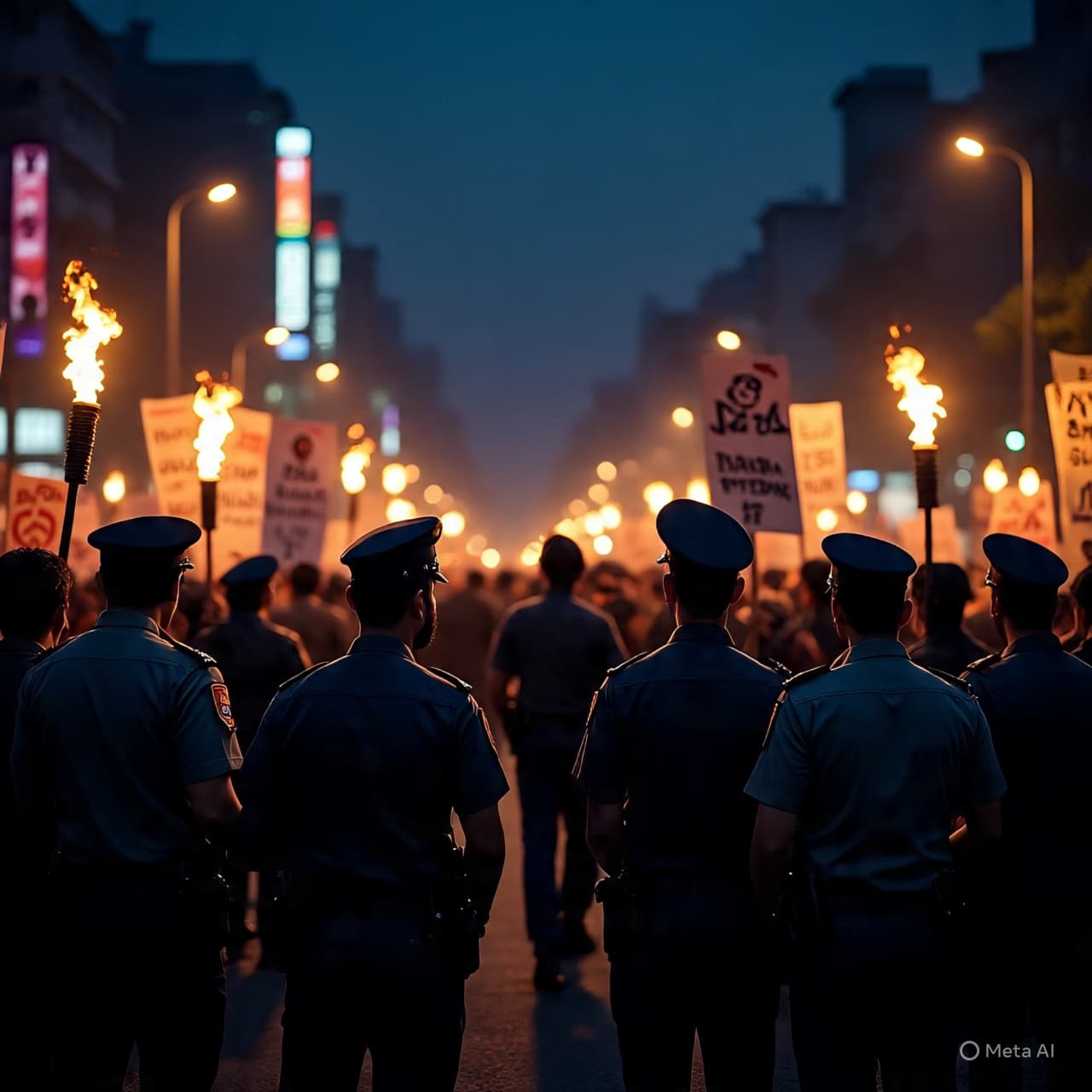
Violence erupted in multiple locations after news of Hadi’s death circulated, with demonstrators clashing with security forces, vehicles set ablaze, and major roads obstructed. What began as mourning rapidly hardened into accusations, as protesters demanded accountability and answers that authorities have struggled to provide. The situation escalated quickly, reflecting a broader pattern of unrest in Bangladesh, where political tensions often simmer beneath the surface until a single event triggers widespread outrage.
Hadi was known among activist circles as a persistent voice, critical of power yet rooted in grassroots organizing. His death, under disputed circumstances, has amplified long-standing tensions between civil society groups and the state. For many on the streets, this was not an isolated incident, but another chapter in a familiar narrative of state repression and civil disobedience.
Police have stated they are investigating the cause of death and have urged calm, while denying any wrongdoing. However, protest leaders accuse authorities of delaying transparency and suppressing dissent. The gap between these narratives has widened into confrontation, visible in burning barricades and the heavy presence of security forces across urban centers. The police's response has been met with skepticism, as many citizens demand to know the truth behind Hadi's death.
Bangladesh has seen this cycle before. Periods of political pressure often simmer quietly, contained by fatigue or fear, until a single event punctures restraint. When that happens, protests escalate quickly—not because the issue is new, but because it resonates with accumulated grievances. The unrest following Hadi’s death reflects deeper anxieties: shrinking civic space, the treatment of activists, and the limits of public dissent. Demonstrators are not only demanding justice for one man but recognition that dissent itself is not a crime.
Authorities face a delicate moment. A forceful crackdown risks inflaming tensions further, while hesitation may be read as weakness. Past experience suggests that how the state communicates now—what it explains, what it concedes, what it denies—may matter as much as what it does on the ground. The government’s response will be critical in determining whether the unrest expands or subsides.
For ordinary citizens, the scenes unfolding are unsettling but familiar. Shops shuttered early, traffic was frozen, and rumors spread faster than official statements. In such moments, the line between protest and instability feels thin, even as participants insist their demands are rooted in accountability, not chaos. As night fell, violence continued in pockets, and calls for nationwide demonstrations circulated online. The potential for further unrest looms large, hinging on the authorities' ability to provide credible answers about Hadi’s death—and whether those answers are believed.
Bangladesh’s streets have once again become a forum of last resort. What began with a single death now tests the country’s ability to absorb dissent without tipping into deeper disorder. The question is no longer only how Sharif Osman Hadi died, but what his death has now set in motion.
Published by Banx Network. This article is part of the Banx decentralized media programme, powered by the BXE token on the XRP Ledger.



