History remembers its architects, but it also remembers its destroyers. Ratko Mladić, the former Bosnian Serb military commander whose name became synonymous with the brutality of the Balkan wars, has died in prison. His passing marks the end of a life defined by conflict and conviction, closing a chapter on one of the most painful periods in modern European history. For many, his death brings a complex mix of finality and unresolved grief.
Mladić was sentenced to life imprisonment in 2017 by the International Criminal Tribunal for the former Yugoslavia (ICTY). He was found guilty of genocide, war crimes, and crimes against humanity, most notably for his role in the Srebrenica massacre of 1995, where more than 8,000 Bosniak men and boys were killed. His conviction was a landmark moment for international justice, affirming that even the highest-ranking military officials are accountable for atrocities.
Known as the "Butcher of Bosnia," Mladić evaded capture for over a decade after the war ended. His arrest in 2011 was a significant victory for prosecutors and a moment of relief for survivors who had long demanded justice. During his trial, he remained defiant, often disrupting proceedings and refusing to acknowledge the gravity of his actions, which further alienated him from any possibility of moral redemption.
His death in a Dutch prison hospital ends the legal proceedings but does not erase the historical record. The ICTY’s extensive documentation ensures that the truth of the Bosnian War remains preserved. This archive serves as a crucial resource for historians and educators, helping future generations understand the mechanisms of ethnic conflict and the importance of rule of law.
For the survivors of Srebrenica and other affected communities, Mladić’s death is not a cause for celebration but a somber milestone. Many feel that justice was delayed and incomplete, as no prison sentence can fully compensate for the loss of loved ones. Yet, his conviction stands as a testament to the resilience of those who sought truth amidst devastation.
The legacy of the Bosnian War continues to shape the politics and social fabric of the Balkans. Ethnic tensions persist, and the region still grapples with the aftermath of the conflict. Mladić’s death may remove a symbolic figure of division, but the work of reconciliation and healing remains an ongoing challenge for Bosnia and Herzegovina.
International law scholars note that Mladić’s case set important precedents for the prosecution of command responsibility. It demonstrated that leaders cannot hide behind the actions of subordinates and must answer for the crimes committed under their command. This principle continues to influence contemporary efforts to address war crimes in other conflicts around the world.
Authorities in the Netherlands have confirmed Mladić’s death, stating that he passed away due to natural causes. His body will be handled according to legal protocols, and no public funeral is expected, reflecting the controversial nature of his legacy.
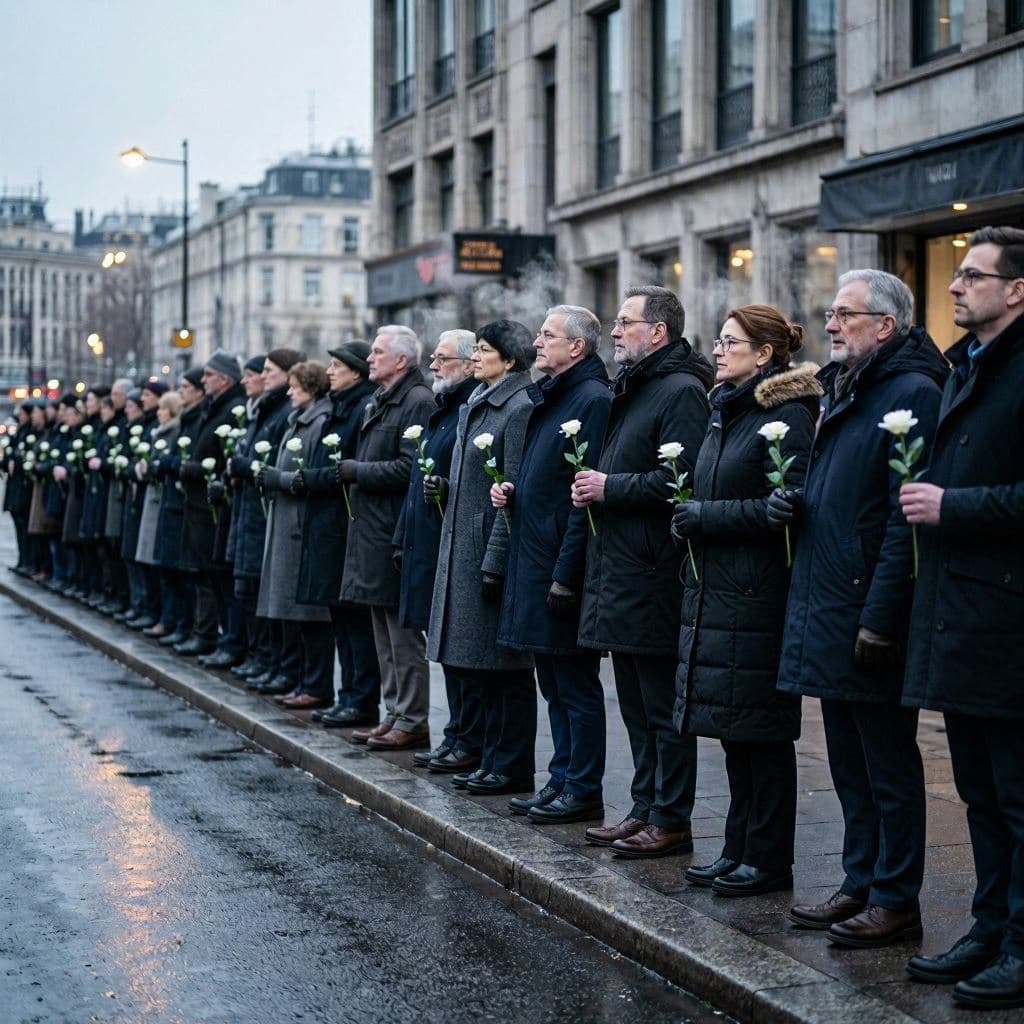
AI Image Disclaimer: The images associated with this article are AI-generated visualizations created to reflect the themes of historical memory, justice, and the passage of time.
Sources: Reuters Associated Press BBC News The New York Times
Published by Banx Network. This article is part of the Banx decentralized media programme, powered by the BXE token on the XRP Ledger.