Famine is not a headline — it is the bluntest measurement of system failure.
Two cities in Sudan are now officially in famine. They are cut off by war. That phrase — “cut off” — sounds administrative. In reality it means: supply cannot get in, civilians cannot get out, and hunger becomes the dominant environment.
This is the part of conflict that is hardest to communicate at scale. Because hunger is not cinematic. There are no explosions. There is only the slow erosion of the human body. Starvation requires no dramatic visuals — it is a mathematical inevitability when markets die and roads close.
Elsewhere in Sudan, there have been fragile humanitarian gains. Aid trucks have reached some areas. Malnutrition rates have stabilized in a few pockets. But even these improvements exist inside a margin of volatility — one border closure, one blocked corridor, one week of new clashes, and those gains could vanish.
This is what makes famine declarations so hauntingly precise. They are not forecasts. They are diagnoses. And they carry the underlying message: there is no more future left in contingency — the disaster is present tense.
Sudan’s emergency is not only a story of hunger. It is a case study in how modern conflict creates non-linear suffering — where blockade becomes a weapon, where food can be a strategic lever, and where starvation becomes an index of geopolitical neglect.
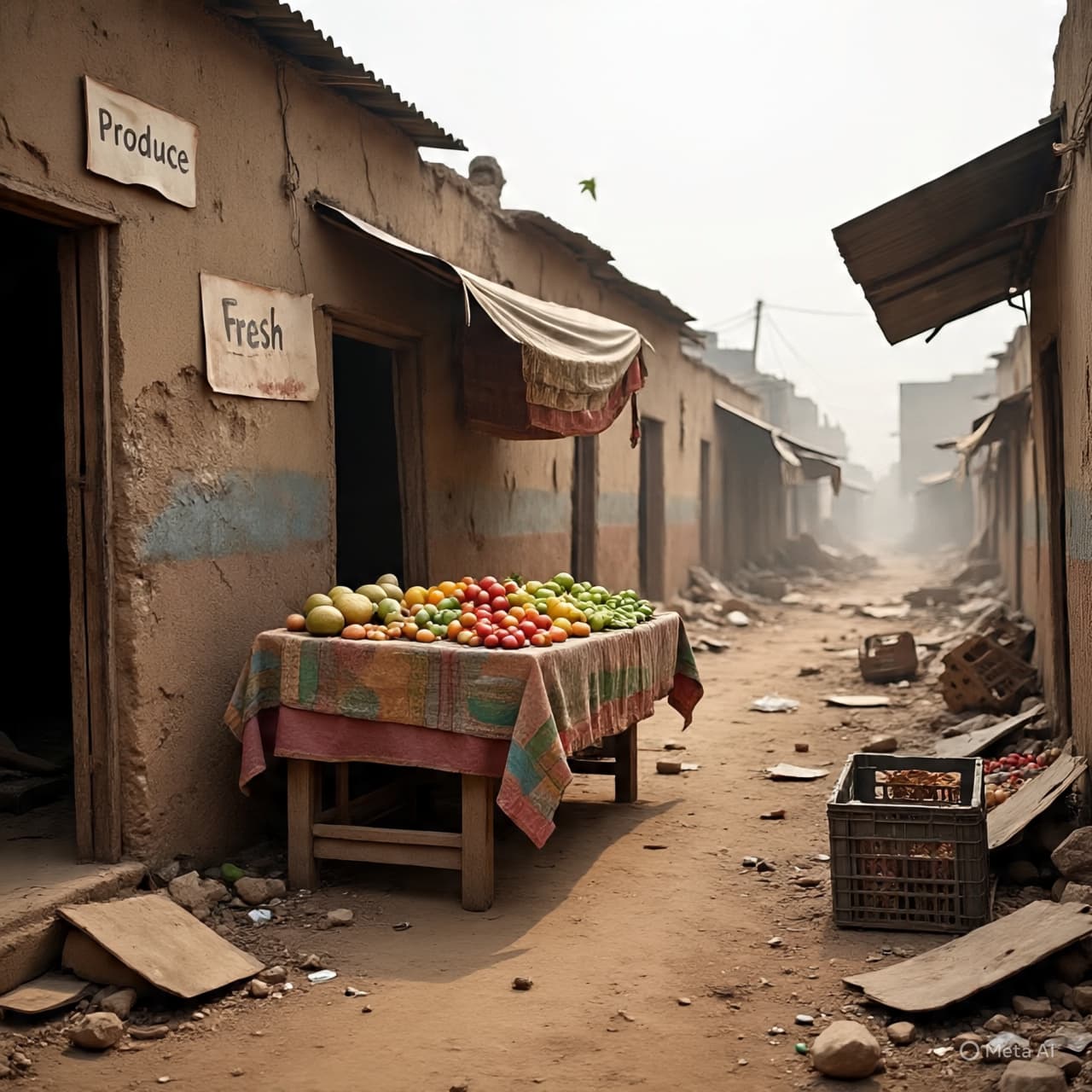
AI image disclaimer AI images are illustrative concepts and not documentary evidence.
Published by Banx Network. This article is part of the Banx decentralized media programme, powered by the BXE token on the XRP Ledger.