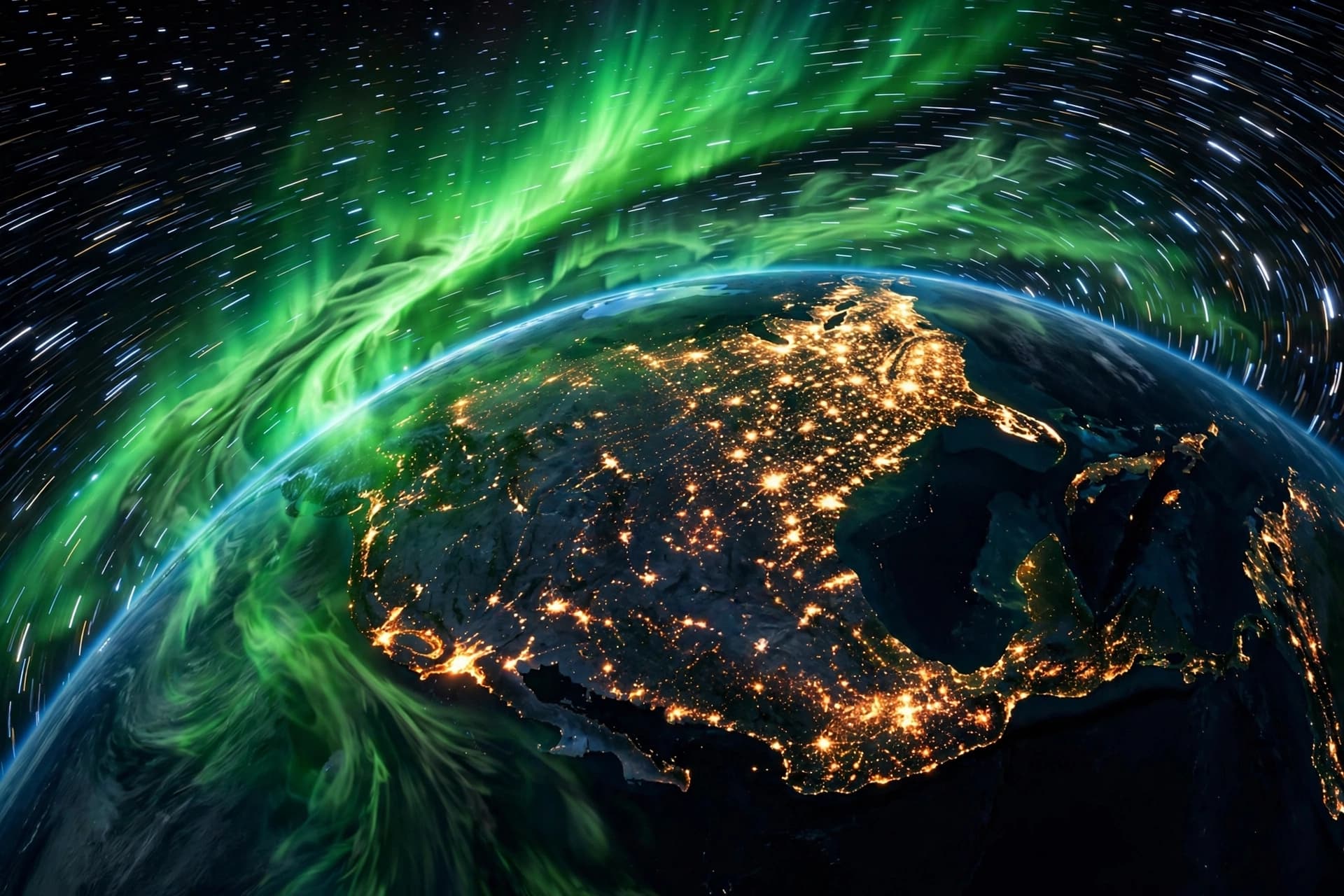
From the vantage point of the International Space Station, Earth transforms into a canvas of light and motion. On September 22, 2026, astronauts aboard the ISS captured a breathtaking image that blends the terrestrial with the celestial. City lights glow like scattered embers, auroras dance in vibrant hues, and star trails arc across the blackness of space. This photograph is more than a visual spectacle; it is a meditation on our place in the universe, connecting the human footprint with the cosmic dance.
The image, taken using long-exposure techniques, reveals the dynamic nature of our planet’s atmosphere. The auroras, caused by solar particles interacting with Earth’s magnetic field, appear as ethereal ribbons of green and purple. They serve as a reminder of the invisible forces that protect life on Earth. For the astronauts who witness these phenomena firsthand, the experience is often described as transformative, offering a perspective known as the "overview effect."
Below the auroras, the city lights trace the contours of human civilization. These clusters of illumination represent homes, businesses, and communities, all connected in a network of activity. From space, political boundaries disappear, replaced by the organic patterns of urban development. It is a view that emphasizes unity and interdependence, highlighting how shared resources and environments bind us together.
The star trails, created by the rotation of the Earth during the exposure, add a sense of movement and time. They remind us that we are on a spinning planet, hurtling through space at incredible speeds. This cosmic context puts daily concerns into perspective, encouraging a sense of wonder and humility. The juxtaposition of static cities and moving stars creates a powerful visual narrative of stability and change.
Photography from the ISS has become an important tool for both science and public engagement. These images help researchers monitor weather patterns, light pollution, and atmospheric changes. For the public, they offer a window into the beauty of our planet, fostering a deeper appreciation for its fragility. Each photo shared by astronauts serves as an invitation to look up and care for the world below.
The technical skill required to capture such images is considerable. Astronauts must account for the station’s rapid orbit, changing light conditions, and camera settings. Their ability to produce stunning visuals amidst a demanding schedule is a testament to their dedication and expertise. These photographs are not just snapshots; they are carefully crafted works of art that communicate the majesty of space.
As we view this image, we are reminded of the collaborative effort that keeps the ISS operating. Nations work together to maintain this outpost of humanity in low Earth orbit. It stands as a symbol of what can be achieved when people unite for a common goal. The photos they send back are gifts that inspire and educate, bridging the gap between space and Earth.
The September 22 photograph from the ISS is a beautiful convergence of natural wonder and human presence. It invites us to reflect on the interconnectedness of our world and the universe. As we gaze at the city lights and auroras, we are encouraged to cherish our planet and the delicate balance that sustains life.
AI Image Disclaimer: The images associated with this article are AI-generated illustrations inspired by space photography, not the actual photo taken by the astronaut.
Sources: Space.com NASA
Published by Banx Network. This article is part of the Banx decentralized media programme, powered by the BXE token on the XRP Ledger.