

Key Highlights
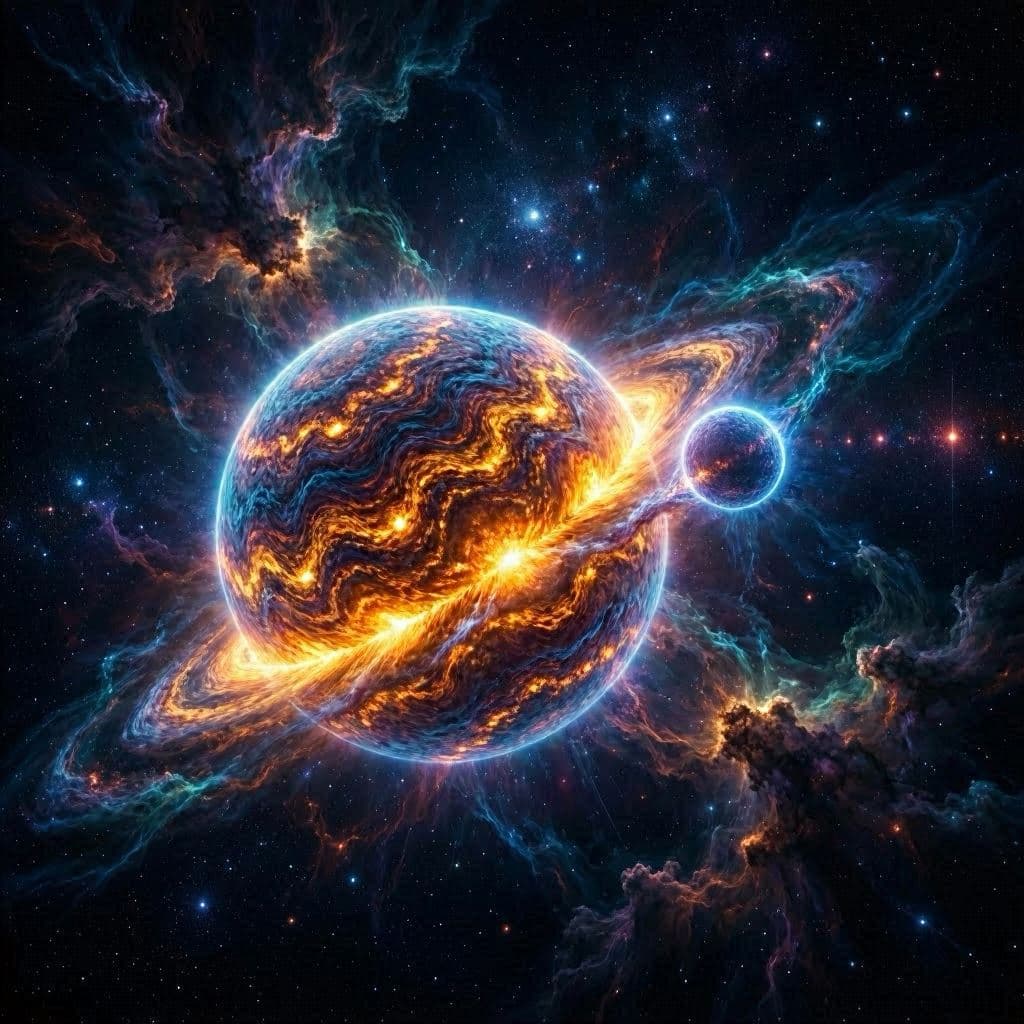
- Discovery:Astronomers may have found the first known binary star system where both stars exploded as supernovae.
- Implications:This finding could reshape our understanding of stellar evolution and the chemical enrichment of galaxies.
- Ongoing Research:Scientists are using advanced techniques to confirm the connection between the two supernova remnants.
In the vast theater of the cosmos, stellar explosions are often solitary acts, dramatic finales to the lives of massive stars. However, astronomers believe they may have identified the first known binary system where both stars exploded as supernovae. This groundbreaking discovery offers a rare glimpse into the interconnected fates of celestial siblings, challenging our understanding of stellar evolution.
The potential candidate for this unique phenomenon was identified through careful analysis of archival data and recent observations. Researchers noticed unusual chemical signatures in a nearby galaxy, suggesting that two supernova remnants were linked not just by proximity, but by a shared history. The stars, once part of a tight binary pair, likely influenced each other’s mass and lifespan before exploding within a relatively short cosmic timeframe.
Binary star systems are common in the universe, yet finding evidence of both members undergoing supernova explosions is exceptionally difficult. Typically, the first explosion can disrupt the orbit, ejecting the companion star or altering its trajectory significantly. For both to explode while remaining gravitationally associated requires a specific set of initial conditions, such as similar masses and a stable orbital configuration that survives the first blast.
The implications of this finding extend beyond mere curiosity. Supernovae are crucial for dispersing heavy elements like iron and gold into the interstellar medium, seeding future generations of stars and planets. If twin supernovae occur more frequently than previously thought, it could mean that certain regions of galaxies are enriched with these elements at a faster rate, influencing the chemical evolution of the cosmos.
Scientists are now working to confirm the link between the two remnants using advanced spectroscopic techniques. By studying the light emitted from the debris, they can determine the composition and age of the explosions. If the dates align closely and the chemical profiles match, it would provide strong evidence that these were indeed twin stars that died together.
This discovery also sheds light on the formation of neutron stars and black holes. In some binary systems, the remnant of one star can accrete material from its companion, leading to different evolutionary paths. Understanding how twin supernovae affect these remnants helps refine models of high-energy astrophysics and gravitational wave sources.
While the identification is still tentative, the excitement within the astronomical community is palpable. It represents a step forward in mapping the complex life cycles of stars. Each new piece of evidence helps astronomers piece together the puzzle of how the universe builds and recycles its fundamental components.
As research continues, the possibility of twin supernovae adds a layer of symmetry to the chaotic beauty of the universe. It reminds us that even in death, stars can remain connected, leaving behind a legacy that shapes the galaxy around them. The search for confirmation is ongoing, but the initial findings promise to rewrite parts of our stellar history books.
Published by Banx Network. This article is part of the Banx decentralized media programme, powered by the BXE token on the XRP Ledger.




