
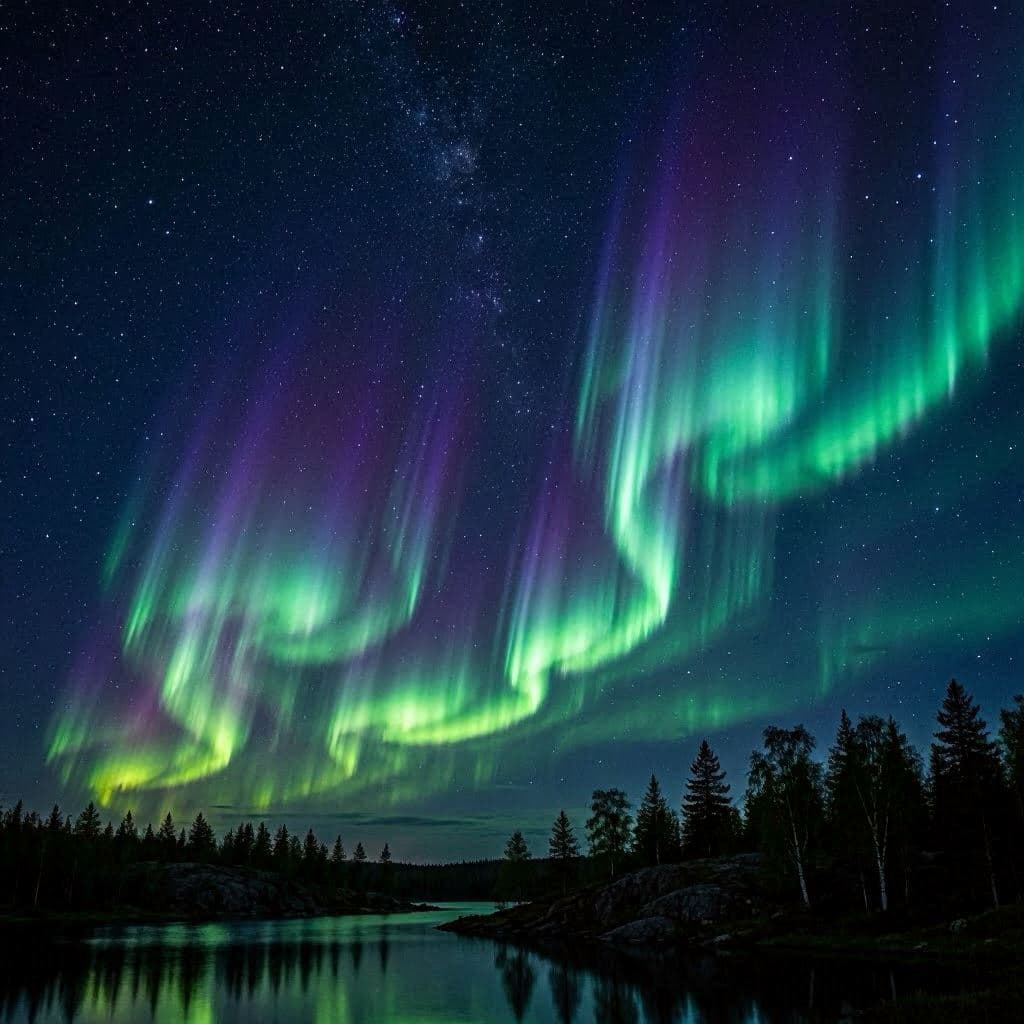
The sun, our constant and life-giving companion, occasionally reminds us of its volatile nature with bursts of energy that ripple across the solar system. Recently, our star unleashed a powerful X-class solar flare, accompanied by a coronal mass ejection (CME) directed toward Earth. This celestial event has sparked anticipation among skywatchers, as it may paint the night skies with the ethereal glow of the aurora borealis during the July 4th weekend, offering a natural spectacle to complement human celebrations.
X-class flares are the most intense category of solar eruptions, releasing vast amounts of magnetic energy. When these flares are associated with a CME, they hurl billions of tons of charged particles into space. If these particles interact with Earth’s magnetosphere, they can trigger geomagnetic storms. While such events can sometimes disrupt satellite communications or power grids, they also create one of nature’s most breathtaking displays: the northern and southern lights.
For many in the northern hemisphere, the prospect of seeing the aurora so far south is a rare treat. Typically confined to high latitudes, strong geomagnetic storms can push the auroral oval toward the equator, making the lights visible in regions that rarely experience them. This phenomenon transforms the night sky into a canvas of dancing greens, purples, and reds, inviting people to step outside and look up in wonder.
The timing of this event, coinciding with Independence Day celebrations in the United States, adds a layer of symbolic resonance. As fireworks illuminate the ground, the sun may provide its own pyrotechnics in the heavens. This convergence of human tradition and natural beauty offers a moment to reflect on our place in the cosmos and the delicate balance of forces that sustain our planet.
Scientists at the National Oceanic and Atmospheric Administration (NOAA) and NASA are monitoring the situation closely. They advise that while the potential for visible auroras is high, the intensity can vary depending on the strength of the geomagnetic storm. Skywatchers are encouraged to check local forecasts and find dark, open areas away from city lights to maximize their chances of witnessing the display.
Beyond the visual appeal, these solar events serve as important reminders of the sun’s influence on our technological infrastructure. Understanding space weather is crucial for protecting satellites, astronauts, and power systems. Each flare provides data that helps researchers refine their models and improve prediction capabilities, ensuring we are better prepared for future solar activity.
For those unable to see the lights directly, live streams and social media shares will likely capture the magic. The global community often comes together during such events, sharing photos and experiences that transcend borders. It is a testament to the universal appeal of natural wonders and the shared human desire to connect with the mysteries of the universe.
In the end, the sun’s latest outburst is both a challenge and a gift. It challenges our technology but gifts us with beauty. As we celebrate our national holidays, let us also take a moment to appreciate the cosmic dance above us, a reminder that we are part of a dynamic and vibrant solar system.
AI Image Disclaimer: The visual representations included in this article are generated by artificial intelligence to illustrate thematic concepts and do not depict actual real-time solar imagery.
Sources: NASA NOAA Space Weather Prediction Center Space.com The Guardian Live Science
Published by Banx Network. This article is part of the Banx decentralized media programme, powered by the BXE token on the XRP Ledger.



