
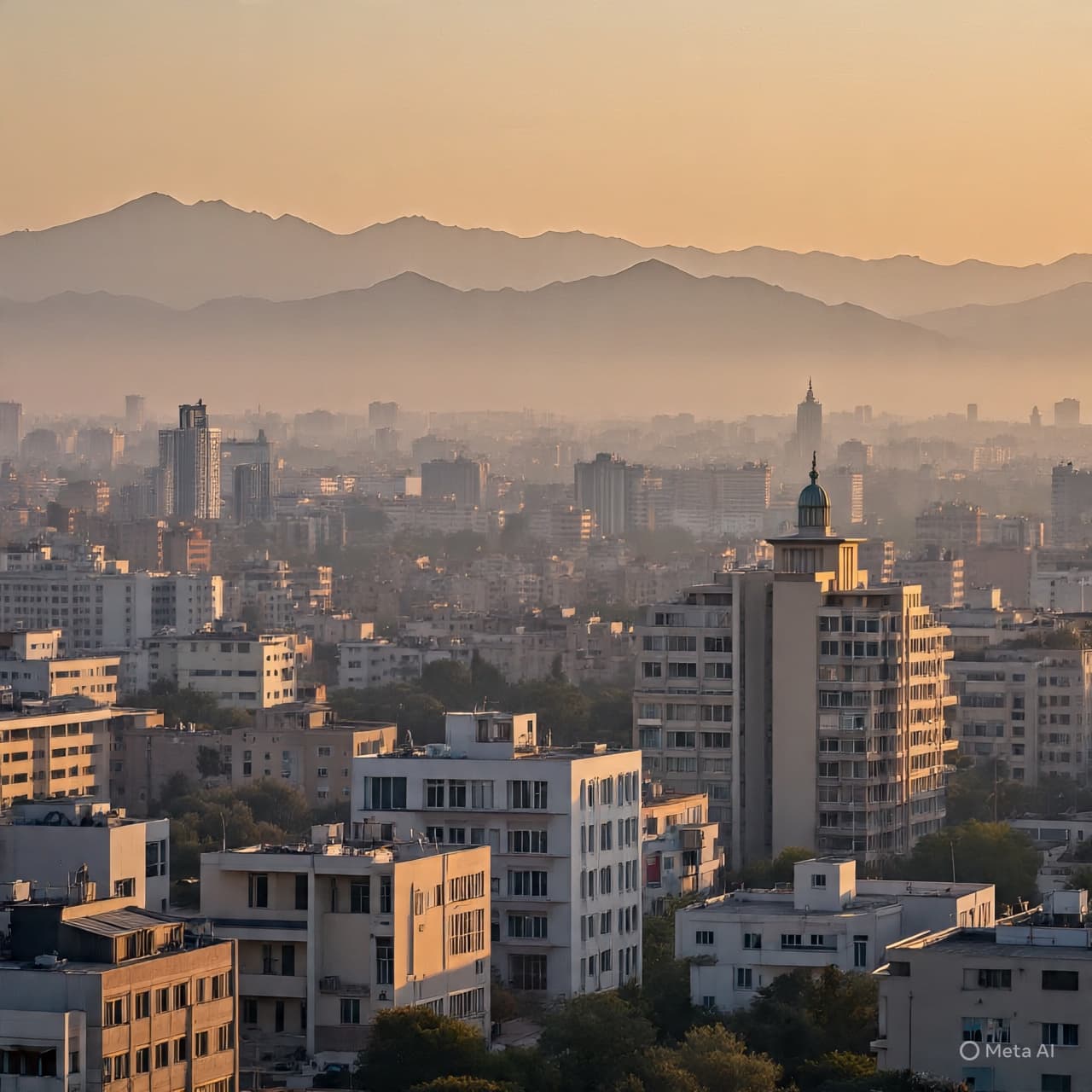
Morning arrives unevenly across the region, as if light itself hesitates before settling over the cities and coastlines stretched between desert and sea. In Tehran, the air carries a quiet tension that feels suspended, while far beyond, in Washington, statements emerge in measured tones, carefully worded, as though each sentence must pass through layers of caution before reaching the world.
Between these two points, a proposal lingers—neither fully embraced nor entirely dismissed. Officials from the United States have insisted that Iran has not rejected the framework intended to ease the widening strain, even as signals from various channels seem to blur into contradiction. Diplomacy, in moments like this, resembles a shoreline at dusk: edges are difficult to trace, and meanings shift with the tide.
The proposal itself, shaped through indirect exchanges and mediated conversations, is said to outline a pathway toward de-escalation—an arrangement that would quiet the more immediate tensions while leaving deeper questions to be addressed later. Yet the absence of a clear response has created a space filled quickly by speculation. Some voices describe cautious openness; others point to silence as its own kind of refusal. In this space, uncertainty becomes its own actor, moving quietly but persistently through every briefing and headline.
For those observing from afar, the language of officials carries a restrained urgency. There is an insistence that talks remain possible, that doors have not closed. At the same time, the rhythm of events on the ground—military postures, regional anxieties, the watchful stance of neighboring states—suggests a different tempo, one less patient and more brittle. The contrast between what is said and what is felt forms a subtle dissonance, like two overlapping currents moving in slightly different directions.
Across the broader Middle East, the implications ripple outward. Governments weigh their positions carefully, balancing alignment and caution. Markets respond in quiet fluctuations. Ordinary routines continue—shops opening, traffic building, families gathering—yet beneath these daily patterns runs an awareness that decisions made in distant rooms may alter the landscape with little warning.
What emerges most clearly is not resolution, but a kind of suspended motion. The United States maintains that negotiation remains viable, emphasizing that the proposal still stands. Iranian responses, conveyed through indirect channels and selective commentary, resist easy interpretation. Between assertion and ambiguity, the path forward appears less like a straight line and more like a shifting corridor, its direction dependent on words not yet spoken.
And so the day unfolds without a definitive turn. The proposal has not been rejected, officials say, but neither has it been accepted. In this delicate interval, diplomacy continues its quiet work—measured, uncertain, and persistent—while the region waits, listening for clarity in a conversation that has yet to fully declare itself.
AI Image Disclaimer Illustrations were created using AI tools and are not real photographs.
Sources Reuters Associated Press BBC News Al Jazeera The New York Times
Published by Banx Network. This article is part of the Banx decentralized media programme, powered by the BXE token on the XRP Ledger.


