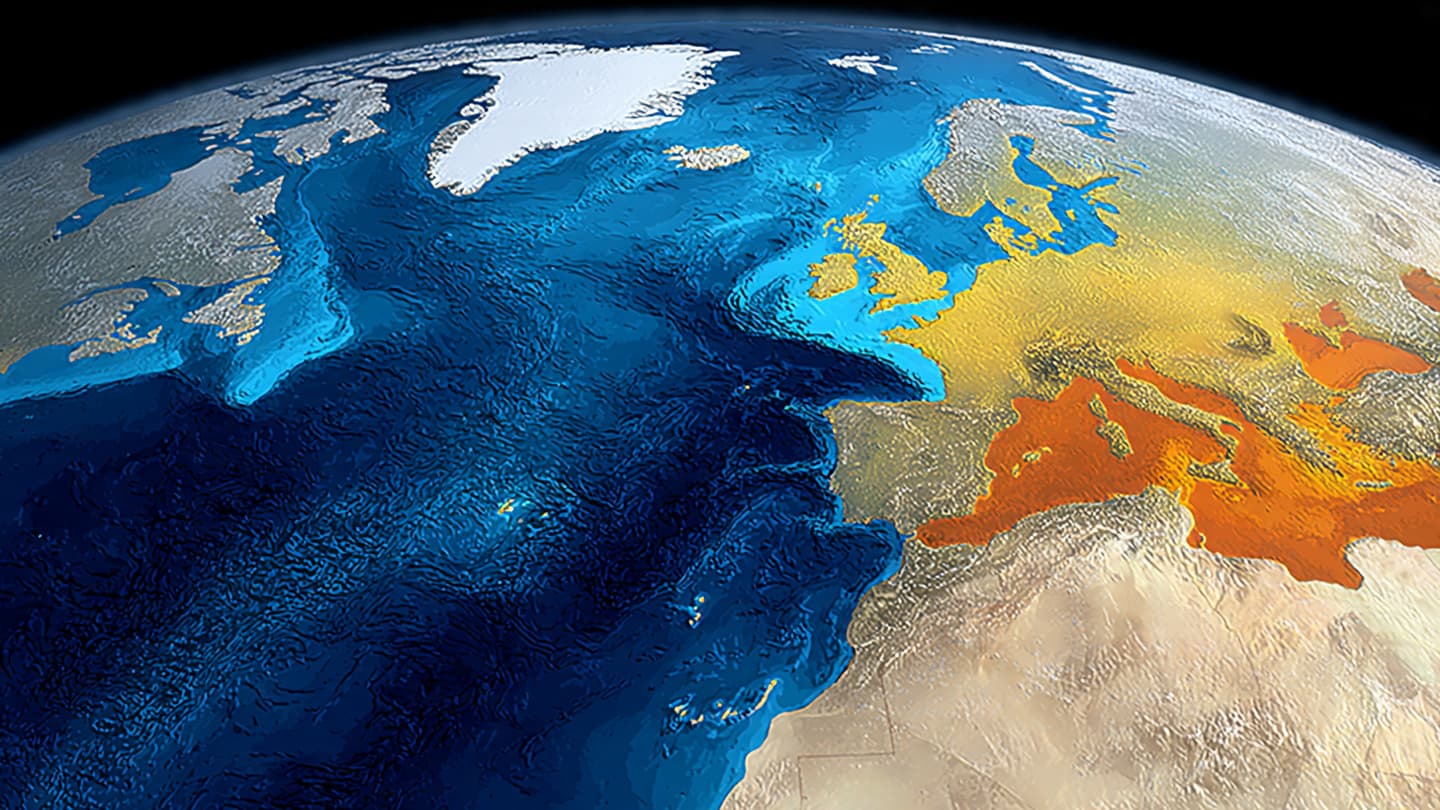
The Atlantic Ocean is often imagined as a constant and familiar presence, yet beneath its surface, subtle changes can reveal important clues about the Earth's climate system. Scientists are closely studying a region known as the "Cold Blob," an area of unusually cool water in the North Atlantic that appears to be expanding.
The Cold Blob differs from surrounding ocean waters because its temperatures remain lower than expected. Researchers have observed this pattern for several years and continue investigating the processes that contribute to its development and long-term behavior.
One theory suggests that changes in major ocean currents could influence the phenomenon. Ocean circulation systems transport heat across the planet, helping regulate regional climates. Variations in these currents may alter temperature patterns in different parts of the Atlantic.
The Cold Blob has attracted scientific interest because of its potential influence on weather systems. Ocean temperatures can affect atmospheric circulation, rainfall distribution, and storm activity, although researchers continue studying the precise relationships involved.
Marine ecosystems may also respond to changing water temperatures. Fish populations, plankton communities, and other marine species often depend on stable environmental conditions. Scientists monitor these ecosystems to understand how temperature variations influence biodiversity.
Climate researchers emphasize that the Cold Blob represents one part of a larger and highly complex climate system. Regional cooling does not necessarily contradict broader global warming trends, as different parts of the planet can experience different changes simultaneously.
Advanced satellites, ocean sensors, and research vessels provide valuable information about ocean temperatures and circulation patterns. International scientific cooperation allows researchers to combine observations and improve climate models.
Understanding the Cold Blob may help improve long-term weather forecasting and climate projections. Better knowledge of ocean processes can support planning in sectors such as agriculture, fisheries, disaster preparedness, and environmental management.
The expanding Cold Blob reminds scientists that the oceans remain one of Earth's most dynamic and influential systems. Continued observation and research may reveal important insights into the changing relationship between the oceans, atmosphere, and global climate.
AI Image Disclaimer: The images accompanying this article are AI-generated editorial illustrations and not direct scientific observations.
Sources Verified: Live Science, NOAA, Reuters, Nature, Associated Press
Published by Banx Network. This article is part of the Banx decentralized media programme, powered by the BXE token on the XRP Ledger.