There is a particular kind of exclusion that becomes invisible through its own longevity. It is not a locked door, but a room that was never built for you in the first place—a seat that was never set at the table, a name that was never called. When the United Nations Security Council was shaped in 1945, much of Africa was still under colonial rule. Eighty years later, the continent bears the weight of the international order without holding a permanent hand in directing it. Nigeria's Vice President has now put that contradiction into words.
Vice President Kashim Shettima, speaking on the sidelines of the 81st UN General Assembly in New York, said Africa's continued exclusion from permanent membership of the Security Council "undermines the fairness and legitimacy of the global governance system" . His remarks came during a meeting with UN Deputy Secretary-General Amina Mohammed, where he reaffirmed Nigeria's support for urgent reform of the United Nations .
The centerpiece of Shettima's argument was a simple moral proposition. "A continent cannot be summoned to bear the burdens of the international order and then denied an equal hand in directing it," he said . He commended UN Secretary-General António Guterres for his consistent support for a more representative Council, particularly Guterres's declaration that a 21st-century Council without permanent African representation is "unjust and indefensible" .
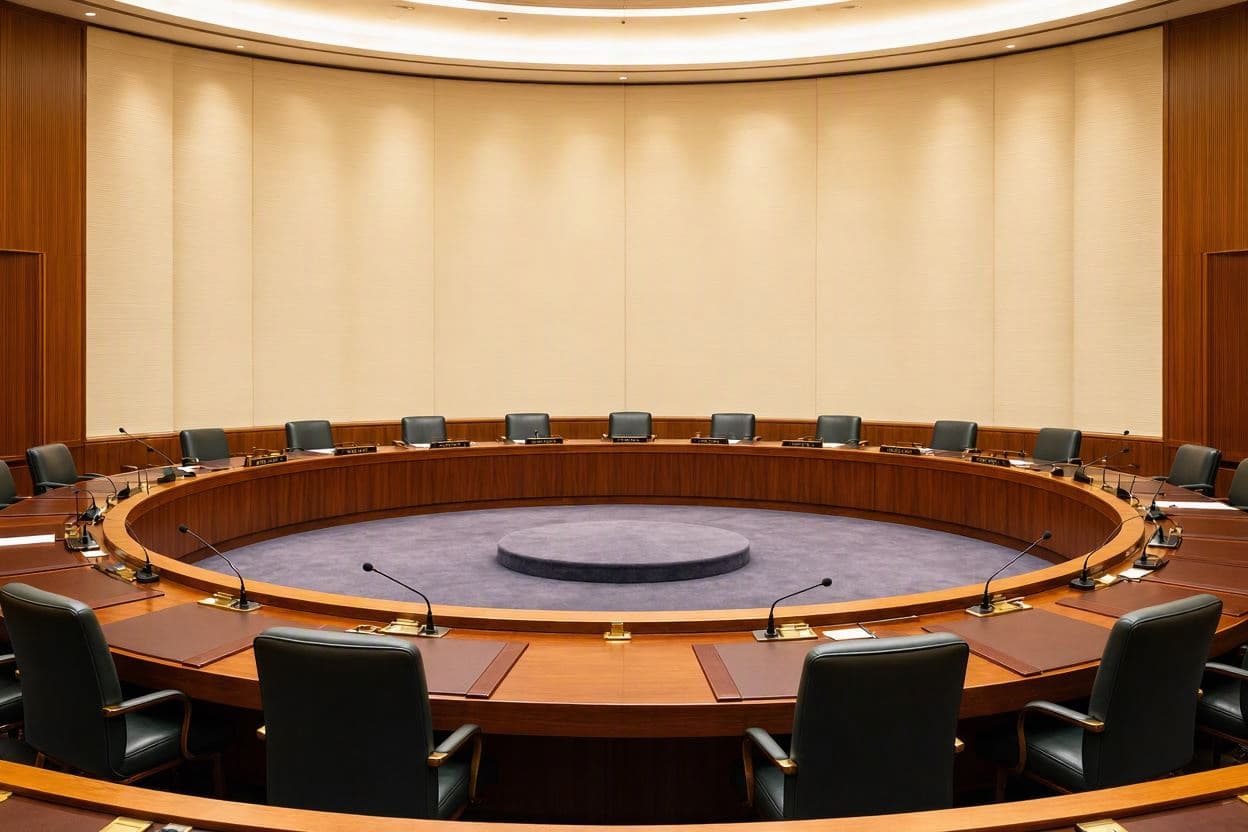
The call is not new. Nigeria has repeatedly demanded at least two permanent seats for Africa on the Security Council, with full rights and responsibilities including veto power, alongside five non-permanent seats . The African Group has echoed that position, rooted in the Ezulwini Consensus and the Sirte Declaration, arguing that the world of 2026 cannot "remain captive to the distribution of power in 1945" . Currently, the 15-member Council has five permanent members—China, France, Russia, the United Kingdom, and the United States—and ten elected members serving two-year terms. Africa has none of the permanent seats .
Shettima grounded his appeal not in geopolitical abstraction but in human consequence. He spoke of "the mother searching for her child, the family driven from home and the hungry child awaiting food," insisting they "must never become abstractions in the language of states" . He praised Guterres for defending international law and human dignity amid widening conflicts, saying the Secretary-General had "insisted that sovereignty carries duties, that might confers no licence to injure, and that the worth of a human life cannot vary with the flag above it" .
He also commended Deputy Secretary-General Amina Mohammed, a Nigerian, for her contributions to multilateral diplomacy, describing her service as a source of pride . Mohammed, in turn, thanked Nigeria and President Bola Tinubu for supporting the United Nations and her work, saying she was honored by the visit and grateful to be embraced "not just as the DSG but as a daughter of the soil" .
The path to reform is complex, requiring broad support from member states and agreement on amendments to the UN Charter—a diplomatic undertaking of considerable difficulty . Yet Shettima framed the question as one of conscience as much as procedure. "Civilisation endures only when the suffering of a stranger becomes a claim on our conscience," he said . The credibility of the international system, he added, will ultimately depend on its ability to respond fairly to human suffering and give all regions a meaningful voice .
Nigeria's Vice President Kashim Shettima says Africa's exclusion from permanent UN Security Council membership undermines global governance. He reaffirmed Nigeria's call for at least two permanent African seats with veto power, arguing the world of 2026 cannot remain captive to the power distribution of 1945.
AI Image Disclaimer: Visuals accompanying this article are produced by artificial intelligence for illustrative purposes only and do not depict actual persons or events.
Sources: Channels Television, Premium Times Nigeria, Leadership Newspapers, Voice of Nigeria, ANTARA News
Published by Banx Network. This article is part of the Banx decentralized media programme, powered by the BXE token on the XRP Ledger.