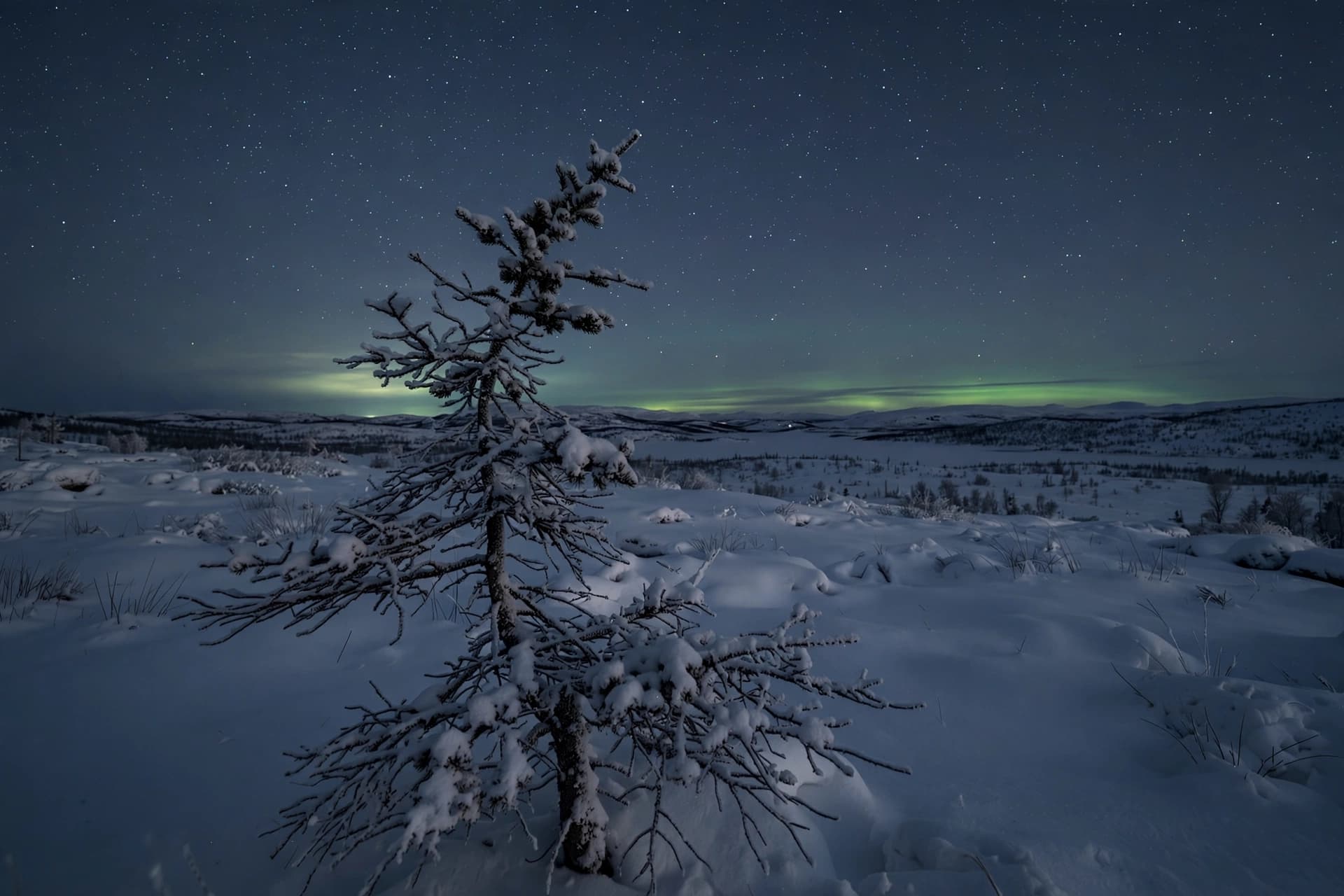
On some nights, the sky reminds us that our solar system is not a closed room but a corridor. Things pass through it—quietly, briefly—carrying fragments of distant histories.
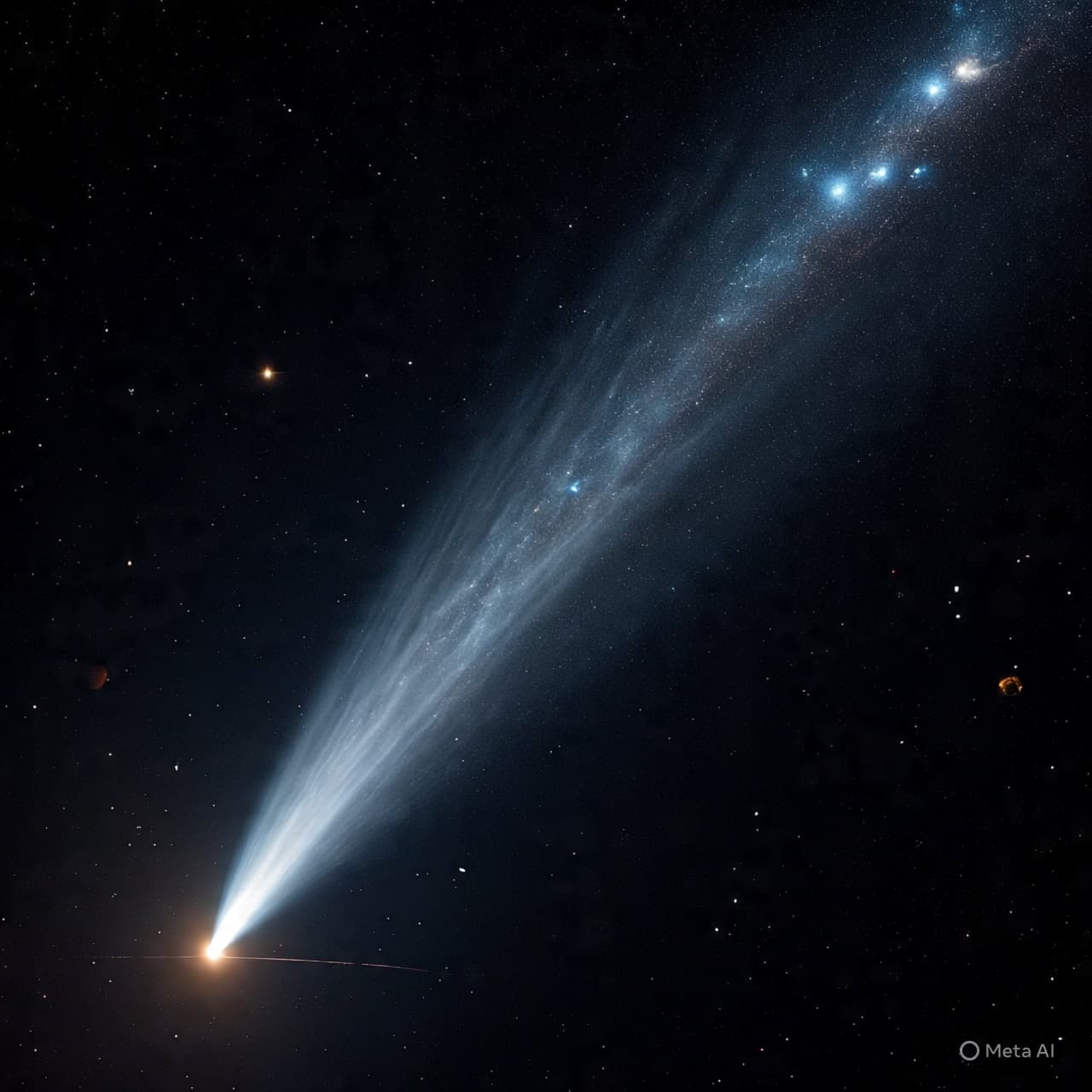
Far beyond the outer planets, an object once drifted through the darkness between stars. Over untold ages it moved without audience or witness. Then, in the summer of 2025, telescopes on Earth noticed a faint point of light approaching from deep space. It would soon receive a name: 3I/ATLAS, an interstellar traveler that had wandered into the gravity of the Sun.
Like other comets, the object began to change as it approached the warmth of the inner solar system. Ice hidden within its core started to warm, releasing clouds of gas and dust that formed a glowing envelope known as a coma. To astronomers, this haze is a message—chemical fingerprints drifting outward in sunlight.
When researchers studied the comet using the Atacama Large Millimeter/submillimeter Array, they discovered something unusual. The escaping gases carried a strikingly high amount of methanol, a simple alcohol molecule rarely seen in such abundance among comets closer to home.
Methanol might sound familiar to anyone who knows chemistry’s quieter corners. It resembles drinking alcohol in name, but not in nature. Methanol is highly toxic; even small quantities can cause blindness, organ failure, or death. The discovery therefore inspired a peculiar kind of cosmic warning—half scientific note, half dry humor. Whatever frozen residue the comet might leave behind as it melts in sunlight, it would not be something anyone should treat as a drink.
The chemical richness of 3I/ATLAS offers something far more valuable than novelty. Each interstellar comet is a fragment of another planetary system, a frozen archive from a region that formed around a different star. Scientists often describe such objects as samples delivered across the galaxy—materials that would otherwise remain permanently out of reach.
In the case of 3I/ATLAS, the methanol levels appear unusually high compared with most comets in our own solar system. The ratio between methanol and other molecules, including hydrogen cyanide, suggests that the comet formed under conditions very different from those that shaped the icy bodies orbiting our Sun.
Earlier observations also indicated strong activity even when the comet was far from the Sun, releasing water and other materials at distances where most comets remain quiet. Such behavior hints at unusual internal chemistry—perhaps ice grains embedded in its structure or volatile compounds locked into its ancient core.
This wandering object is only the third confirmed visitor from outside the solar system, following earlier discoveries like ʻOumuamua and 2I/Borisov. Each arrival lasts only a short time, a brief crossing before gravity releases the traveler once more into the open dark of interstellar space.
For astronomers, these passages feel almost ceremonial. Telescopes pivot toward the sky, instruments collect spectra and images, and the data—carefully gathered—becomes a small window into distant systems scattered across the Milky Way.
And then the visitor leaves.
In the coming months and years, 3I/ATLAS will continue outward, slipping past the planets and fading again into the long silence between stars. What remains behind is not ice or dust on Earth’s surface, but the knowledge gathered during its passing.
Scientists say the comet’s chemical signatures are helping them better understand how planetary systems form elsewhere in the galaxy. The observations, published in The Astrophysical Journal Letters, suggest that interstellar comets like 3I/ATLAS may contain compositions significantly different from those found in our own solar system.
AI Image Disclaimer
Illustrations were created using AI tools and are not real photographs.
Source Check
Credible coverage and/or reporting exist from: Live Science Futurism Space.com Phys.org NASA
Published by Banx Network. This article is part of the Banx decentralized media programme, powered by the BXE token on the XRP Ledger.