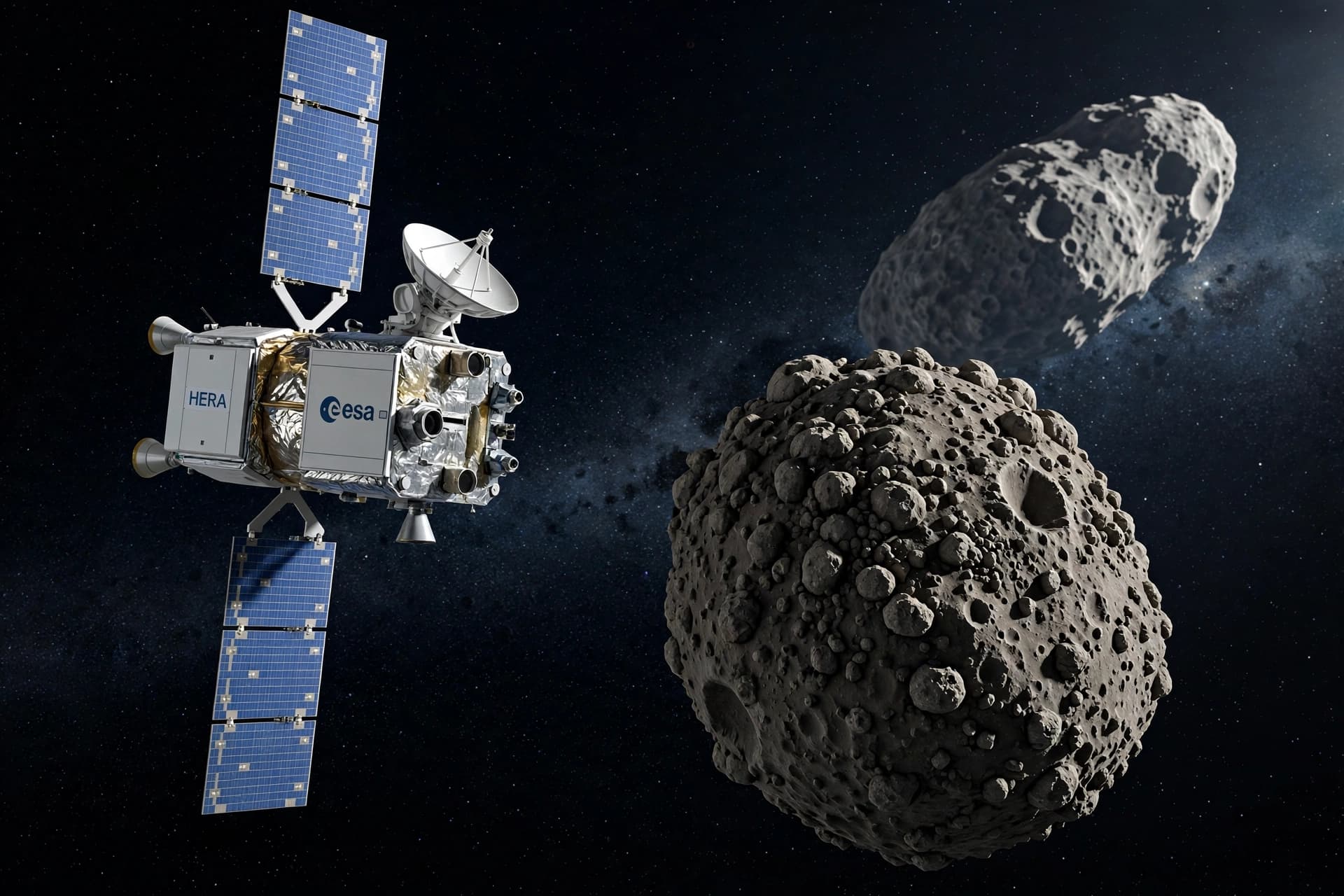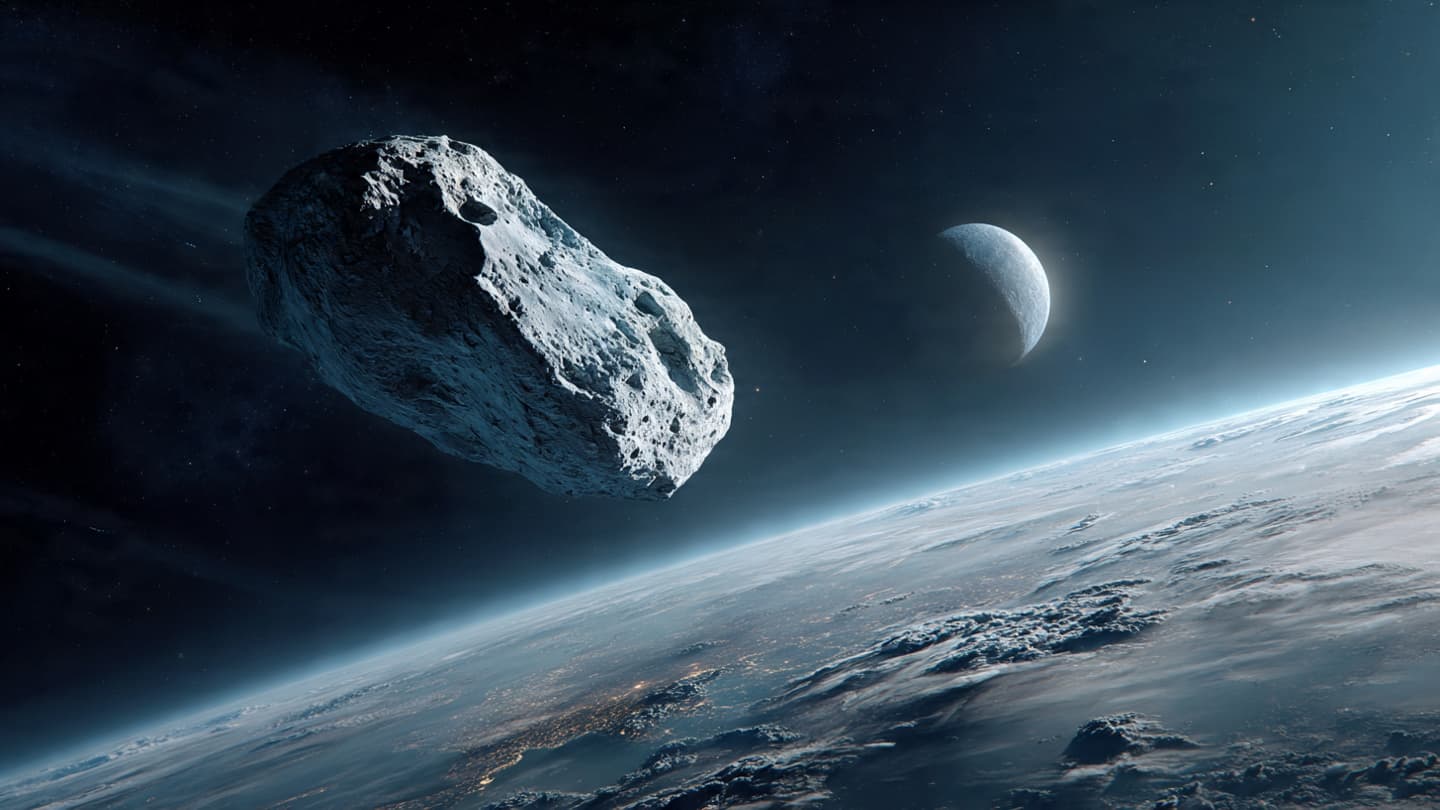
In the vast quiet of space, even distant motion can feel intimate when measured against the familiar presence of the Moon, as a fast-moving asteroid briefly traces a close path through Earth’s neighborhood.
Astronomers report that an asteroid roughly comparable in size to a commercial aircraft is expected to pass relatively close to Earth, on a trajectory that brings it nearer than the average distance to the Moon. While “close” in astronomical terms still spans vast distances, such flybys are closely monitored.
Near-Earth objects like this asteroid are tracked using telescopes and radar systems that map their orbits with increasing precision. These observations help scientists refine predictions and ensure accurate modeling of future trajectories.
The asteroid’s size, often compared to a Boeing 737 for visualization, helps the public understand scale rather than suggest any aviation-related characteristics. Objects of this size are not uncommon in near-Earth space and typically pose no immediate threat when their orbits are well understood.
Space agencies such as NASA and international observatories continuously monitor these objects through dedicated planetary defense programs. The goal is not only to detect potential risks but also to deepen understanding of how small bodies move through the solar system.
When such flybys occur, they provide valuable opportunities for observation. Telescopes can capture data about composition, rotation, and surface properties, contributing to broader research about the formation of the solar system.
Despite the dramatic framing often used in headlines, most of these events are routine in astronomical terms. The asteroid’s passage serves more as a reminder of Earth’s dynamic environment within a populated solar neighborhood than an indication of danger.
As the object continues on its orbit and recedes into the darkness, it leaves behind not disruption but data—another small but meaningful addition to humanity’s understanding of space.
AI Image Disclaimer: Visual depictions of the asteroid flyby may be simulated or AI-generated for illustrative purposes.
Sources: NASA Jet Propulsion Laboratory, European Space Agency, International Astronomical Union Minor Planet Center, BBC Science
Published by Banx Network. This article is part of the Banx decentralized media programme, powered by the BXE token on the XRP Ledger.