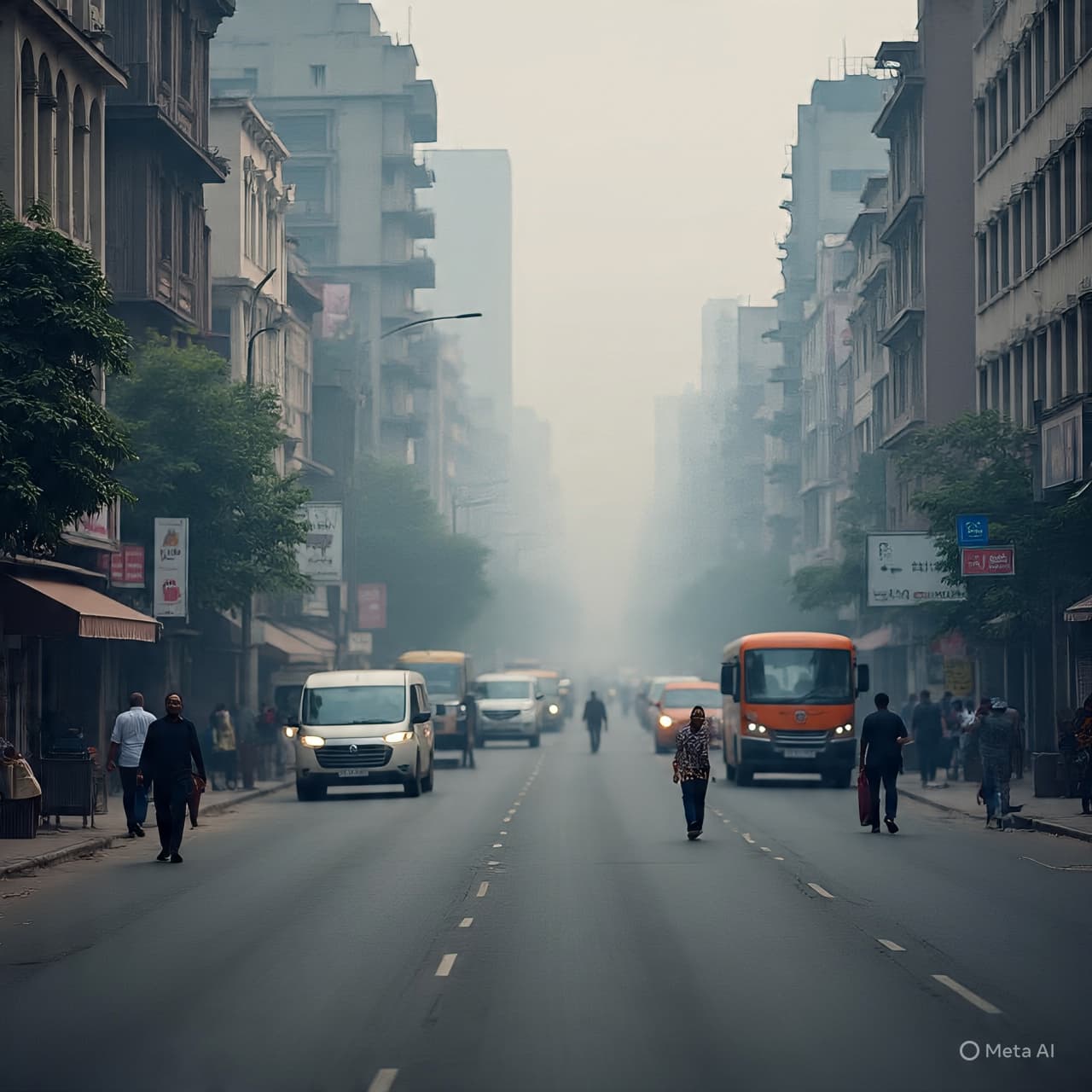
In the fragile early hours of a winter morning, when the pale sun should gently rise over New Delhi’s broad avenues, an opaque haze instead greets the city’s residents, transforming familiar streets into a scene more akin to a watercolor brushed with gray and muted silence. On December 15, 2025, dense toxic smog has enveloped the Indian capital, pressing its presence onto every corner of daily life and drawing into sharp relief the fragile threshold between routine and crisis.
For millions of commuters, the journey to work began under an eerie pall where visibility shrank and breaths felt heavier. Flights were cancelled or delayed, and train schedules were disrupted as transportation networks struggled against the smog’s embrace. Construction sites fell quiet under emergency pollution curbs, and authorities reinstated stringent measures aimed at slowing the surge of hazardous pollutants that hovered in the cold air.
The numbers paint a stark picture: air pollution indices surged into levels classified as severe or hazardous, far beyond what is considered safe for human health. Hospitals reported upticks in respiratory complaints, eye irritation, and distress among the elderly, children, and those with pre‑existing conditions, underscoring how smog—though invisible in its composition—imposes a tangible toll on everyday life.
Travel that should have been ordinary became an exercise in patience and concern. Airports issued advisories advising passengers to check flight statuses, while motorists navigated roads where the horizon was a dim suggestion rather than a clear view. These public disruptions mirror a deeper unease: the routine of living in a megacity has been interrupted not just by weather, but by a compounded human and environmental predicament that refuses easy solutions.
People who walk through smog‑shrouded markets or wait at bus stops share an unspoken resilience, yet also a growing awareness of vulnerability. In masks and scarves, they move through a city that feels simultaneously familiar and obscured—where each breath carries the weight of a larger conversation about urban health, climate, and shared responsibility.
As the sun arcs higher and officials convene to assess ongoing responses, the hope remains that winds might shift, visibility improve, and the skies clear once more. But for now, New Delhi’s winter is marked by a thick, lingering haze—an atmospheric reminder that in every modern city, the environment and the people who sustain it are bound in delicate equilibrium.
AI Image Disclaimer Visuals are created with AI tools and are not real photographs.
Sources (News): Associated Press/ABC News
• The Independent
• Newswav
• The Hans India
• Associated Press (AP)
Published by Banx Network. This article is part of the Banx decentralized media programme, powered by the BXE token on the XRP Ledger.