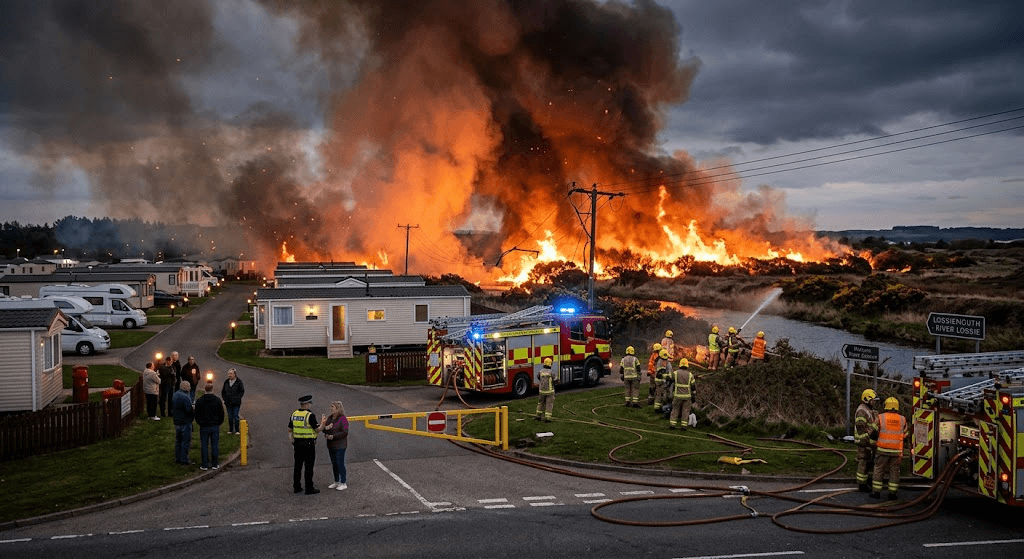
The sky above Tehran darkened in an unusual way that morning, as if the clouds themselves had absorbed the color of smoke. The capital—normally alive with the pale haze of traffic and the distant silhouette of the Alborz Mountains—woke beneath a ceiling of thick black plumes drifting slowly across the city. Rain began to fall, but the drops were strange, heavier, darker, leaving smudges on windows and rooftops.
Residents soon noticed what the sky had carried with it.
The rainfall appeared blackened, mixed with soot and traces of oil that had risen hours earlier in columns of smoke. The clouds above Tehran had become something else—an atmosphere shaped by burning fuel depots, their fires still flickering on the city’s outskirts.
The transformation began overnight, when Israeli airstrikes targeted multiple oil storage facilities and fuel infrastructure in and around the Iranian capital. The Israeli military said the sites were used to supply military operations and were part of the country’s logistical network. Fires erupted at several depots, sending vast clouds of smoke and hydrocarbons into the air above the city of nearly ten million people.
Through the night, flames burned steadily, their glow visible across neighborhoods and highways. The smoke gathered into towering columns before spreading across the skyline, turning dawn into a muted gray. By morning, the haze hung so heavily that sunlight struggled to reach the streets below.
Then the rain came.
Meteorologists and reporters in Tehran described rainfall that appeared dark and oily, formed as soot and unburned hydrocarbons mixed with moisture in the atmosphere. Some droplets left greasy stains along walls and pavement, the result of particles released when the oil facilities ignited.
The phenomenon carried more than an eerie appearance. Iranian authorities warned that the fires had released large quantities of toxic compounds—including hydrocarbons, sulfur, and nitrogen oxides—into the air. When rain interacts with those particles, officials said, it can produce acidic or contaminated precipitation capable of irritating skin and damaging lungs.
Health advisories spread across the city as residents were urged to remain indoors, wear masks, and avoid exposure to rainfall that might carry chemical residue. Some were advised to cover food and ventilate homes carefully, as soot particles drifted through the air.
Meanwhile, the fires continued to burn at several sites. Reports indicated that at least four oil storage depots and a petroleum logistics facility were struck during the attacks. Initial figures from Iranian officials said several workers were killed and others injured as explosions ripped through the infrastructure.
The strikes mark a notable moment in the widening conflict between Israel and Iran. Oil facilities inside Tehran had rarely been targeted directly, making the attack a shift toward strategic energy infrastructure within the capital itself.
Across the city, the effects unfolded quietly but visibly. Cars parked along streets collected dark specks. Rainwater pooled in gutters with an oily sheen. The skyline, usually softened by the pale winter light of early spring, remained veiled by smoke drifting slowly between buildings.
War often arrives first as sound—sirens, explosions, the distant roar of aircraft. But sometimes its presence lingers afterward in quieter forms: a scent in the air, a stain on the pavement, a sky that changes color.
On this morning in Tehran, it came down with the rain.
AI Image Disclaimer Illustrations were created using AI tools and are not real photographs.
Sources Al Jazeera AFP The Times of Israel The Independent Daily Sabah
Published by Banx Network. This article is part of the Banx decentralized media programme, powered by the BXE token on the XRP Ledger.