

Key Highlights
- Location:Milford Sound, New Zealand, known for its dramatic landscapes.
- Ecosystem Health:Recent dives confirm stable populations of rare marine species.
- Conservation Efforts:The Department of Conservation prioritizes sustainable management practices.
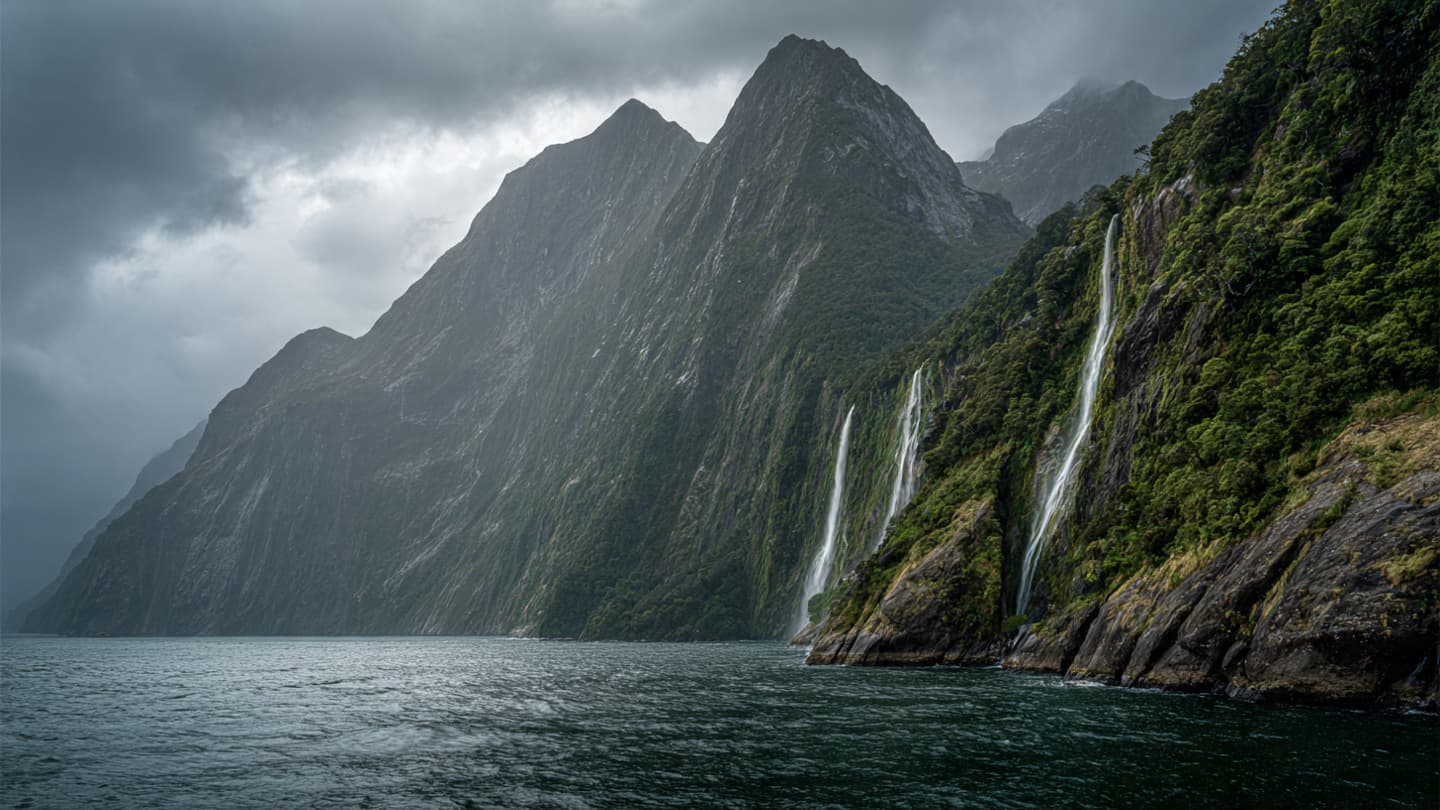
Milford Sound, located in the southwest of New Zealand's South Island, is a breathtaking natural wonder where granite peaks plunge dramatically into the Tasman Sea. This fiord, characterized by its steep cliffs and cascading waterfalls, offers a unique glimpse into the geological history shaped by ancient glaciers. The air is thick with the scent of wet moss and salt, creating a primordial atmosphere that has remained largely unchanged for millions of years.
The still waters of Milford Sound serve as a perfect mirror, reflecting the jagged peaks and swirling clouds above. However, this tranquility is often disrupted by the arrival of storms, which transform the granite walls into a spectacle of temporary waterfalls. These fleeting displays of nature highlight the dynamic water cycle at play in this stunning landscape, where rain is a constant presence.
The geological features of Milford Sound tell a story of ancient ice that carved out the valleys, leaving behind a U-shaped profile that serves as a reminder of the region's glacial past. Visitors to the fiord are often struck by the profound age of the stone, which has witnessed countless observers over millennia. The landscape's history is etched into the granite, and the slow erosion of the rock is a testament to the passage of time.
The lush rainforest clinging to the cliffs is a marvel of resilience, showcasing a diverse array of ferns and beech trees that thrive in the challenging environment. This vibrant ecosystem is alive with the sounds of native birds, such as the tūī, and the rush of distant waterfalls, creating a rich auditory backdrop that enhances the sense of seclusion and tranquility.
Light plays a crucial role in the beauty of Milford Sound, shifting throughout the day and illuminating the intricate textures of the granite. In the early morning, the fiord often lies in deep shadow, while as the sun rises, the landscape transforms into a mosaic of light and shadow, revealing the vibrant life that flourishes in this unique environment.
The isolation of Milford Sound offers a restorative experience, allowing visitors to disconnect from the chaos of modern life and reconnect with the natural world. The fiord operates on its own schedule, indifferent to human presence, which provides a comforting reminder of nature's enduring power and beauty. As boats navigate the waters, passengers are left with lasting memories of the dark waters and towering granite walls, a testament to the forces that shaped this remarkable landscape.
Recent reports from the New Zealand Department of Conservation indicate that the underwater ecosystem of Milford Sound remains in excellent health. Recent dives have confirmed stable populations of rare black coral and brachiopods, showcasing the resilience of this unique marine environment. Monitoring of the fiord's freshwater layer, where rain runoff sits atop saltwater, reveals that current tourism levels have not significantly impacted the delicate balance of the ecosystem. Officials are committed to sustainable management practices to ensure that Milford Sound continues to thrive as a sanctuary for both terrestrial and aquatic biodiversity.
Published by Banx Network. This article is part of the Banx decentralized media programme, powered by the BXE token on the XRP Ledger.




