Science often advances through grand discoveries, but sometimes it moves forward by revisiting questions left unanswered for generations. Like a note preserved between the pages of an old book, certain scientific puzzles remain waiting for future minds to return and complete the story. One such mystery, rooted in the color theory work of physicist Erwin Schrödinger, has recently found a long-awaited resolution.
Schrödinger is widely recognized for his contributions to quantum mechanics, yet his interests extended into other scientific fields as well. Among them was the study of color perception, an area that sought to better understand how humans experience and interpret visual information.
For decades, aspects of Schrödinger's color theory presented mathematical and conceptual challenges that remained unresolved. Researchers continued examining the problem, recognizing its significance for both theoretical understanding and practical applications involving visual science.
The recent breakthrough emerged through modern mathematical analysis and advances in computational methods. By revisiting original assumptions and applying contemporary techniques, scientists were able to clarify relationships that had puzzled researchers for nearly a century.
Color science plays a surprisingly important role in daily life. Technologies such as digital displays, cameras, printing systems, and image-processing software all depend on accurate models of color perception. Improvements in theoretical understanding can influence these technologies over time.
Researchers involved in the work emphasize that the discovery is not simply about solving a historical puzzle. The findings contribute to a broader understanding of how visual systems interpret information and how mathematical frameworks can describe sensory experiences.
The achievement also highlights the enduring value of foundational science. Questions that appear abstract today may eventually support practical innovations in unexpected ways. History contains numerous examples where theoretical insights later transformed technology and industry.
Academic observers have welcomed the development as an illustration of scientific continuity. Knowledge progresses not only through new questions but also through the careful reexamination of old ones that continue to hold relevance.
With the mystery now clarified, researchers can build upon the findings to explore new directions in vision science, mathematics, and perception research, extending a conversation that began generations ago.
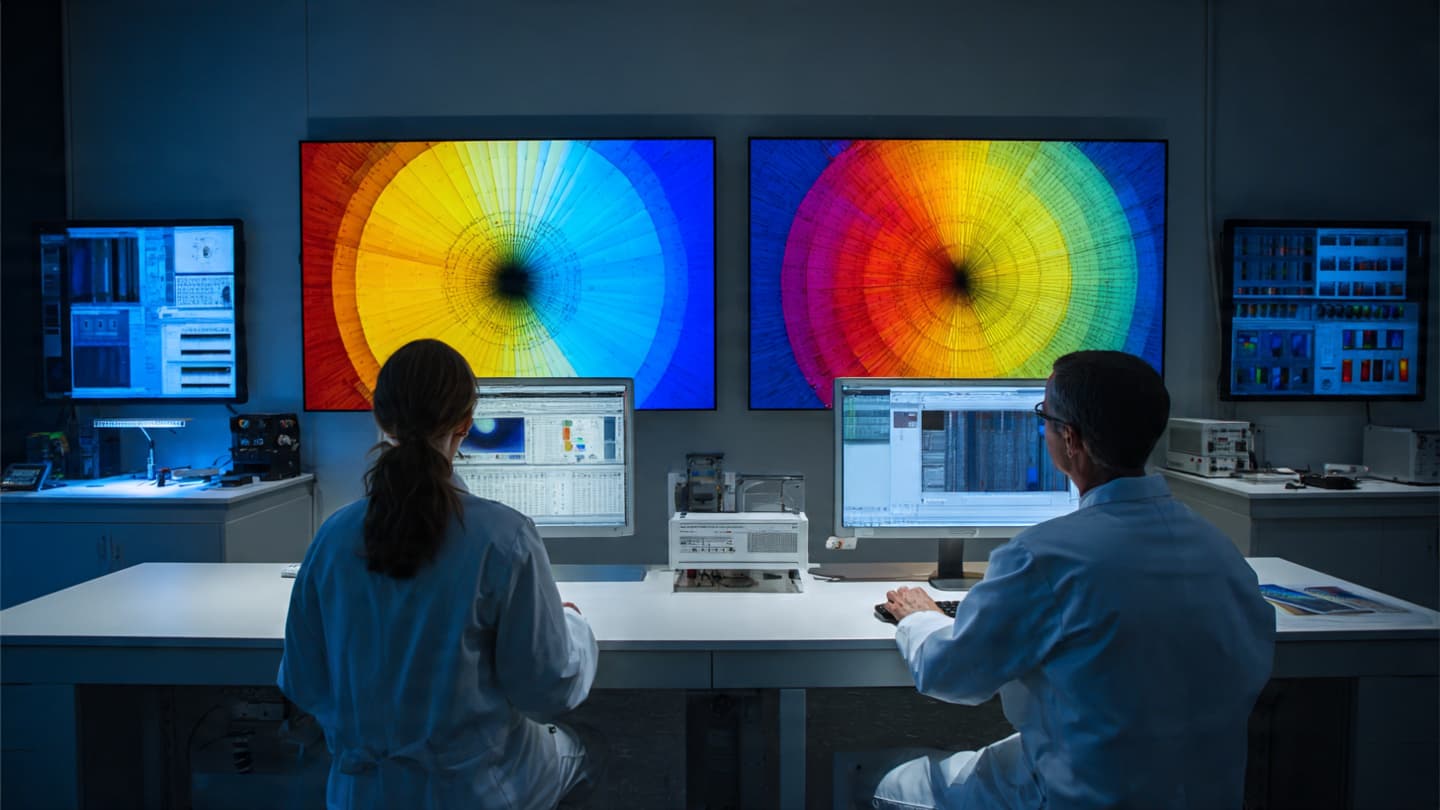
AI Image Disclaimer: This article contains an AI-generated illustration designed to visually represent scientific concepts and is not based on a historical photograph.
Source Verification Check: ScienceDaily, Nature, Physical Review Journals, New Scientist, Scientific American
Published by Banx Network. This article is part of the Banx decentralized media programme, powered by the BXE token on the XRP Ledger.