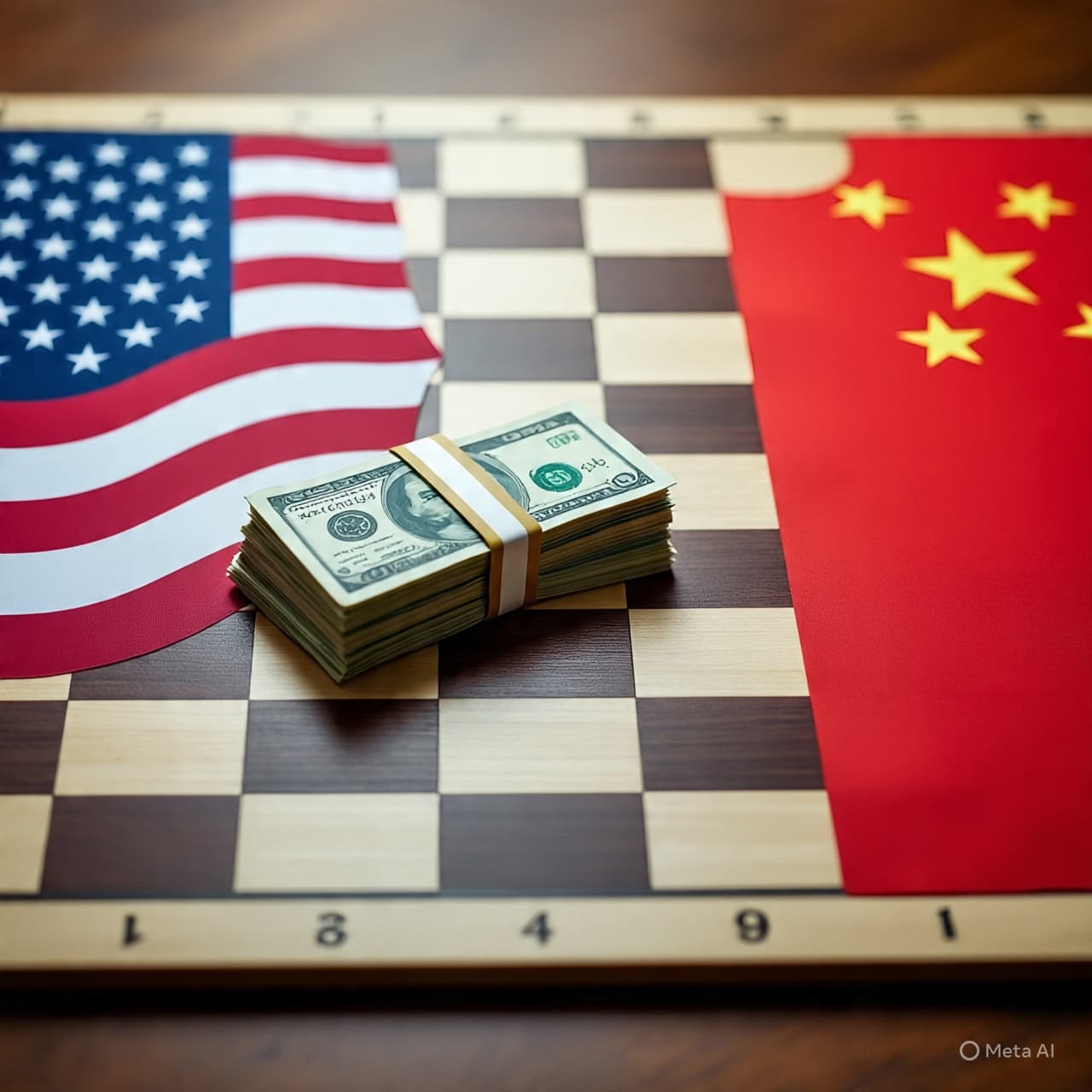
In a move that sent tremors through global markets, Donald Trump announced that the United States will impose a 100% tariff on Chinese goods starting November 1, reigniting the specter of a full-scale trade war between the world’s two largest economies.
Speaking at a rally that quickly turned into an economic declaration, Trump framed the decision as a defense of American manufacturing and a response to what he called “decades of unfair trade.” His statement came with no immediate details on product scope or enforcement mechanisms, but the symbolic weight was unmistakable — a doubling down on protectionism as economic nationalism returns to the fore.
The reaction was swift. Futures tied to the Nasdaq 100 fell, Asian markets opened lower, and analysts warned of possible retaliatory measures from Beijing. The announcement evokes memories of 2018–2019, when escalating tariffs disrupted supply chains, raised import costs, and rattled global investors.
China has yet to issue an official response, but trade observers expect countermeasures, possibly including restrictions on U.S. exports or critical minerals. Economists fear the ripple effects could pressure global inflation just as major economies are stabilizing post-tightening cycles.
For now, the statement stands as a warning shot — one that merges politics and policy in a way that markets remember all too well. As November 1 approaches, companies and consumers alike will be watching for whether this is rhetoric turned into regulation — or the first strike in a renewed economic confrontation. AI-generated imagery concept; for editorial visualization only.
Sources: Reuters, Bloomberg, The Wall Street Journal, CNBC, Financial Times
Published by Banx Network. This article is part of the Banx decentralized media programme, powered by the BXE token on the XRP Ledger.