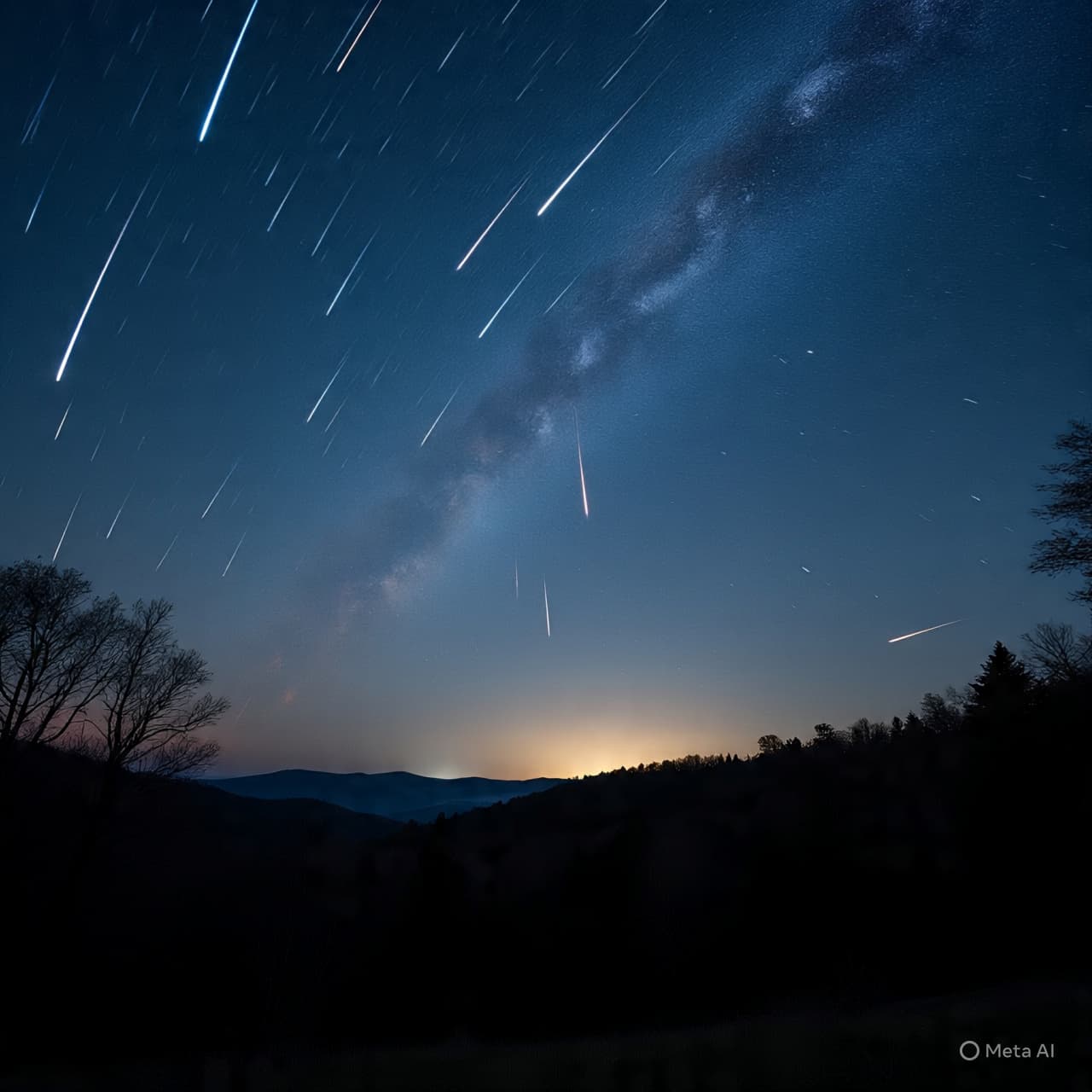
As dusk falls this Sunday, a rare harmony may unfold across the northern skies: not only the shimmering curtains of the Aurora Borealis, but also the graceful streaks of a meteor shower. Space weather experts are forecasting that up to 16 U.S. states could witness this dual celestial display — a gentle reminder that the heavens are always alive with possibility.
This opportunity stems from a recent solar tempest: satellites detected a powerful X4.0-class solar flare on November 14, which is now expected to be followed by charged particles sweeping through the Earth’s magnetosphere. According to NOAA, these particles could trigger a G1–G2 geomagnetic storm, bright enough to push the northern lights far beyond their usual domain.
Under these conditions, the aurora may stretch into states like Alaska, Washington, Idaho, Montana, North and South Dakota, Minnesota, Wisconsin, Michigan, New York, and Maine — possibly even reaching Oregon, Iowa, Vermont, and New Hampshire if the storm intensifies. Meanwhile, the Leonid meteor shower is peaking overnight, with forecasts of up to 15 “shooting stars” per hour in dark, clear skies.
For sky-watchers, the night could feel like a whispered conversation between the Sun and the Earth — a tilt and tug of magnetic fields, charged particles meeting our atmosphere, and atoms lighting up in response. Those who venture out should look to remote or lightly lit areas, face north, and give their eyes time to adjust. As some space weather guides suggest, even a smartphone camera in “night mode” may pick up auroral glows that are too faint for the naked eye.
This moment is more than just a show: it's a living testament to our planet’s place in the cosmic dance. When the Sun breathes out, the Earth responds — and sometimes, just sometimes, we on the surface get to watch.
AI image disclaimer: “Visuals are created with AI tools and are not real photographs.”
Sources Forbes Space.com Time & Date (astronomy) Newsweek The Guardian
Published by Banx Network. This article is part of the Banx decentralized media programme, powered by the BXE token on the XRP Ledger.