There is a particular kind of silence that surrounds places where history has been buried—not out of malice alone, but out of a collective reluctance to disturb what has been laid to rest. In southwestern Manitoba, that silence has lingered for more than a century over a stretch of land along the Assiniboine River, where children who attended the Brandon Indian Residential School were laid to rest in a cemetery that would eventually become a private campground.
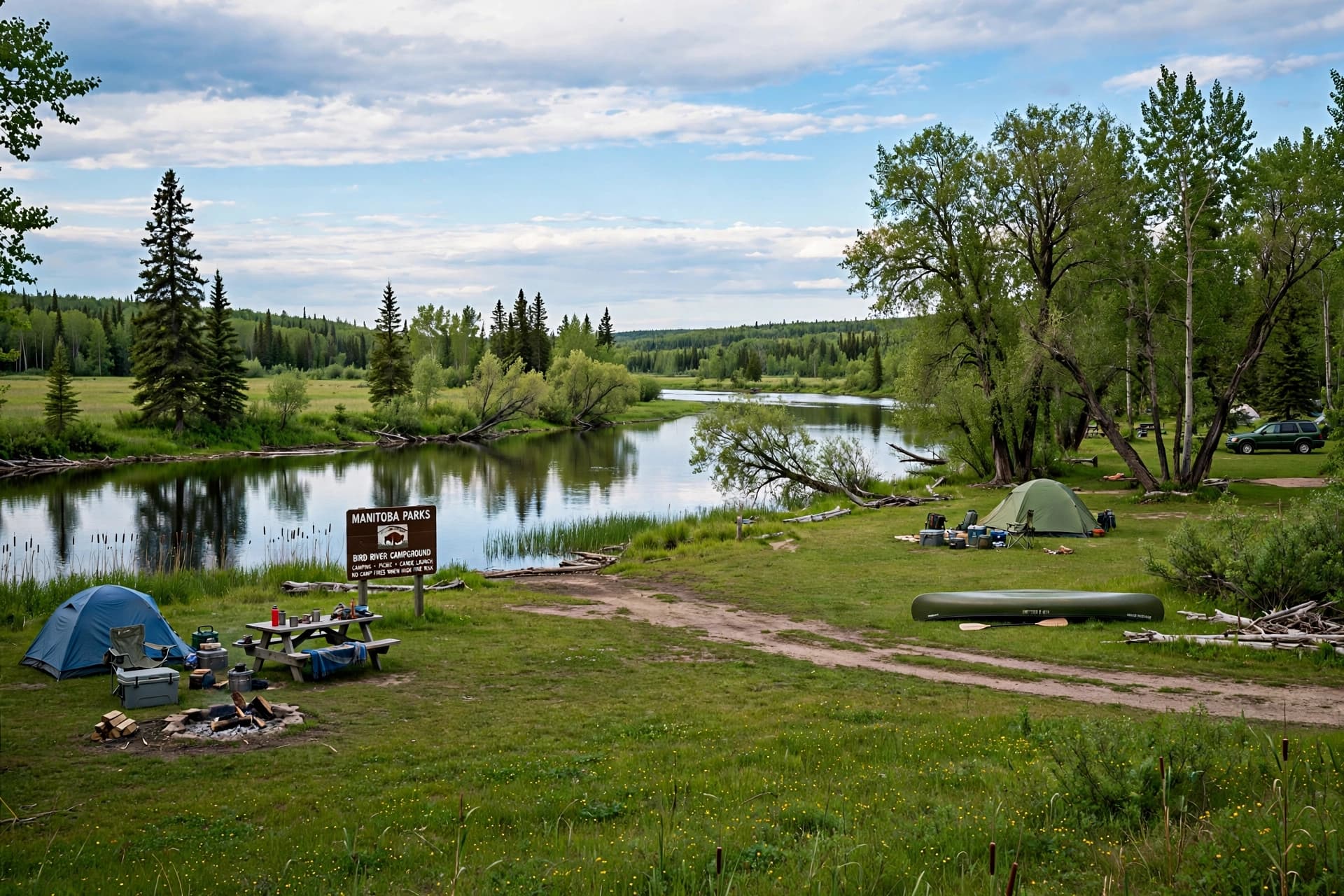
The Manitoba government announced Tuesday that it has partnered with the City of Brandon to purchase the Turtle Crossing Campground property, a site that historical records confirm contains the buried remains of children who attended the residential school. The cemetery was used from 1895 to 1912, and its existence has been documented in church records and provincial vital statistics files for generations. Premier Wab Kinew, in a statement, noted that these graves "have been known about since long before the invention of ground-penetrating radar"—a pointed acknowledgment that the knowledge was never truly lost, only set aside.
The land's history is one of repeated disturbance. After being taken over by the City of Brandon in the 1920s, grave markers were removed in 1921 when the area was converted into a park. The burial ground was commemorated in 1963 and formally marked in 1970, but in 2001 the park was sold and became a privately owned campground. A fence and memorial marker at the cemetery were removed in the mid-2000s, and Sioux Valley Chief Jennifer Bone has said the graves have been repeatedly disturbed and damaged by developers since the 1920s.
An initial geographical survey in 2018 identified 56 potential gravesites at the campground. Sioux Valley Dakota Nation, which owns the land where the residential school once stood, has been searching for unmarked graves since 2012 and has partnered with university researchers to identify all children who died at the school. In 2023, the First Nation and advocacy group Manitoba Keewatinowi Okimakanak called on the province to designate the campground a provincial heritage site to better protect it.
The acquisition represents a shift in approach. Premier Kinew stated that any future decisions regarding the site will be made in consultation with residential school survivors, impacted First Nations, and advocacy groups. Chief Bone emphasized that any searches will be Indigenous-led, with technical expertise and community knowledge guiding the work. "This is important work for our nation and for Indigenous Peoples across Canada," she said in a joint statement.
Kinew is scheduled to dedicate a memorial at the site on Wednesday, Canada's National Day for Truth and Reconciliation, also known as Orange Shirt Day—a date that carries its own weight of memory and mourning. The Brandon Residential School operated from 1895 until 1972, its long tenure spanning generations of Indigenous families whose children were sent there.
The purchase of Turtle Crossing Campground is, in one sense, a bureaucratic act—a transfer of property, a line in a budget. But it is also something more difficult to name: an acknowledgment that some places require a different kind of stewardship than the market can provide. The work of identifying the children buried there, of returning their names and stories to memory, will take years. The land, at last, will be held in trust for that purpose.
Image disclaimer: The visuals accompanying this article are AI-generated and do not depict actual locations or individuals.
---
Sources: CBC News, CTV News, Winnipeg Free Press
Published by Banx Network. This article is part of the Banx decentralized media programme, powered by the BXE token on the XRP Ledger.