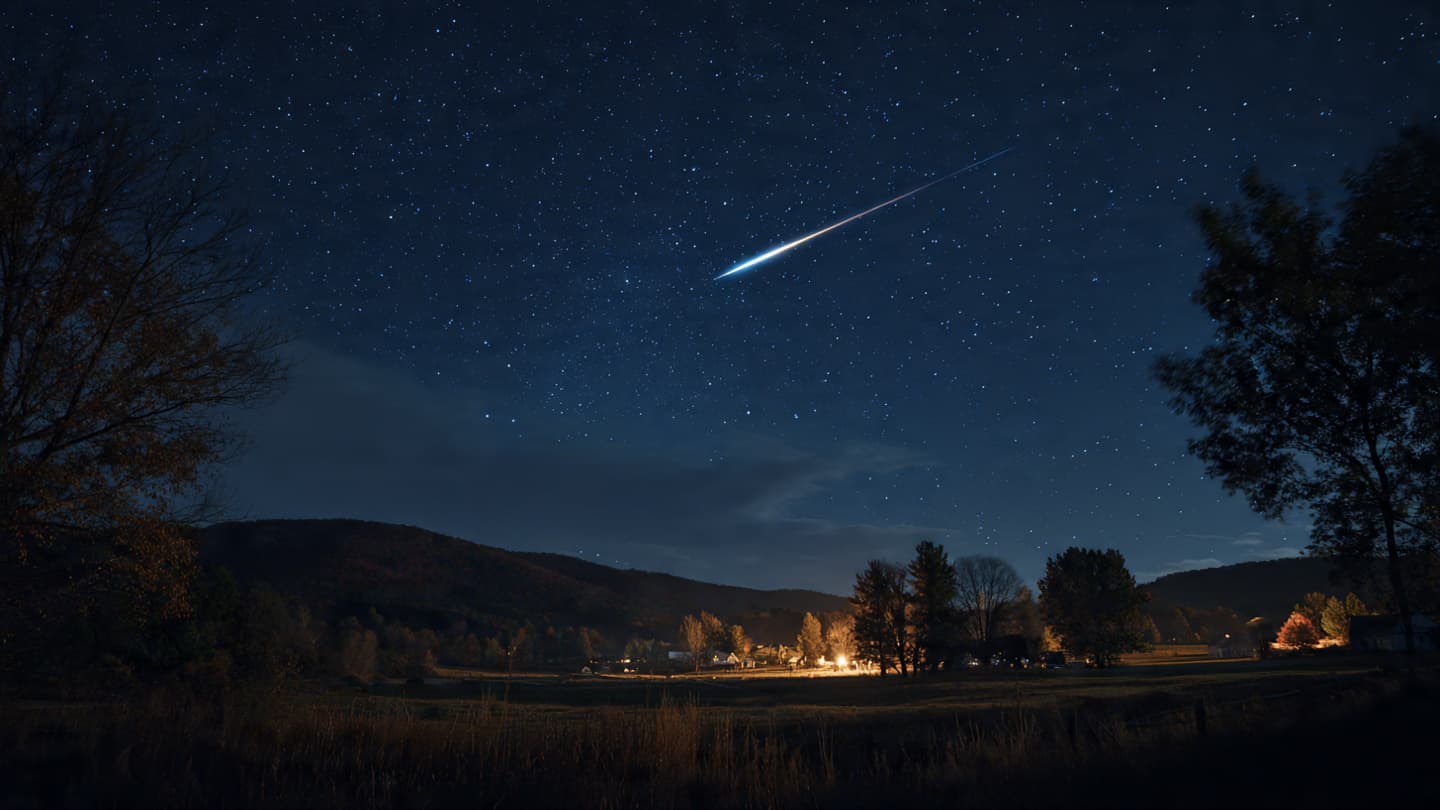
The sky often appears calm and familiar, a vast canopy stretching above daily life. Yet from time to time, reminders arrive that Earth remains part of a dynamic cosmic environment. Such a moment occurred when a bright meteor streaked across the skies of New England, producing flashes of light and reports of loud sounds before NASA confirmed that the object had exploded in the atmosphere.
Body:
Witnesses across several states reported seeing a brilliant fireball moving rapidly across the sky. Many described an intense burst of light followed by a delayed boom that echoed through local communities.
NASA later confirmed that the event was caused by a meteor entering Earth's atmosphere at high speed. As friction and pressure increased, the object fragmented and released a significant amount of energy before reaching the ground.
Events of this kind are not uncommon from an astronomical perspective. Every day, countless small objects enter Earth's atmosphere, though most burn up harmlessly and go unnoticed. Larger meteors, however, can produce spectacular visual displays.
Scientists explained that the brightness observed during the event resulted from extreme heat generated as the meteor traveled through the atmosphere. The resulting fireball was visible across a wide geographic area.
The sound reported by residents likely originated from shock waves created during the atmospheric explosion. Such sonic effects can sometimes be heard several minutes after the visual event due to the difference between the speed of light and the speed of sound.
Researchers continue collecting data from satellites, ground-based sensors, and eyewitness reports to better understand the object's size, trajectory, and composition. These observations contribute to broader efforts to monitor near-Earth objects.
Astronomers emphasize that events like this provide valuable scientific opportunities. Studying meteors helps researchers learn more about the origins of the solar system and the materials that continue traveling through space.
Closing:
While the meteor created a memorable spectacle for observers across New England, experts stress that it posed no significant threat. The event serves as a reminder of Earth's connection to the wider cosmos and the ongoing scientific effort to understand it.
AI Image Disclaimer: This article includes an AI-generated illustration intended solely to visualize the astronomical event described.
Sources Verified: NASA, Reuters, Associated Press, Space.com, CBS News
Published by Banx Network. This article is part of the Banx decentralized media programme, powered by the BXE token on the XRP Ledger.